Home Blog Page 165

Biden laid the muse for an alliance to protect democracy

0

To understand the bold ambition behind President Joe Biden’s Europe trip this week, consider him less as the US commander in chief and more as the doctor in charge of the democratic (little “d”) world.

80 years ago, when far fewer democracies were besieged by rising authoritarian forces, Franklin Roosevelt declared himself Dr. Win-the-war. Now that the democratic world is under attack again, it is Biden’s turn to get Dr. To be Save Democracy.

After repeatedly diagnosing the cancers that threaten global democracies, Biden sped up the course of treatment last week. Like any good doctor, he understands that after so many years of invasive and metastatic disease, healing and recovery remain uncertain.

Waiting longer would have ensured the patient’s failure in what Biden diagnosed as a “turning point” in the historical and systemic struggle against authoritarianism. As he said this week at NATO Headquarters in Brussels, setting out a leitmotif for his entire presidency: “We must prove to the world and to our own people that democracy can still meet the challenges of our time and the needs of our people.”

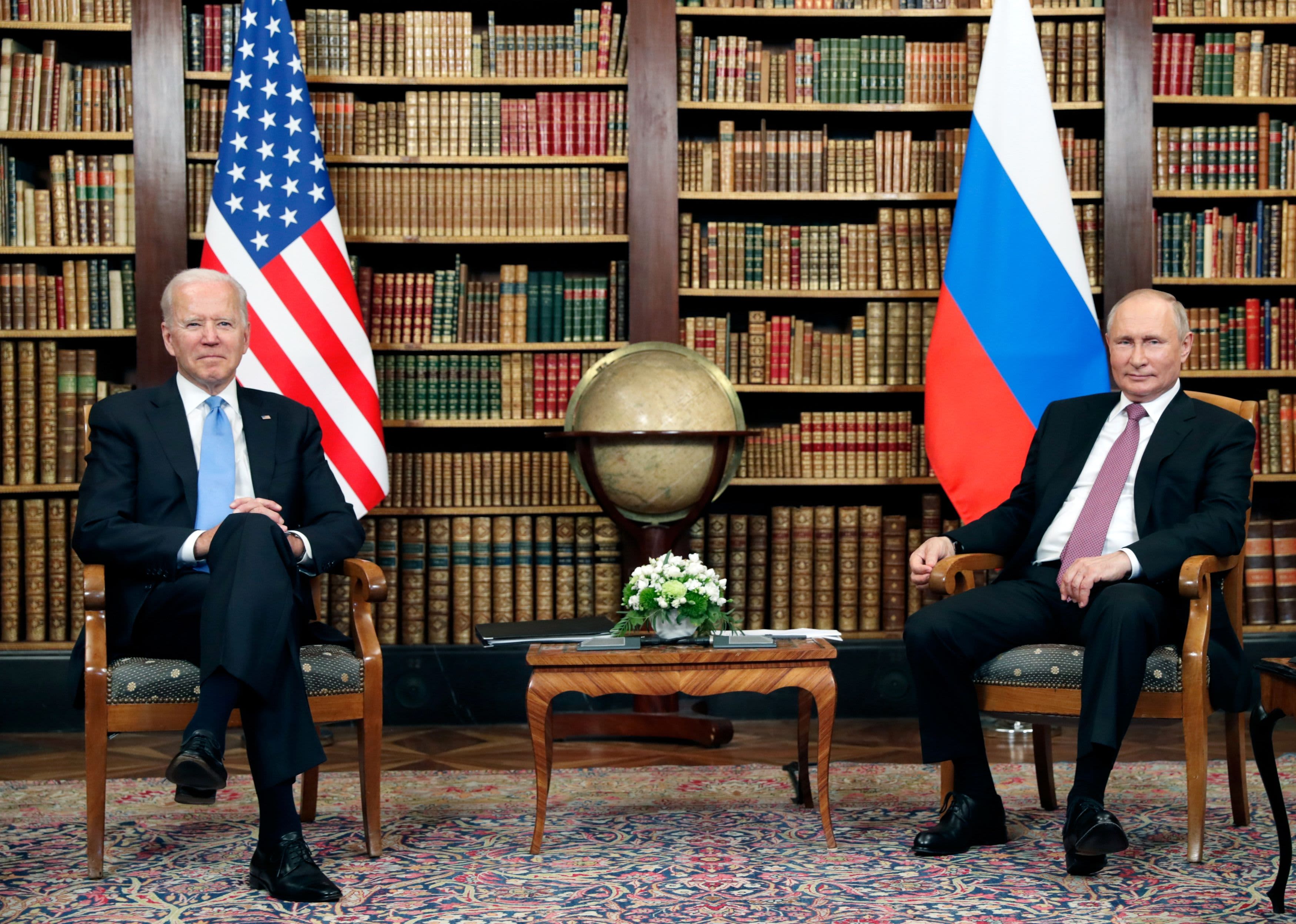
While the 78-year-old president’s message and remarkable perseverance during the trip’s five whistle stops were impressive, any US leader can organize a similar series of meetings. This included his bilateral collaboration with British Prime Minister Boris Johnson, followed by the G-7 meeting of the world’s leading industrial democracies, then the meeting of NATO leaders, a US-European Union summit and the conclusion in Geneva with the Russian President Vladimir Putin, the embodiment that Biden fights for.

More remarkable is what Biden did to them. Through careful planning and negotiation, his team and partners created dozens of pages of agreements, communiques, and future commitments. All of this should provide a narrative thread and provoke a common cause among the world’s leading democracies.

Behind all of this, there is an overarching focus of the Biden government on China as the challenge of our time. In contrast to the Trump administration, which has brought itself into conflict with Europe and China at the same time, the Biden administration has made every effort to win the Europeans on its side in the competition with China, even if compromises from individual countries and a whole European Union are calling for China to be its leading trading partner.

Agreements reached last week included a communique from the Carbis Bay G-7 Summit, which included a commitment to provide the world with another billion doses of Covid vaccines this year, a plan to revitalize it of member countries and a commitment to a global minimum VAT.

This included a statement from the US-EU summit, perhaps the least reported and underestimated of the week’s agreements, which established a series of dialogues that encouraged closer cooperation on everything from Covid aid and climate change to technological cooperation and China could enable.

“We intend to continue coordinating our common concerns, including ongoing human rights violations in Xinjiang and Tibet,” the statement said, “the erosion of Hong Kong’s autonomy and democratic processes, economic coercion, disinformation campaigns and regional security issues.”

The end of a 17-year-old trade and customs dispute between Boeing and Airbus has the increasing competition with China as a motivating factor. Even the joint declaration by the US President and Russia on strategic stability contained in three paragraphs had China in its sights, with the aim of initiating a bilateral dialogue on strategic stability, the aim of which was to create a more predictable environment with Moscow Washington’s energies are more direct to Beijing.

However, beneath the surface of all President Biden’s meetings lingered lingering doubts about the durability of this renewed American commitment to alliances, democratic partners, and a common cause – which led to an understandable whiplash among leaders attending meetings of a. had participated in a completely different tone with President Trump.

Europeans have every reason to wonder what the next US election might bring as Trump and his allies still refuse to accept his election defeat and claim fraud. They also have their own electoral uncertainties as the German elections in September are set to end Chancellor Angela Merkel’s nearly 16-year term and French President Macron faces the local elections on Sunday, which preview his next year’s showdown with Marine Le Pen could offer.

Thanks in no small part to these uncertainties, Biden’s great success with his partners over the past week, who were just too eager to embrace the change. What the Trump administration demonstrated, as did the first few months of Biden’s presidency, is the continued dependence of global democracies on US leadership. So why not use the present to implement as many agreements and habits as possible in the hope that they could last.

With that in mind, the week began appropriately with the New Atlantic Charter signed with British Prime Minister Johnson, a useful reminder of the historic difference the internationally active United States can make on the 80th anniversary of the original Atlantic Charter, which was adopted by the US President Franklin Roosevelt was agreed and British Prime Minister Winston Churchill.

“Our revitalized Atlantic Charter”, says the new document, “builds on the commitments and aspirations formulated 80 years ago and reaffirms our ongoing commitment to preserve our enduring values ​​and to defend them against new and old challenges. We pledge to work closely with all partners who share our democratic values ​​and to counter the efforts of those who seek to undermine our alliances and institutions. “

It is worth remembering that nearly four full months before the US formally entered World War II, Roosevelt and Churchill agreed to the original charter outlining their ambitious common goals for the postwar world and clear US support for the British war effort expressed on 08/14/1941.

It is also worth thinking about what kind of world would have been created if the US had not stepped forward.

Given the threatened liberal order of the post-war era, the New Atlantic Charter could serve as a call for a renewed international commitment to the revival of democracy.

As early as December last year, I wrote at this point: “Joe Biden has the rarest opportunity in history: the chance to be a transformative president.”

Biden’s trip to Europe recognizes and builds on this opportunity. Perhaps just as motivating, however, are the known but unspoken costs of failure at a time when the question of the global forces that will shape the future is at stake.

Frederick Kempe is a best-selling author, award-winning journalist, and President and CEO of the Atlantic Council, one of the United States’ most influential think tanks on global affairs. He worked for the Wall Street Journal for more than 25 years as a foreign correspondent, assistant editor-in-chief and senior editor for the European edition of the newspaper. His latest book – “Berlin 1961: Kennedy, Khrushchev, and the Most Dangerous Place on Earth” – was a New York Times bestseller and has been published in more than a dozen languages. Follow him on Twitter @FredKempe and subscribe here to Inflection Points, his view every Saturday of the top stories and trends of the past week.

One of the best dad jokes for father’s day

0

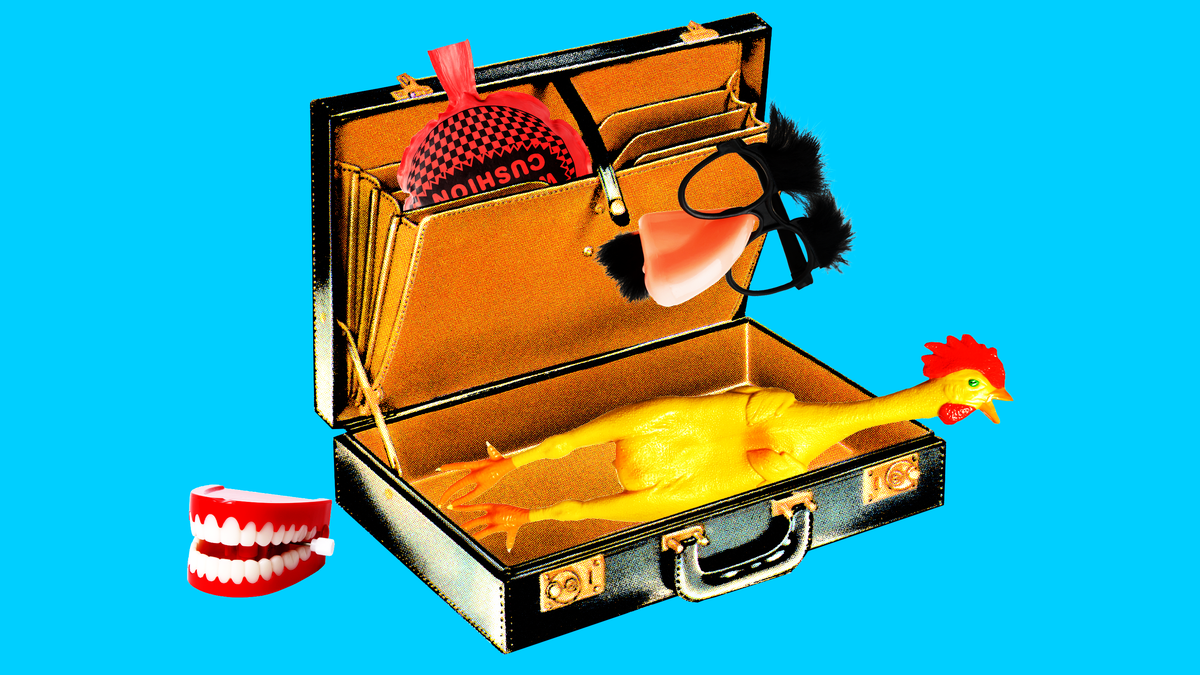
A papa joke is to be cherished any day of the year, but as we near Father’s Day it is especially important to appreciate this particular genre of “humor”. If we can call it that.

What’s a dad joke?

A papa joke (capitalized out of respect) is defined by Merriam-Webster as “a wholesome joke of the kind told by fathers with a punch line that is often an obvious or predictable pun or pun and is usually judged to be adorable cheesy or uncomfortable.”

(When does a joke turn into a papa joke? When it becomes obvious.)

In other words, if it’s incredibly cheesy and makes you half moan, half smile, it’s a dad joke. Sure, anyone can tell a dad joke, but the punch lines are most effectively delivered by a half-dumb, middle-aged dad.

(It is inappropriate to make a “dad joke” if you are not a dad. It’s a faux pas.)

What are your favorite dad jokes?

In honor of all of our favorite fathers on Father’s Day, I’ve put together a collection of the very best (worst?) Dad jokes I could find for you. Feel free to destroy these while grilling in the back yard on Sunday.

  • Why are elevator jokes so good? You work on so many levels.
  • Why was the guy fired from his job at the orange juice factory?
    He couldn’t concentrate.
  • Did you hear about the blown up cheese dairy? Da Brie was everywhere.
  • Why do ophthalmologists live so long? You are expanding.
  • Why was 6 afraid of 7? Because 7, 8, 9.
  • How do you steal someone’s coat? You jacket.
  • I was wondering why this frisbee kept looking bigger and bigger. Then it got me.
  • I went to a zoo once, but there was only one dog there. It was a Shih-Tzu.
  • What do you call an alligator in a vest? An investigator.
  • What do you call a fake noodle? A pie.
  • The police have just arrested the tongue twister world champion. They say he’ll get a severe sentence.
  • Why does a chicken coop have two doors? Because if it had four doors it would be a chicken limo.
  • What did the left eye say to the right eye? Something smells between you and me.
  • What do you think of a baby you meet on Rodeo Drive? “Gucci, Gucci, Gucci.”
  • Many people think that Thor’s brother is intense, but I found him reluctant.
  • What do roofs cost? Nothing. You are on the house.
  • What do you call a can opener that doesn’t work? A can opener.
  • Why don’t you hear a pterodactyl go to the bathroom? Because the “P” is silent.
  • What do you call a group of rabbits walking backwards? A receding rabbit line.
  • What do frogs wear on their feet in summer? Open toad sandals
  • Where are all papa jokes stored? In a dad-a-base.
  • Why don’t cannibals eat clowns? They taste weird.
  • Where did the general raise his armies? In his sleeves.
  • What’s brown and sticky? A stick!
  • What did the buffalo father say to the buffalo boy when he went to school? “Bison.”

Finally, an original papa joke – one you’ve probably never heard of – courtesy of one parent’s husband in ours Junior Facebook group:

Where do you think of the hottest peppers? The hall-of-peño.

(Samantha says her husband was very proud when he came up with this, and we can certainly see why.)

I know there is a papa joke you love that is not on this list, and I know it is killing you. Go ahead, paste it in the comments; There aren’t too many dad jokes (yes there are).

This post was originally published in 2020 and was updated with current context (and more papa jokes) on June 17, 2021.

Has the black cash of Indians within the Swiss financial institution elevated since 2019: FinMin calls report incorrectly

0

Fact check

oi-Deepika S.

|

Updated: Saturday, June 19, 2021 12:12 pm [IST]

New Delhi, June 19: According to media reports on Friday, Indian funds in Swiss banks are declining from 6.625 billion rupees (899 million Swiss francs) at the end of 2019 to over 20.700 billion. It was also found that this is also the highest number of deposits in the past 13 years.

Has the black money of Indians in the Swiss bank increased since 2019: FinMin calls report incorrectly

Media reports indicate that the reported figures are official figures that were reported by the banks to the Swiss National Bank (SNB) and do not reflect the amount of the much-discussed alleged black money from Indians in Switzerland. In addition, these statistics do not include the money that Indians, NRIs or others may have in Swiss banks on behalf of third countries, the Ministry of Finance said.

However, customer deposits have actually decreased since the end of 2019. The funds held through trustees have also more than halved since the end of 2019. The biggest increase is in “Other receivables from customers”. These are in the form of bonds, securities and various other financial instruments, the Ministry of Finance also announced.

The ministry also said it was important to point out that India and Switzerland have signed the Multilateral Convention on Mutual Administrative Assistance in Tax Matters (MAAC) and both countries have also signed the Multilateral Competent Authority Agreement (MCAA), according to which the Der Automatic exchange of information (AEOI) will be activated between the two countries for the annual exchange of financial account information from the 2018 calendar year.

The exchange of information on financial accounts related to residents of each country took place between the two countries in both 2019 and 2020. In view of the existing legal regulation for the exchange of information on financial accounts (which has a significant deterrent effect on tax evasion) undisclosed assets abroad), there does not seem to be any significant possibility of increasing deposits at Swiss banks from undeclared Income from Indian residents, the ministry said.

The Swiss authorities have been asked, in view of the highlighted media reports, to present the relevant facts and their opinion on possible reasons for an increase / decrease, the ministry said in a statement.

In addition, the following factors could potentially explain the increase in deposits:

  • Increase in the deposits of Indian companies in Switzerland due to increased business transactions
  • Increase in deposits due to the business of Swiss bank branches in India
  • Increase in interbank transactions between Swiss and Indian banks
  • A capital increase for a subsidiary of a Swiss company in India and
  • Increase in liabilities related to the outstanding derivative financial instruments

Fact check

claim

The amount of black money held by Indians in Swiss banks has increased

Conclusion

The Treasury Department says this information is inaccurate and customer deposits have actually decreased

For breaking news and instant updates

Allow notifications

You have already subscribed

5 Issues You Ought to Know Earlier than The Inventory Alternate Opens On Friday June 18th

0

Here are the top news, trends, and analysis investors need to start their trading day:

1. Dow tracks for the first losing streak of five sessions since January

Trader on the New York Stock Exchange.

Source: NYSE

US stock futures fell sharply on Friday as the Dow appeared poised for its first five-session losing streak since January. Dow futures declined 300 points and accelerated during CNBC’s interview with St. Louis Fed President James Bullard at 8 p.m. ET from Squawk Box. He turned out to be one of the Fed members who expect rate hikes at the end of 2022, before the average forecast for 2023. “We expected a good year, a good reopening, but this is a bigger year than we expected, inflation higher than we expected, and I think it’s natural that we’re a little more restrictive here to cope with inflationary pressures contain. ” “Said Bullard, who is not a voting member of the Fed this year.

Thursday marked the second day the Dow was down 200 points in a row after the Federal Reserve meeting. So far, the average of 30 stocks for the week has been down nearly 2%. The S&P 500, which was tracking a more modest weekly decline, fell for the third straight year on Thursday. The Nasdaq bucked Thursday’s downtrend, rising nearly 0.9% and breaking a two-session losing streak. The Nasdaq was only 13 points away from Monday’s record close. The S&P 500 was less than 1% from its record high on Monday. The Dow was up more than 2.7% since its last record high in early May.

2. 10-year yields continue to rebound after the Fed-driven spike

Federal Reserve Chairman Jerome Powell speaks during a hearing of the Senate Banking Committee on Capitol Hill, Washington, Jan.

Al Drago | Swimming pool | Reuters

The yield on 10-year government bonds hovered to nearly 1.6% on Wednesday after the Fed-driven spike and traded around 1.5% on Friday. Yields have fallen despite the Fed’s rising inflation expectations. The central bank also signaled two rate hikes in 2023 on Wednesday afternoon. In March, policymakers announced they would not see any hikes until at least 2024, adjusting policies to give the economy more room to recover from the depths of the Covid pandemic.

3. Many commodities recover a day after falling sharply

Many commodities rebounded on Friday, a day after falling sharply as China took steps to cool rising prices. These declines resulted in months-long gains and weighed on stocks. On Thursday, the declines in commodities were widespread, with platinum futures falling more than 11%, along with declines of nearly 6% in corn futures and 4.8% in copper futures.

A Chinese government agency on Wednesday announced a plan to release some of its key metal reserves. Commodities often perform inversely against the dollar as they are mostly valued worldwide in the US currency, which has been gaining in value since the Fed’s decisions this week.

4. Warnings about Covid from a British study and England’s chief medical officer

Paramedics arrive at the emergency room at Sharp Memorial Hospital in San Diego, California with a patient with Covid-19.

Bing Guan | Bloomberg | Getty Images

A new UK study looked at brain imaging before and after coronavirus infections, specifically looking at the potential effects on the nervous system. “In short, the study suggests there could be long-term brain tissue loss from Covid, and that would have some long-term ramifications,” said Dr. Scott Gottlieb told CNBC “The News with Shepard Smith”. The destruction of brain tissue could explain why Covid patients have lost their sense of smell, he said.

Hounslow, London, which on Thursday 27 May 2021 has become one of the UK’s biggest hotspots for the variant of the coronavirus first identified in India.

Tejas Sandhu | MI news | NurPhoto | Getty Images

England’s chief medical officer warned that it would likely be five years before new Covid vaccines against a number of coronavirus variants could “hold the line” at high levels. Until then, Chief Medical Officer Chris Whitty said new vaccination programs and booster vaccinations would be needed. Another relaxation of lockdown restrictions in England was delayed this week due to a surge in cases of the Delta variant, first discovered in India.

5. Biden signs law making June thenth a public holiday

U.S. President Joe Biden is applauded as he picks up a pen to sign the June National Independence Day bill while Vice President Kamala Harris stands in the East Room of the White House in Washington on June 17, 2021.

Carlos Barria | Reuters

Most federal employees will celebrate Friday June 10th because the new public holiday that marks the end of slavery in the United States falls on a Saturday this year. The New York Stock Exchange won’t close for Juneteenth but will consider closing in 2022. On Thursday, President Joe Biden signed a bill making Juneteenth, celebrated on June 19, the first federal holiday since Martin Luther King Jr 1983. June 15 marks the day in 1865 that Union soldiers entered Galveston, Texas, and officially ended slavery in the state. It happened more than two years after then President Abraham Lincoln issued the Emancipation Proclamation.

– Reuters contributed to this report. Follow all market activity like a pro on CNBC Pro. Get the latest on the pandemic with coronavirus coverage from CNBC.

Disclosure: Dr. Scott Gottlieb is a CNBC employee and a member of the board of directors of Covid vaccine maker Pfizer, genetic testing startup Tempus, health technology company Aetion, and biotechnology company Illumina. He is also co-chair of Norwegian Cruise Line Holdings ′ and Royal Caribbean’s Healthy Sail Panel.

See Justin Timberlake give his finest recommendation to music college students

0

As Justin talked about the songs the students were creating, Justin noticed how one track really stood out for his wife.

“I played a lot of these ideas and my wife was bouncing around the house and I played these [song] and she said, ‘Ooo, what’s that ?!’ “he recalled, telling the class,” So you have something that gets people’s attention right away, so I think it’s their attention with this tune – Sorry, pun intended – key here. “

In one of the clips, Justin also talked about writer’s block and how his perspective changed when he previously worked with the record producer. Rick Rubin.

“I had writer’s block on a song and he asked me to play it for him,” said the Palmer actor. “And I said, ‘Here I am and this is where I am stuck.’ He said, ‘Well, who are you writing this song for?’ I said, “What do you mean? I’ll write the song for myself. “He says, ‘No, no, no.'”

Justin added, “We’re all just a mix of our influences … check this out and who you want to introduce this album to … it could inspire more melodies.”

To find out more about the star dish, check out their Instagram above!

Easy methods to use mulch in your flower beds and gardening your yard

0

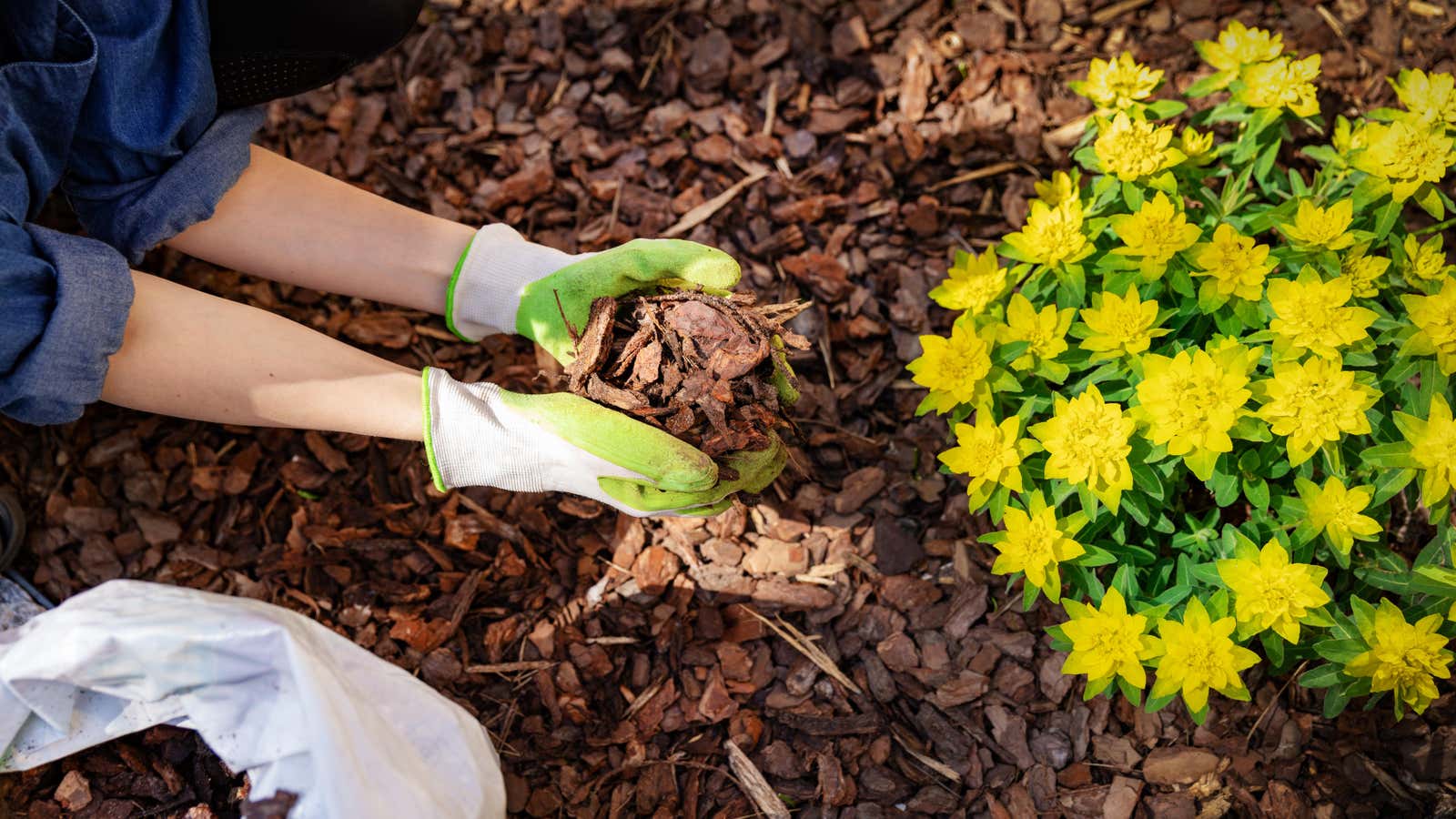
Illustration for the article titled How To Use Mulch In Your Flower Beds And GardenPhoto: Ronstik (Shutterstock)

If you’ve read many articles on gardening – including those on this website – you’ve probably noticed that mulch is a common occurrence. Its ability to keep your plants hydrated and weeds at bay makes mulch a popular (albeit smelly) gardening accessory.

But there are different types of mulch that serve a multitude of purposes, and you can’t just throw down loads of any kind and expect them to work wonders. in the a recent article for Well + Good, Francesca Krempa spoke to a horticultural expert to get the dirt on mulch. Here’s what you should know.

Types of mulch

There are basically two broad categories of mulch: organic and inorganic. According to Angelo Randaci, a master gardener and horticultural expert at Earth’s Ally, organic mulch is made from plant and tree materials such as chopped leaves, wood chips, crushed bark, and pine needles. Inorganic mulch, on the other hand, consists of man-made materials such as rubber, plastic and other landscaping materials.

Each type has its advantages and disadvantages. “If you want to improve your soil, use one of the many organic mulches available,” Randaci said good + good. “If they collapse, they will enrich your soil.” In the meantime, inorganic mulch won’t add to the quality of your soil, but it’s good for keeping flower beds isolated and preventing weed growth.

How much mulch to use

Ideally, according to Randaci, you should distribute between 5 and 10 cm of mulch evenly over your flower beds. “If you’re using a finer mulch, go 1/2 inch or less and apply 2 inches deep,” he said said good + good. “If you’re using a coarser mulch like pine nuggets, apply it 3-4 inches deep.”

G / O Media can receive a commission

Spread the mulch

You also need to be careful about where you place the mulch. Per Good + good:

Randaci says you should never mulch directly around the stems or trunks of plants, flowers, trees, or shrubs. Instead, move your mulch 10 cm away from the stems of annual and perennial plants and at least 15 cm away from trees and shrubs to avoid stressing the plant structure.

Apply for 10 months rent-free in an Airbnb

0

Illustration for the article titled Apply to Live Rent Free in an Airbnb for 10 MonthsPhoto: Shellygraphie (Shutterstock)

One of the many things we’ve learned over the past year is that most office jobs can be done from almost anywhere with a solid internet connection (unless you have young children around, but that’s another story) . After years of telling employees that working remotely was not an option by office bosses, this is now a difficult argument.

If you’ve thought about taking to the streets – at least temporarily – as a digital nomad, you might be interested a new program from Airbnb. It gives 12 people the chance to live on Airbnbs around the world for 10 months while they pay for your travel and accommodation expenses. Here’s what you know and how to apply.

What does the program include

The initiative called “Live anywhere on Airbnb“Starts in July 2021 and lasts until July 2022. We will spend ten of these months on the road. In return for your stay and travel, the 12 selected people are required to provide Airbnb with feedback about their experience. Specifically:

  • Product changes and resources that could help improve the long-term living experience
  • Ideal accommodation types for solo travelers or groups such as families
  • Connections with local community members and businesses
  • Better understanding of the financial benefits of hosts when traveling

Between July and September, the winners will have the opportunity to learn from experienced Airbnbers, such as The senior nomads, and traveling journalist Imani Bashir– a former Lifehacker employee. Then Airbnb will cover the following for the 10 months of travel:

  • Credit for lodging accommodation
  • Transport fee
  • Offer proposals
  • Local experiences

“Up to three companions” can be added to the selected participants.

How to apply

As you can imagine, with such a long program, there are a few things to consider before you apply. To help you with that, here are those Selection conditions (including things like paying taxes on your winnings).

You must be at least 18 years old to apply, and can do this here before July 30th at 11:59 p.m. EST.

No matter who wins the election, Iranians will lose “for positive”: FDD

0

The Iranian people will be the losers in Friday’s elections, no matter which candidate wins, because their votes are not important, according to a senior researcher at a US research institute.

The outcome of the presidential election campaign is in many ways a matter of course, said Behnam Ben Taleblu from the Foundation for the Defense of Democracies.

“Iran really only has one important voter … and that is the supreme leader,” he said, referring to Ayatollah Ali Khamenei.

“So you could say which of the candidates you named wins, the Iranian people will certainly lose,” he told CNBC’s Capital Connection on Friday.

A spokesman for the Iranian Foreign Ministry was not immediately available for comment at the request of CNBC.

Ben Taleblu referred to anti-government protests in recent years, with demonstrators demanding the resignation of their leaders. They were “not looking for reforms as in previous years – but in reality for revolution,” he said.

“Agent of stasis”

The front runner in the presidential race, Ebrahim Raisi, is “definitely an agent of stasis, not change,” said Ben Taleblu.

Political analysts have revealed hardline judge Raisi’s name as a possible future replacement for Khamenei, he said. Raisi, if elected, would be the first recent incumbent Iranian president to be sanctioned by Washington before taking office – the sentences would be imposed on him for his involvement in the 1988 mass execution of political prisoners.

“It is likely that the Islamic Republic will maintain its aggression abroad and repression at home with Raisi in the lead,” said Ben Taleblu.

Elections for the Iranian elections opened at 7 a.m. local time on Friday, with political experts finding widespread apathy across the country.

Iranian voters cast their ballots in Iran’s 13th presidential election in Tehran, Iran on June 18, 2021 at the Hosseiniyeh Ershad Mosque in Rey city.

Fatemeh Bahrami | Anadolu Agency | Getty Images

Instead of looking to see who wins the elections, Ben Taleblu said future US policy should be guided by voter turnout, which is expected to be very low.

“It’s not about who is at the head of the Islamic Republic / … It’s about what the Iranian people are signaling to their state,” he said. “The gap between state and society could not have widened in recent years.”

Voter turnout is a way of knowing whether the Iranian people support their leaders, and that should “feed into US policy,” he said.

Nuclear deal

Ben Taleblu also said there could be a return to the 2015 nuclear deal ahead of the new president’s inauguration.

“It’s very important to note that even some of the toughest of the hardline candidates want to keep talking,” he said.

“Even though they are beating up the (current) Rouhani government and the nuclear deal, they would want to because ultimately … the Iranian economy is suffering,” he said.

It is “entirely possible” that the Joint Comprehensive Action Plan could be inserted during the “lame duck” of the Hassan Rouhani government, he said.

Within the Juneteenth essay, Macy Grey requires the US flag to be redesigned

0

Macy Gray believes it is time to change the flag of the United States of America.

The 53-year-old R&B singer-songwriter, who was awarded a Grammy, commented in an essay on the stock market news site Marketwatch on Thursday 17th, historically known as Emancipation Day and Black Independence Day. On the same day, Gray published her essay, US President Joe Biden and Vice President Kamala Harris signed a bill to make Juneteenth a federal holiday.

“President Biden, Madame Harris, and members of Congress: The American flag was hijacked as a code of belief,” wrote the I Try singer. “God bless these believers, they can have it. Like the Confederates, it is tattered, out of date, divisive, and false. It no longer represents democracy and freedom. It no longer represents ALL of us. It’s not fair to be forced to honor. It’s time for a new flag. “

How ambivalence might help you make higher selections

0

Illustration for the article titled How Ambivalence Can Help You Make Better DecisionsPhoto: Constantin Stanciu (Shutterstock)

Some decisions require a lot of thought – weighing the pros and cons and striving to achieve the best possible result. But some people are undecided about just about anything, big or small. Whether you’re dealing with an ambivalent person or you are an ambivalent person yourself, you know it can be annoying.

But according to a new study done in British Journal of Social Psychology‘Ambivalence may not be the negative quality we think it is. in the an article for psychology today, Dr. Susan Krauss Whitbourne, Professor Emeritus of Psychology and Brain Sciences at the University of Massachusetts Amherst, sheds additional light on the potential benefits of ambivalence, as well as a downside. Here’s what you should know.

How to use your ambivalence to your advantage

Basically, what matters is that ambivalent people take the time to consider the different sides of an issue, which can lead them to make more informed decisions. Whitbourne gives the example of a visit to a restaurant with a certain family member who takes forever to order and gets on everyone’s nerves (including the waiters). Here is she takes:

Weighing factors like healthy choices, price, and method of preparation can ultimately lead to better choices than rushing to get what’s first on your list of possible entrees. How many times have you been disappointed when your own main course arrives and realized you made the wrong choice by being too hasty?

The downside of ambivalence

Aside from things taking a long time, there’s another negative aspect of ambivalence, says Whitbourne:

A quick decision can be the mental equivalent of pulling the bandage off a wound without hesitation. It can be painful, but you are through. In chronically ambivalent people, the inability to resolve conflict can lead to tension, worry, and an overall negative state of mind.

G / O Media can receive a commission

So keep that in mind the next time you’re in a situation where someone is particularly undecided (including yourself).

POPULAR POSTS