Home Blog Page 214

Is Pupil Mortgage Forgiveness Lifeless?

0

Illustration for article titled Is Student Loan Forgiveness Dead?Photo: Fizkes (Shutterstock)

Student loan forgiveness will not be included in President Biden’s annual budget for the White House, further diminishing hopes of blanket loan cancellation of $ 10,000, let alone $ 50,000. While the options remain – Congress, executive action – it seems more likely that lending will only expand through reforms of existing credit relief programs. Here’s what you need to know.

What’s wrong with student loan forgiveness?

Said he supports the cancellation of a $ 10,000 government-sponsored student loan debt that was supposed to be passed through Congress, Biden stated in a town hall in February, “I don’t think I have the authority.” Even so, a few weeks ago he directed the US Department of Education to review its legal authority to cancel student loan debt through executive order.

But as a university specialist Mark Kantrowitz Put it on CNBCThis could be a way for Biden to pass the money on to Congress, his preferred option for all of the time:

“Only when he receives this report, which I expect does not have legal authority, will the ball be in the Court of Congress.”

G / O Media can receive a commission

The only problem with going through Congress is that there is no indication that student forgiveness legislation has enough support to pass as there is no consensus on how much should be given away. even among Democrats. With the Senate bogged down between Republicans and Democrats, Congress looks like a path that Democrats are avoiding, at least for now.

What is President Biden planning for student loan forgiveness?

On Monday the education department announced an official rewriting processthat could change the rules for existing federal student loan programs, including:

After President Biden’s recent executive action which resulted in relief Disability dismissal qualifications, along with US $ 1 billion debt relief under Borrower’s Defense for Repayment ProgramIt is likely that the reforms will bring more of this, making it easier for existing borrowers to either pay off debts (through) reduced payment requirementswho supports Biden) or relieve loans. While this type of regulatory reform does not require Congress approval, the process will take a long time, maybe up to a year (the first hearing) starts in June).

So is blanket student loan forgiveness dead?

Not quite. If you’ve withheld student loan payments because you’re waiting to be forgiven, you may want to wait a little longer, at least until the student loan payment moratorium expires (we’ve already discussed your options in this Lifehacker post).

Education Minister Miguel Cardona recently recommended that the student loan payment hiatus would not be extended beyond September 2021, but neither did he rule it out. Of course, you can still pay off your student debt, but as long as you’re not paying interest, it can’t hurt to wait until October.

How one can know an entry-level job is bullshit

0

Illustration for article titled How To Know An Entry-level Job Is BullshitPhoto: Monkey Business Images (Shutterstock)

Much like millennials who graduated from college during the Great Recession, the 2021 class faces grim prospects in the labor market (it is still remarkably improved from last year’s COVID-affected market). At least that’s how they feel, so a new survey from educational technology and publisher Cengage.

About half of the respondents who tried to get their first job admitted that they were reluctant to apply for an entry-level position because they did not feel qualified. That anyone brand new to the workforce feels that their skills are not worthy of an entry-level job speaks in favor of an obvious disconnect between them and company expectations, in addition to the misconception the recent graduates have about their own ability to learn .

The survey itself also underscores a misunderstanding shared by both groups: We rarely, if ever, clearly define what a real entry-level job means.

What is an entry-level job?

If something is truly an entry-level model, a worker needs to have basic skills and an appetite to learn the ropes of their trade. A true entry-level job is for a graduate and shouldn’t require anything other than the basic skills that someone at the bottom of the company hierarchy needs.

G / O Media can receive a commission

Why are they so hard to come by?

Entry-level jobs are usually just in name. Much of the time Companies disguise more demanding jobs in an “entry form” to attract more experienced and theoretically more capable candidates. It’s a way of paying people less to do more. This is a sneaky tactic to watch out for.

In addition, the labor market became increasingly competitive – at least until it was decimated by the pandemic. More graduates become job seekers every year, exacerbating the crisis of newcomers vying for the same positions. As a job resource page Indeed indicates that the subject begins and continues from college:

The class sizes are increasing steadily. Tuition fees share the same increase, but it doesn’t stop many high school graduates from entering college. Because of this significant increase, the main reason graduates struggle to find employment is because of sheer competition.

It’s a sad reality in today’s job market, but luckily, you will know when you encounter a real entry-level position.

Good companies promote professional development

A true entry-level job provides a path to a higher position, and the introductory nature of the job is evident in the job listing. Rather than leading the nature of an experienced worker’s job, you will be expected to do more than just lead, and you may be given more responsibility once you have shown yourself adept at some areas.

Most importantly, however, when you have a manager who is interested in mentoring, or at least recognizes that you intend to move up the ranks someday, you know that you are really in an entry-level position. Good mentoring is rare these days, but a good company will at least give its greener workers a semblance of career development.

Don’t let a “lack of skill” discourage you.

Unless you have attended vocational school or studied something highly relevant to a specific subject like computer programming or marine biology, you shouldn’t have to worry about missing the perfect résumé. The reason you don’t have certain skills is because you’ve never had a full-time job, which is nothing to despair.

No degree is worthless in the real world, despite the belief that only majors with immediate career prospects are worthwhile. The truth is, when you have the opportunity to develop your skills, you know you have reached a real entry-level position and therefore you should never be afraid to apply.

ASU and the county determine on Holliday’s cash messages

0

That’s still a long way from the $ 1,415,304.79 the county is entitled to based on a civil ruling in the Craighead County Circuit Court. In the bankruptcy case, the court trustee filed a document seeking court approval of the settlement between ASU and the county. Under the agreement, the university, ASU Foundation and Red Wolves Foundation would keep a total of $ 44,593.91 of the money Holliday donated before filing for bankruptcy protection on October 1. The county would receive $ 14,864.64.

A bankruptcy judge must officially approve the settlement filed on May 12 between ASU and the county. Trustee Hamilton Moses Mitchell said on the filing that he believes all creditors are eligible to participate in the recovery of donations. The county believes it is entitled to all of the money. and that ASU doesn’t believe it has an obligation to return the gifts. Holliday is alleged to have transferred money from the employee’s payroll account to his personal and business accounts between January and the end of June last year.

His criminal case in a federal court is scheduled for October. Source www.jonesborosun.com

Holliday is due to appear before Craighead County Circuit Court to answer criminal charges of theft of county funds and a separate low-money charge from a small charity. A bankruptcy hearing is scheduled for June 7 in Jonesboro so creditors can debate who will receive the proceeds from an auction of Holliday’s real estate and personal property that raised approximately $ 762,000.

News highlights business

  • ASU and the county decide on Holliday’s money messages
  • Review all the news and articles from the Business News Updates.

Disclaimer: If you need to update / edit / remove these messages or articles, please contact our support team.

The one which Courteney Cox and Matthew Perry discover out they’re cousins

0

Nobody told us that life would be like this!

Ahead of the Friends Reunion, slated to debut on HBO Max on May 27, a report from MyHeritage.com claims that Courteney Cox and Matthew Perrywho portrayed friends who became married couple Monica Gellar and Chandler Bing on the show are actually cousins!

Well, 11th cousins, that is! Apparently the two relatives share William Osbern Haskell III and Ellen Haskell, a married couple who lived in England more than 500 years ago. (Hmm maybe Lisa Kudrow‘s Friends character Phoebe Buffay met her in one of her past lives?) The connection is made through Courteney Copelandwho is Courteney’s mother and Matthew’s father, John Bennett Perry.

While these two may not have known they were related until now, Courteney and Matthew have stayed close since Friends ended in 2004. In 2019, the Scream actress announced that she and her former co-star had caught up while eating.

“Guess who I had lunch with today …” she wrote on Instagram next to a picture of herself and Matthew. “I know !! Could I be happier? #Realfriends.”

Asia shares set for combined opening; China’s industrial earnings knowledge for subsequent April

0

SINGAPORE – Asia Pacific stocks should have a mixed start on Thursday as investors await the release of China’s April industrial earnings data.

Futures indicated a lower open for Japanese stocks. The Chicago Nikkei futures contract was 28,585 while its Osaka counterpart was 28,620. This is compared to the Nikkei 225’s last closing price at 28,642.19.

Australian stocks seemed poised to barely move. The SPI futures contract was 7,093 compared to the last closing price of the S & P / ASX 200 at 7,092.50.

China is expected to release its April industrial earnings data around 9:30 a.m. to HK / SIN on Thursday.

As for the company’s performance, investors will be watching Xiaomi’s shares in Hong Kong after the Chinese smartphone maker reported an almost 55% increase in sales in the first quarter over the same period last year on Wednesday.

On Wall Street overnight, the Dow Jones Industrial Average rose 10.59 points to 34,323.05 while the S&P 500 rose 0.19% to 4,195.99. The Nasdaq Composite rose 0.59% to 13,738.

Currencies

The US dollar index, which tracks the greenback versus a basket of its peers, hit 90.042 after a recent surge from below 89.7.

The Japanese yen was trading at 109.13 per dollar, weaker than below 108.9 against the greenback seen yesterday. The Australian dollar was trading at $ 0.774 compared to levels above $ 0.777 seen yesterday.

Here’s a look at what’s on tap:

  • China: Industrial profits for April at 9:30 a.m. HK / SIN

Cover Likes on Your Instagram Posts

0

Illustration for article titled How to Hide Likes on Your Instagram PostsImage: Instagram

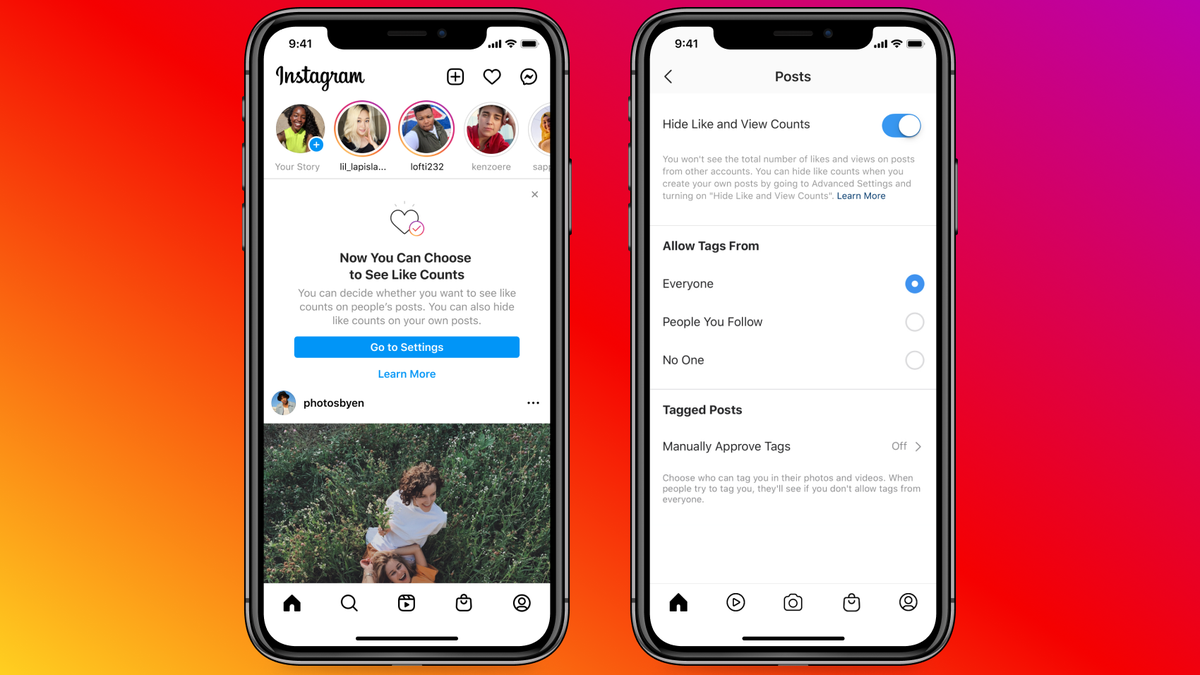
Starting today, all Instagram users can refrain from displaying likes and views on their own picture and video postings. And if you really want a completely “likes-free” experience, the app now lets you hide the likes and display counters for all the posts in your timeline.

Instagram considered removing public people count from the app entirely when testing these new features. The Company says It was chosen to make Likes optional for users who prefer to focus on the photos and videos being shared rather than how many Likes posts will be received while maintaining functionality.

Removing public likes counts for all posts wouldn’t make much sense anyway – Instagram likes are an important metric of audience engagement with brands and influencers. That said, likes can also be a distraction; Not everyone who uses Instagram wants to build a large following, and the option to turn it off is great for those who prefer to focus on sharing and browsing posts without being affected by analytics and popularity.

How to hide views and likes on your own Instagram posts

While there is currently no way by default to hide likes and views for all of your posts, you can simply deactivate (or reactivate) the likes counter for new or existing posts. This prevents other users from seeing how many likes a post is getting. However, you will still receive notifications when the post is liked.

G / O Media can receive a commission

Hide likes on a new Instagram post

  1. Start a new post.
  2. Tap “Advanced settings” at the bottom of the final edit screen where you add the post’s caption.
  3. Activate “Hide likes and view count for this post.”
  4. Return to the editing screen and tap the check mark to start creating your post.

Hide likes on existing Instagram posts

  1. Go to your Instagram profile and open a post.
  2. At the top right, tap the three-dot icon and select “Hide like Graf.”
  3. Repeat this process for each post you want to hide likes on. You can turn this feature on or off at any time after posting.

Here’s how to prevent likes and view counts from showing up on other people’s Instagram posts

Illustration for article titled How to Hide Likes on Your Instagram PostsScreenshot: Instagram

  1. Go to your Instagram profile too Settings> Posts.
  2. Switch “Likes” and “Ads Counts”. “
  3. You will no longer see likes / views in posts in your timeline (note: this does not affect whether others can see the likes / views in your own posts).

Republicans are calling for Fauci to resign due to a change in place in funding the Wuhan laboratory

0

Anthony Fauci, director of the National Institute for Allergies and Infectious Diseases, speaks during a hearing on the National Institute of Health (NIH) budget estimates and the state of medical research on Capitol Hill in Washington, DC on May 26, 2021.

Sarah Silbiger | Pool | AFP | Getty Images

Dr. Anthony Fauci faces increasing demands from Republican lawmakers for his resignation as his position changes on whether the US government has funded research at the Wuhan Institute of Virology.

White House chief medical officer Fauci told lawmakers Tuesday that the National Institutes of Health had funded the Wuhan Institute of Virology through the nonprofit EcoHealth Alliance with $ 600,000 over a five-year period. Funding for the nonprofit was eventually stopped by the NIH.

He denied that the funds were specifically used for so-called gain-of-function research, which involves modifying a virus to make it either more transmissible or deadly, in order to better predict new pathogens and ways to combat them.

On Wednesday, Senator John Kennedy, R-La., Further questioned Fauci’s trust in the Wuhan laboratory’s scientists during a Senate hearing. “How do you know they weren’t lying to you and are using the money to gain functional research anyway?” Kennedy asked Fauci.

Fauci said there was no way to guarantee that the scientists and fellows would not have lied. “You never know,” he said.

He added that the lab’s scientists were “trustworthy” and that he would expect them to meet the terms of the grant, which was to study coronavirus transmission from bats to humans in order to test the SARS-CoV-1 Better understanding of epidemic at the beginning of the 2000s.

“I don’t have enough insight into the Chinese Communist Party to understand the interactions between them and the scientists,” said Fauci when asked if the Chinese government influences its scientists. He also said he had no way of knowing the Chinese government’s influence on the World Health Organization after Kennedy hinted that WHO is in the Chinese government’s pocket.

President Joe Biden announced on Wednesday that he has ordered a more detailed review of what he claims to be two equally plausible scenarios for the development of the Covid-19 pandemic – that come from a laboratory or an animal. The director of the National Intelligence Service previously agreed that the two scenarios are equally likely.

Biden announced that earlier this year he hired the intelligence services to “prepare a report on their most recent analysis of the origins of Covid-19, including whether it was from a human contact with an infected animal or from a laboratory accident emerged. ” “”

“To date, the US intelligence community has partnered around two likely scenarios, but has not reached a definitive conclusion on the issue,” Biden said in a statement.

Federal health officials claim the virus is more likely to be of natural origin, but aren’t ruling out a laboratory leak as a possibility.

Rep. Warren Davidson, R-Ohio recently enacted the Fauci Early Dismissal Act, which required Fauci’s resignation.

“Dr. Fauci represents everything that President Eisenhower warned us about in his farewell address: the scientific and technical elite who run the country for their own ends,” Davidson said in a statement.

Republican lawmakers also said they believe Fauci misled the American people about mask-making at the start of the pandemic. Fauci said in early March 2020: “Right now, people in the US shouldn’t be walking around with masks.” He later clarified that he meant that health worker masks should be prioritized, but Republican lawmakers claim Fauci lied.

GOP lawmakers also claim Fauci misled Americans when he said there would be an explosion in coronavirus cases after Texas lifted its mask mandate.

“It has been a long time since Dr. Fauci stopped speaking to the American public. Fauci should resign or be discharged immediately,” said Rep. Guy Reschenthaler, R-Pa.

Correction: Warren Davidson, R.-Ohio, is a member of the House of Representatives. In a previous version, its title was incorrectly stated.


You will not imagine the celebrities nearly thrown at buddies

0

Can you imagine Eric McCormack and Tiffani Thiessen as Ross and Rachel? Or Vince Vaughn and Jon Cryer sit in Joey and Chandler’s La-Z Boys? Yes, we can’t do that either, and yet it almost happened.

Almost three decades after Friends premiered, it’s hard to see anyone else playing the iconic NBC sitcom characters. And yet Jennifer Aniston, Courteney Cox, Lisa Kudrow, Matthew Perry and Matt LeBlanc and David Schwimmer Everyone had to fight for their breakout roles, battling aspiring actors for their place on the legendary NBC sitcom then called Six of One.

Some stars were already signed to other pilots while others were brought in at the last minute when the roles were so close to being cast. And a friend almost played another friend. Fortunately, thanks to her work in Family Ties, Seinfeld and this one, Cox is probably the most famous of the sextet Bruce Springsteen Video, had to ask ahead to read for Monica.

According to the casting director Ellie Kanner, The plan was to allow the actress to audition for Monica with the intention of casting her as Rachel. But when she “nailed it,” Kanner told the Huffington Post in 2015 that everything had changed.

“We were just blown away,” admitted Kanner. “We said, ‘Oh, I must be Monica.'”

Tips on how to Make Your First Batch of Kombucha as a Newbie

0

If you’re reading this, you probably already know what kombucha is, but you might not know what kombucha is, if you know what I mean. Maybe you were feeling experimental when you first grabbed a bottle of GT’s Trilogy, and perhaps you were intrigued by the curiously tart and fizzy experience it afforded you, but you probably didn’t think too hard about what goes in to making this weirdo beverage in the first place—or whether you, yes you, could participate in the process yourself.

Kombucha is a fermented drink made from sweetened tea—usually black tea, although you can also find versions that use green, or oolong, or even pu-erh tea. The important bit here is that it uses actual tea, from the tea plant. Advanced brewers will sometimes experiment with herbal infusions, but traditionally kombucha is made from brewed tea, sugar, water, and a SCOBY (more on that in a moment).

Kombucha has been around a very long time; its earliest documented appearance is all the way back in 221 BCE in China, where it was consumed as a health drink. Even today, kombucha is alleged to have profound abilities to cure a litany of illnesses, from cancer to diabetes. Unfortunately, there’s almost no science to support these assertions. The one thing most reputable science types do tend to agree on is that, like many fermented foods, kombucha is chockablock with probiotics, so it seems likely that drinking it might offer similar benefits to any probiotic consumption—mainly a well-balanced gut microbiome and a more, uh, regular bowel situation.

Personally, I drink kombucha because I like the way it tastes, and I’ve also had some good times experimenting with flavors. If you’re looking to kombucha for potential healing properties, I won’t tell ya no. I’ll just say that kombucha, or any food or beverage, is not medicine, so I’d suggest you only consume it if you genuinely like it. Home-brewed kombucha is a very different creature than the store-bottled kind, so even if you’re not a fan of commercial kombucha, you might really dig what you can make yourself.

Get to know the SCOBY gang

Let’s talk about the SCOBY, the coolest part of kombucha-making. SCOBY stands for “Symbiotic Culture of Bacteria and Yeast.” To be frank, it looks like something a gravely ill elephant would sneeze at you, but you need to make peace with handling a giant snotty blob if you’re going to give kombucha-making a go.

Illustration for article titled How to Brew Your First Batch of KombuchaPhoto: Lesley Kinzel

It took me a while to get comfortable with the kombucha process, and putting my hands on this slippery-spongy colony of organisms was a big part of why. But, mucus-y vibes notwithstanding, a SCOBY is the beneficial microbial mat that does all the real work after you’ve prepared its lovely little tea bath. The cultures in the SCOBY eat the sugar in the sweet tea and convert it into acids, carbon dioxide, and a bit of alcohol. It’s also sometimes called a “mother,” and it’s similar (but not quite the same) to the filmy muck you see in a bottle of unfiltered apple cider vinegar. (It’s also sometimes called a “mushroom,” but that’s just plain wrong.)

The SCOBY may not adhere to cultural beauty standards, but over time I’ve come to think of her as beautiful; she’s plump and healthy and ferments my sweet leaf juice. I’m not saying I talk to mine sometimes, or give her little appreciative pets, but I’m not not saying any of that either.

Where do you get a SCOBY of your own? These days you can buy them online, but you might be able to source one locally. One of the first kombucha-making books I read said something like, “You might be surprised to learn that someone you know makes kombucha!” and I was like “Shut up book, you don’t know my friends.” But then it turned out that a local friend did make her own kombucha, and she had an extra SCOBY to pass off to me. Book 1, Lesley 0.

The SCOBY reproduces as part of the kombucha process, so the original SCOBY you pop in the vessel grows a new SCOBY as a second layer at the surface. Each batch equals one new SCOBY to make your next batch of kombucha! You can compost the extra, make a SCOBY hotel to keep them in long-term, or become your town’s Kombucha Fairy and deliver baby SCOBYs to all the hopeful home brewers in your neighborhood. (Some folks apparently use extra SCOBYs to make skincare products. That’s way beyond my own interests, but maybe it appeals to you.)

Don’t screw the ‘booch

Before we get into the process, we’re going to have a little chat about food safety. Like all forms of home fermentation, kombucha comes with a certain degree of risk, as it’s much more challenging to prevent contamination in a home kitchen compared to the stricter regulations of a commercial space.

That said, kombucha has never conclusively been attributed to an outbreak of foodborne illness. There was one documented 1995 case in which a person may have died, and it’s this story that usually comes up when discussing kombucha’s potential risks. But all medical efforts to determine a cause in that case came up empty, and the two ill people seemed to only have one possible factor in common—they had both been drinking homebrewed kombucha made with SCOBYs sourced from the same local supplier. Over a hundred other people had also gotten SCOBYs from the same place without mishap, so it’s not actually a sure thing that the kombucha was the cause, but the incident was scary enough that it put a bit of a pall over kombucha safety for a long time.

The current conventional advice is that pregnant or nursing people, as well as people with weakened immune systems, should avoid kombucha, but the evidence supporting this is not super conclusive, and it may be a matter of erring on the side of caution. Similarly, the CDC suggests drinking no more than four ounces a day, which is not a lot of kombucha (your typical store-bought bottle holds 16oz). I am hardly prepared to contradict the CDC, but I will say that your personal kombucha consumption should be determined by what feels best for your own body. Pay attention to how kombucha hits your guts and decide how much is enough for you.

This is probably also a good time to note that one of the squirrellier parts of home kombucha brewing is the wildly unpredictable alcohol content. Yes, part of the fermentation process involves the production of alcohol. Commercially-available kombucha needs to have an alcohol content below 0.5% ABV; otherwise it has to be labeled and sold as an alcoholic beverage, which obviously has a profound impact on how it goes to market. (Back in 2010, Whole Foods pulled all kombucha from its shelves after tests revealed higher alcohol content than expected).

Home brewed kombucha is unlikely to get above 2% ABV under normal circumstances—for comparison, beer can range from 3% to 13% ABV—but that’s an important distinction for folks who are avoiding alcohol. Also, while strategies exist for making “drunk kombucha,” it’s not easy to control with precision, whether you want to boost your ABV, or minimize your buzz as much as possible. Point being, if you’re sensitive to booze, you might want to try a different hobby.

The mighty ‘booch

Illustration for article titled How to Brew Your First Batch of KombuchaPhoto: Lesley Kinzel

Enough talking. Let’s get brewing. To make one gallon of kombucha, here’s what you’ll need:

  • One gallon of dechlorinated water (filtered or bottled is also fine)
  • Five standard size black tea bags (organic if you’ve got ‘em)
  • One cup white sugar
  • A SCOBY
  • At least one cup of unflavored mature kombucha (store-bought is fine)

And for your tools:

  • A brewing vessel that holds at least 1.25 gallons with a wide top opening
  • A clean tea towel
  • A non-reactive stirring implement
  • Swing top bottles for storing your finished kombucha (I like these)
  • A funnel for filling those bottles
  • pH strips (or a pH meter if you have one handy)
  • A food thermometer and/or a stick-on thermometer (optional, but useful)

First things first: Make the tea. Bring one quart of the water to boiling, then turn off the heat, move the kettle off your burner if it is electric, and plunk in your tea bags. These can steep anywhere from five to 15 or even 20 minutes, depending on how strong you like your brew.

While your tea is steeping, this is a good time to make sure your brewing vessel is clean, clean, clean. Using antibacterial soap might sound like a good idea, but don’t—it can leave residue that may impede your brew. Use very hot water and/or a 50/50 mixture of distilled white vinegar and water instead. I usually do a final vinegar rinse right before I start loading the brewing vessel up, just to be sure it’s well prepared to host my future kombucha.

While there are several different types of brewing vessels, I strongly suggest going with a glass one. For one thing, ceramic vessels must have a kombucha-safe, food-grade glaze, and that kind of info isn’t always available from every supplier. Also, at least until you’re used to the process, it’s helpful to be able to see what’s happening from day to day.

Pour the other three quarts of room temperature water into your vessel. By now your tea should be done brewing, so dump those teabags in the compost. Add the cup of sugar to the tea, stirring until it’s completely dissolved. Do not try to make diet kombucha by using less sugar or substituting some other sweetener, as the SCOBY requires a certain amount of sugar for fermentation to occur. Also, use plain old refined white sugar until you have gained more experience; using raw sugars might be fun later on, but that’s the kind of advanced move that can produce unpredictable results.

Let the tea concentrate sit to cool a bit. When you’re ready (and the sugar is fully dissolved), pour the tea into the vessel with the rest of the water. With a clean finger, test the temperature. If it feels much warmer than body temperature, throw the tea towel over the top and let it cool further. If you have a thermometer handy, aim to get it below 100℉—any warmer than that risks harming your SCOBY.

When it feels right, take those clean hands and drop in the SCOBY. Once the SCOBY is in the vessel, pour a cup or two of mature kombucha on top. “Mature” or “strong” kombucha is kombucha that has been fully brewed; if you don’t have access to fresh unflavored kombucha, you can use store-bought kombucha instead—just make sure it’s unflavored. Your SCOBY may sink at this point; if it does, don’t worry, it’ll still work.

Put the clean tea towel over the top of the jar. Air needs to circulate, so whatever fabric you put over the top should be permeable, but you don’t want too loose a weave, as your evolving kombucha will smell fantastic to any insects in your house (don’t use cheesecloth, is what I’m saying). I like to secure the tea towel with a rubber band or some string just for extra certainty.

At this point you can move the whole shebang to a warm-ish spot that’s well out of direct sunlight where it’s unlikely to be disturbed. An ambient temperature of 75℉–85℉ is great, but kombucha will still brew at cooler temperatures, it will just take longer; that stick-on thermometer I mentioned above applied to the side of your vessel is helpful here.

And now: Wait. Your kombucha will get to fermenting, and the flavor will depend on how long you let it go. You’ll start to see the baby SCOBY forming at the surface like a blanket, and it will get thicker the longer you let it brew. At around five to seven days, you can begin testing by gently dipping a clean spoon or glass along the edge of the SCOBY to get a sample.

Illustration for article titled How to Brew Your First Batch of KombuchaPhoto: Lesley Kinzel

Before you try a brand new batch, I forcefully recommend pH testing it. Paper test strips are cheap and easy and can confirm your brew has reached a safe acidity; for basic kombucha you should expect a pH between 2.5 and 3.5, which is acidic enough to prevent the growth of most forms of undesirable (and dangerous) bacteria.

The first taste of your own kombucha is pretty magical. As long as your pH is within range, you can bottle your batch whenever it reaches the flavor you like best; early kombucha is sweeter, while later kombucha becomes more tart. When you’re ready, you can bottle it as-is, or bottle it and add flavoring agents, and then give it a shorter secondary fermentation period at room temperature to generate more complex flavors and create a bit of fizz in the enclosed bottles.

You can flavor kombucha with almost anything you want—herbs, spices, ginger, syrups, fresh fruit, or even jam—but the total volume of flavoring agents should be five percent or less of the bottle volume. This doesn’t sound like much, but I’ve learned a little flavor goes a long way. Add your flavors and then fill the bottle with kombucha, leaving some headspace at the top. I recommend using swing-top bottles for convenience. You can leave the flavored bottle out for a day or three, depending on temperature, for a secondary ferment, but after that, pop it in the fridge so the process is throttled—hopefully before the brew gets too strong or acidic for your palate. (Warm temperatures accelerate fermentation; cool temperatures slow it down.)

Illustration for article titled How to Brew Your First Batch of KombuchaPhoto: Lesley Kinzel

A warning: If you add flavoring agents with sugars in them, this will restart the fermentation process, except now you’ve got that process trapped in a sealed bottle. Developing carbonation is a tricky balance that requires your conscientious attention. Refrigerating your kombucha will slow this down, but it’s wise to periodically “burp” any sealed container you’ve used to store kombucha. I scoffed at others’ stories of exploding bottles (because I’m a dumb jerk!) until a bottle on my counter exploded mere moments after I’d left the kitchen. Luckily that situation turned out fine, but believe me, kitchen cockiness does not prevent explosions.

And that’s it—you’ve made your first batch! There are additional processes for doing continuous kombucha brewing, and loads of options for mad scientist-worth flavor experiments, but that’s beyond the purview of this post. You can check out one of the many excellent books on the subject to push your brewing journeys ever further—I like The Big Book of Kombucha by Hannah Crum and Alex Lagory as a beginner guide.

Now you can sit back with a glass of your own fresh kombucha, give your SCOBY a grateful pat (wash your hand first!) and feel the deep satisfaction of having spent weeks making at home what you previously depended on Whole Foods to provide. It’s called “self-reliance,” and it tastes so good.

Biden orders the US secret service to accentuate the investigation into the origin of Covid-19

0

Security guards guard outside the Wuhan Institute of Virology in Wuhan as members of the World Health Organization (WHO) team investigating the origins of the COVID-19 coronavirus visit the institute in Wuhan, central China’s Hubei Province, on February 3, 2021.

Hector Retamal | AFP | Getty Images

WASHINGTON – President Joe Biden announced Wednesday that he had ordered a closer scrutiny of the intelligence community, which he said were two equally plausible scenarios for the origins of the Covid-19 pandemic.

Biden announced earlier this year that he hired the intelligence community to “prepare a report on their most recent analysis of the origins of Covid-19, including whether it was from human contact with an infected animal or from a laboratory accident . ” “”

“To date, the US intelligence community has partnered around two likely scenarios, but has not reached a definitive conclusion on the issue,” Biden said in a statement.

“Here is their current position: ‘While two elements in the IC tend toward the former and one toward the latter – each with low or moderate confidence – most elements do not believe that there is enough information to make one more likely than that others, “said the President.

Biden issued the new guidelines as the causes of the still officially unknown coronavirus pandemic are increasingly being investigated.

The hypothesis that the virus might have escaped a lab, although originally dismissed by some as a conspiracy theory, has gained more mainstream traction in recent months.

The director of the Center for Disease Control and Prevention, Dr. Rochelle Walensky said on the Senate Testimony last week that an origin of a laboratory leak was “certain” “a possibility”.

White House officials told reporters Tuesday that China had not been “completely transparent” in its global investigation into the origins of Covid-19 and that a full investigation was needed to determine whether the virus is affecting nearly 3.5 million people killed, came from nature or a laboratory.

“We have to get to the bottom of whatever the answer,” Andy Slavitt, Senior Covid-19 Advisor to the White House, told reporters at a Covid briefing Tuesday. “We need a completely transparent process from China, we need that [World Health Organization] to help on this matter, and we don’t feel like we have it now. “

The World Health Organization said in March it was “extremely unlikely” that the virus was transmitted to humans through an accidental laboratory leak. However, this report has been heavily criticized by scientists who said WHO briefly cut the chance of a laboratory accident compared to a natural-origin scenario.

“The report lacks critical data, information and access. It presents a partial and incomplete picture,” White House press secretary Jen Psaki said at the time when asked about the WHO’s stance on Covid’s origins.

The office of the director of the National Intelligence Service, who runs the country’s 18 intelligence agencies, did not immediately respond to CNBC’s request for comment.

The Chinese Embassy in Washington, DC, did not immediately respond to CNBC.

This is the latest news. Please try again.

—- CNBC’s Kevin Breuninger and Amanda Macias contributed to this story.

POPULAR POSTS