Home Blog Page 215

Tips on how to Make Your First Batch of Kombucha as a Newbie

0
Tips on how to Make Your First Batch of Kombucha as a Newbie

If you’re reading this, you probably already know what kombucha is, but you might not know what kombucha is, if you know what I mean. Maybe you were feeling experimental when you first grabbed a bottle of GT’s Trilogy, and perhaps you were intrigued by the curiously tart and fizzy experience it afforded you, but you probably didn’t think too hard about what goes in to making this weirdo beverage in the first place—or whether you, yes you, could participate in the process yourself.

Kombucha is a fermented drink made from sweetened tea—usually black tea, although you can also find versions that use green, or oolong, or even pu-erh tea. The important bit here is that it uses actual tea, from the tea plant. Advanced brewers will sometimes experiment with herbal infusions, but traditionally kombucha is made from brewed tea, sugar, water, and a SCOBY (more on that in a moment).

Kombucha has been around a very long time; its earliest documented appearance is all the way back in 221 BCE in China, where it was consumed as a health drink. Even today, kombucha is alleged to have profound abilities to cure a litany of illnesses, from cancer to diabetes. Unfortunately, there’s almost no science to support these assertions. The one thing most reputable science types do tend to agree on is that, like many fermented foods, kombucha is chockablock with probiotics, so it seems likely that drinking it might offer similar benefits to any probiotic consumption—mainly a well-balanced gut microbiome and a more, uh, regular bowel situation.

Personally, I drink kombucha because I like the way it tastes, and I’ve also had some good times experimenting with flavors. If you’re looking to kombucha for potential healing properties, I won’t tell ya no. I’ll just say that kombucha, or any food or beverage, is not medicine, so I’d suggest you only consume it if you genuinely like it. Home-brewed kombucha is a very different creature than the store-bottled kind, so even if you’re not a fan of commercial kombucha, you might really dig what you can make yourself.

Get to know the SCOBY gang

Let’s talk about the SCOBY, the coolest part of kombucha-making. SCOBY stands for “Symbiotic Culture of Bacteria and Yeast.” To be frank, it looks like something a gravely ill elephant would sneeze at you, but you need to make peace with handling a giant snotty blob if you’re going to give kombucha-making a go.

Illustration for article titled How to Brew Your First Batch of KombuchaPhoto: Lesley Kinzel

It took me a while to get comfortable with the kombucha process, and putting my hands on this slippery-spongy colony of organisms was a big part of why. But, mucus-y vibes notwithstanding, a SCOBY is the beneficial microbial mat that does all the real work after you’ve prepared its lovely little tea bath. The cultures in the SCOBY eat the sugar in the sweet tea and convert it into acids, carbon dioxide, and a bit of alcohol. It’s also sometimes called a “mother,” and it’s similar (but not quite the same) to the filmy muck you see in a bottle of unfiltered apple cider vinegar. (It’s also sometimes called a “mushroom,” but that’s just plain wrong.)

The SCOBY may not adhere to cultural beauty standards, but over time I’ve come to think of her as beautiful; she’s plump and healthy and ferments my sweet leaf juice. I’m not saying I talk to mine sometimes, or give her little appreciative pets, but I’m not not saying any of that either.

Where do you get a SCOBY of your own? These days you can buy them online, but you might be able to source one locally. One of the first kombucha-making books I read said something like, “You might be surprised to learn that someone you know makes kombucha!” and I was like “Shut up book, you don’t know my friends.” But then it turned out that a local friend did make her own kombucha, and she had an extra SCOBY to pass off to me. Book 1, Lesley 0.

The SCOBY reproduces as part of the kombucha process, so the original SCOBY you pop in the vessel grows a new SCOBY as a second layer at the surface. Each batch equals one new SCOBY to make your next batch of kombucha! You can compost the extra, make a SCOBY hotel to keep them in long-term, or become your town’s Kombucha Fairy and deliver baby SCOBYs to all the hopeful home brewers in your neighborhood. (Some folks apparently use extra SCOBYs to make skincare products. That’s way beyond my own interests, but maybe it appeals to you.)

Don’t screw the ‘booch

Before we get into the process, we’re going to have a little chat about food safety. Like all forms of home fermentation, kombucha comes with a certain degree of risk, as it’s much more challenging to prevent contamination in a home kitchen compared to the stricter regulations of a commercial space.

That said, kombucha has never conclusively been attributed to an outbreak of foodborne illness. There was one documented 1995 case in which a person may have died, and it’s this story that usually comes up when discussing kombucha’s potential risks. But all medical efforts to determine a cause in that case came up empty, and the two ill people seemed to only have one possible factor in common—they had both been drinking homebrewed kombucha made with SCOBYs sourced from the same local supplier. Over a hundred other people had also gotten SCOBYs from the same place without mishap, so it’s not actually a sure thing that the kombucha was the cause, but the incident was scary enough that it put a bit of a pall over kombucha safety for a long time.

The current conventional advice is that pregnant or nursing people, as well as people with weakened immune systems, should avoid kombucha, but the evidence supporting this is not super conclusive, and it may be a matter of erring on the side of caution. Similarly, the CDC suggests drinking no more than four ounces a day, which is not a lot of kombucha (your typical store-bought bottle holds 16oz). I am hardly prepared to contradict the CDC, but I will say that your personal kombucha consumption should be determined by what feels best for your own body. Pay attention to how kombucha hits your guts and decide how much is enough for you.

This is probably also a good time to note that one of the squirrellier parts of home kombucha brewing is the wildly unpredictable alcohol content. Yes, part of the fermentation process involves the production of alcohol. Commercially-available kombucha needs to have an alcohol content below 0.5% ABV; otherwise it has to be labeled and sold as an alcoholic beverage, which obviously has a profound impact on how it goes to market. (Back in 2010, Whole Foods pulled all kombucha from its shelves after tests revealed higher alcohol content than expected).

Home brewed kombucha is unlikely to get above 2% ABV under normal circumstances—for comparison, beer can range from 3% to 13% ABV—but that’s an important distinction for folks who are avoiding alcohol. Also, while strategies exist for making “drunk kombucha,” it’s not easy to control with precision, whether you want to boost your ABV, or minimize your buzz as much as possible. Point being, if you’re sensitive to booze, you might want to try a different hobby.

The mighty ‘booch

Illustration for article titled How to Brew Your First Batch of KombuchaPhoto: Lesley Kinzel

Enough talking. Let’s get brewing. To make one gallon of kombucha, here’s what you’ll need:

  • One gallon of dechlorinated water (filtered or bottled is also fine)
  • Five standard size black tea bags (organic if you’ve got ‘em)
  • One cup white sugar
  • A SCOBY
  • At least one cup of unflavored mature kombucha (store-bought is fine)

And for your tools:

  • A brewing vessel that holds at least 1.25 gallons with a wide top opening
  • A clean tea towel
  • A non-reactive stirring implement
  • Swing top bottles for storing your finished kombucha (I like these)
  • A funnel for filling those bottles
  • pH strips (or a pH meter if you have one handy)
  • A food thermometer and/or a stick-on thermometer (optional, but useful)

First things first: Make the tea. Bring one quart of the water to boiling, then turn off the heat, move the kettle off your burner if it is electric, and plunk in your tea bags. These can steep anywhere from five to 15 or even 20 minutes, depending on how strong you like your brew.

While your tea is steeping, this is a good time to make sure your brewing vessel is clean, clean, clean. Using antibacterial soap might sound like a good idea, but don’t—it can leave residue that may impede your brew. Use very hot water and/or a 50/50 mixture of distilled white vinegar and water instead. I usually do a final vinegar rinse right before I start loading the brewing vessel up, just to be sure it’s well prepared to host my future kombucha.

While there are several different types of brewing vessels, I strongly suggest going with a glass one. For one thing, ceramic vessels must have a kombucha-safe, food-grade glaze, and that kind of info isn’t always available from every supplier. Also, at least until you’re used to the process, it’s helpful to be able to see what’s happening from day to day.

Pour the other three quarts of room temperature water into your vessel. By now your tea should be done brewing, so dump those teabags in the compost. Add the cup of sugar to the tea, stirring until it’s completely dissolved. Do not try to make diet kombucha by using less sugar or substituting some other sweetener, as the SCOBY requires a certain amount of sugar for fermentation to occur. Also, use plain old refined white sugar until you have gained more experience; using raw sugars might be fun later on, but that’s the kind of advanced move that can produce unpredictable results.

Let the tea concentrate sit to cool a bit. When you’re ready (and the sugar is fully dissolved), pour the tea into the vessel with the rest of the water. With a clean finger, test the temperature. If it feels much warmer than body temperature, throw the tea towel over the top and let it cool further. If you have a thermometer handy, aim to get it below 100℉—any warmer than that risks harming your SCOBY.

When it feels right, take those clean hands and drop in the SCOBY. Once the SCOBY is in the vessel, pour a cup or two of mature kombucha on top. “Mature” or “strong” kombucha is kombucha that has been fully brewed; if you don’t have access to fresh unflavored kombucha, you can use store-bought kombucha instead—just make sure it’s unflavored. Your SCOBY may sink at this point; if it does, don’t worry, it’ll still work.

Put the clean tea towel over the top of the jar. Air needs to circulate, so whatever fabric you put over the top should be permeable, but you don’t want too loose a weave, as your evolving kombucha will smell fantastic to any insects in your house (don’t use cheesecloth, is what I’m saying). I like to secure the tea towel with a rubber band or some string just for extra certainty.

At this point you can move the whole shebang to a warm-ish spot that’s well out of direct sunlight where it’s unlikely to be disturbed. An ambient temperature of 75℉–85℉ is great, but kombucha will still brew at cooler temperatures, it will just take longer; that stick-on thermometer I mentioned above applied to the side of your vessel is helpful here.

And now: Wait. Your kombucha will get to fermenting, and the flavor will depend on how long you let it go. You’ll start to see the baby SCOBY forming at the surface like a blanket, and it will get thicker the longer you let it brew. At around five to seven days, you can begin testing by gently dipping a clean spoon or glass along the edge of the SCOBY to get a sample.

Illustration for article titled How to Brew Your First Batch of KombuchaPhoto: Lesley Kinzel

Before you try a brand new batch, I forcefully recommend pH testing it. Paper test strips are cheap and easy and can confirm your brew has reached a safe acidity; for basic kombucha you should expect a pH between 2.5 and 3.5, which is acidic enough to prevent the growth of most forms of undesirable (and dangerous) bacteria.

The first taste of your own kombucha is pretty magical. As long as your pH is within range, you can bottle your batch whenever it reaches the flavor you like best; early kombucha is sweeter, while later kombucha becomes more tart. When you’re ready, you can bottle it as-is, or bottle it and add flavoring agents, and then give it a shorter secondary fermentation period at room temperature to generate more complex flavors and create a bit of fizz in the enclosed bottles.

You can flavor kombucha with almost anything you want—herbs, spices, ginger, syrups, fresh fruit, or even jam—but the total volume of flavoring agents should be five percent or less of the bottle volume. This doesn’t sound like much, but I’ve learned a little flavor goes a long way. Add your flavors and then fill the bottle with kombucha, leaving some headspace at the top. I recommend using swing-top bottles for convenience. You can leave the flavored bottle out for a day or three, depending on temperature, for a secondary ferment, but after that, pop it in the fridge so the process is throttled—hopefully before the brew gets too strong or acidic for your palate. (Warm temperatures accelerate fermentation; cool temperatures slow it down.)

Illustration for article titled How to Brew Your First Batch of KombuchaPhoto: Lesley Kinzel

A warning: If you add flavoring agents with sugars in them, this will restart the fermentation process, except now you’ve got that process trapped in a sealed bottle. Developing carbonation is a tricky balance that requires your conscientious attention. Refrigerating your kombucha will slow this down, but it’s wise to periodically “burp” any sealed container you’ve used to store kombucha. I scoffed at others’ stories of exploding bottles (because I’m a dumb jerk!) until a bottle on my counter exploded mere moments after I’d left the kitchen. Luckily that situation turned out fine, but believe me, kitchen cockiness does not prevent explosions.

And that’s it—you’ve made your first batch! There are additional processes for doing continuous kombucha brewing, and loads of options for mad scientist-worth flavor experiments, but that’s beyond the purview of this post. You can check out one of the many excellent books on the subject to push your brewing journeys ever further—I like The Big Book of Kombucha by Hannah Crum and Alex Lagory as a beginner guide.

Now you can sit back with a glass of your own fresh kombucha, give your SCOBY a grateful pat (wash your hand first!) and feel the deep satisfaction of having spent weeks making at home what you previously depended on Whole Foods to provide. It’s called “self-reliance,” and it tastes so good.

Biden orders the US secret service to accentuate the investigation into the origin of Covid-19

0
Biden orders the US secret service to accentuate the investigation into the origin of Covid-19

Security guards guard outside the Wuhan Institute of Virology in Wuhan as members of the World Health Organization (WHO) team investigating the origins of the COVID-19 coronavirus visit the institute in Wuhan, central China’s Hubei Province, on February 3, 2021.

Hector Retamal | AFP | Getty Images

WASHINGTON – President Joe Biden announced Wednesday that he had ordered a closer scrutiny of the intelligence community, which he said were two equally plausible scenarios for the origins of the Covid-19 pandemic.

Biden announced earlier this year that he hired the intelligence community to “prepare a report on their most recent analysis of the origins of Covid-19, including whether it was from human contact with an infected animal or from a laboratory accident . ” “”

“To date, the US intelligence community has partnered around two likely scenarios, but has not reached a definitive conclusion on the issue,” Biden said in a statement.

“Here is their current position: ‘While two elements in the IC tend toward the former and one toward the latter – each with low or moderate confidence – most elements do not believe that there is enough information to make one more likely than that others, “said the President.

Biden issued the new guidelines as the causes of the still officially unknown coronavirus pandemic are increasingly being investigated.

The hypothesis that the virus might have escaped a lab, although originally dismissed by some as a conspiracy theory, has gained more mainstream traction in recent months.

The director of the Center for Disease Control and Prevention, Dr. Rochelle Walensky said on the Senate Testimony last week that an origin of a laboratory leak was “certain” “a possibility”.

White House officials told reporters Tuesday that China had not been “completely transparent” in its global investigation into the origins of Covid-19 and that a full investigation was needed to determine whether the virus is affecting nearly 3.5 million people killed, came from nature or a laboratory.

“We have to get to the bottom of whatever the answer,” Andy Slavitt, Senior Covid-19 Advisor to the White House, told reporters at a Covid briefing Tuesday. “We need a completely transparent process from China, we need that [World Health Organization] to help on this matter, and we don’t feel like we have it now. “

The World Health Organization said in March it was “extremely unlikely” that the virus was transmitted to humans through an accidental laboratory leak. However, this report has been heavily criticized by scientists who said WHO briefly cut the chance of a laboratory accident compared to a natural-origin scenario.

“The report lacks critical data, information and access. It presents a partial and incomplete picture,” White House press secretary Jen Psaki said at the time when asked about the WHO’s stance on Covid’s origins.

The office of the director of the National Intelligence Service, who runs the country’s 18 intelligence agencies, did not immediately respond to CNBC’s request for comment.

The Chinese Embassy in Washington, DC, did not immediately respond to CNBC.

This is the latest news. Please try again.

—- CNBC’s Kevin Breuninger and Amanda Macias contributed to this story.

That is how you retain your knives sharp

0
That is how you retain your knives sharp

They say it is more dangerous to use a blunt knife than a sharp knife. That’s because fighting with a blunt blade makes you more likely to slip – and nobody wants that.

To prevent your knives from losing their sharpness quickly, never put them in the dishwasher. Hand wash and dry immediately. Keep them in a knife block or in a special drawer and cover the blades with guards.

Once you find that your blades are no longer slicing like they used to, you have a few options for honing. (Please note that honing and sharpening are different. Honing is just a smoothing of the sharp edge of the blade and should be done regularly. Sharpening is the process of sanding the metal. To do this, you will need to send your knives to a metal shop every few years.)

If you have a two-sided grindstone, soak the stone in water first, then place it coarse-side up on a damp paper towel for stability. Hold the knife at a 15-degree angle with the heel of the knife on the back of the stone and use a sweeping motion to slide the knife until the tip of the knife reaches the other end of the stone. Repeat this process 4-5 times, then switch sides of the knife, turn the stone over and repeat the process.

You can also use a honing steel by holding it perpendicular to the counter with the shoulder of the blade on top of the steel. Slide the blade down until the tip of the knife reaches the bottom of the steel. Repeat this process 4-5 times and then switch sides.

If you don’t have these tools, you can use the rough ceramic edge of the bottom of a coffee mug. Slide the knife blade from heel to tip along the edge a few times, then switch sides.

G / O Media can receive a commission

Watch Emma Stone cry with laughter over Emma Thompson’s TMI confession

0
Watch Emma Stone cry with laughter over Emma Thompson’s TMI confession

Emma ThompsonThe cheeky admission made Cruella a co-star Emma Stone laugh until she literally cried.

During a recent interview on UK morning show Lorraine, Thompson appeared alongside Stone to discuss her new Disney film Cruella. The British actress, who plays the role of the baroness in the film, confessed to the work behind the fact that her beautiful silhouette can be seen in the 70s-inspired costumes with the tightest underwear imaginable – and held Don’t worry about how uncomfortable the whole thing was, what it really was.

“I mean, I don’t like underwear – period,” Thompson said. “I stopped wearing underwear a long time ago, it’s not my scene. I don’t like comfortable underwear – I find comfortable underwear uncomfortable. You know, the underwear that was needed to get me into this shape could only can be described as industrial. “

The Oscar winner went on frankly, “I said earlier that it’s like squeezing a tube of toothpaste in half. If you squeeze it tight enough, things will go up and down and form the shapes.”

Telebirr’s cellular cash service reaches 1 million customers

0
Telebirr’s cellular cash service reaches 1 million customers

Ethio Telecom’s Telebirr mobile money service surpassed 1 million customers just under two weeks after launch, Quartz Africa reported.

The newscast announced that the milestone announcement came direct from incumbent wireless operator Ethio Telecom, which launched the service two weeks ago at an event hosted by the country’s Prime Minister Abiy Ahmed.

At the reveal, the company said Telebirr was designed to increase financial inclusion for low-income groups. The enormous potential of mobile money services in Ethiopia has already been identified by the GSMA and the World Bank.

In a report published in 2018 on the global introduction of mobile money, the GSMA described Ethiopia as one of Africa’s “sleeping giants”.

Details on the rapid introduction of Telebirr will be announced a few days after the Ethiopian authorities have issued the first mobile phone license to a private company following a lengthy tendering process.

The successful consortium Global Partnership for Ethiopia is led by Safaricom and also includes the affiliated companies Vodafone Group, Vodacom Group and their financial partners. The group will initially not be able to launch a competing mobile money service.

Subscribe to our daily newsletter Back

Find out how to grill cucumbers

0
Find out how to grill cucumbers

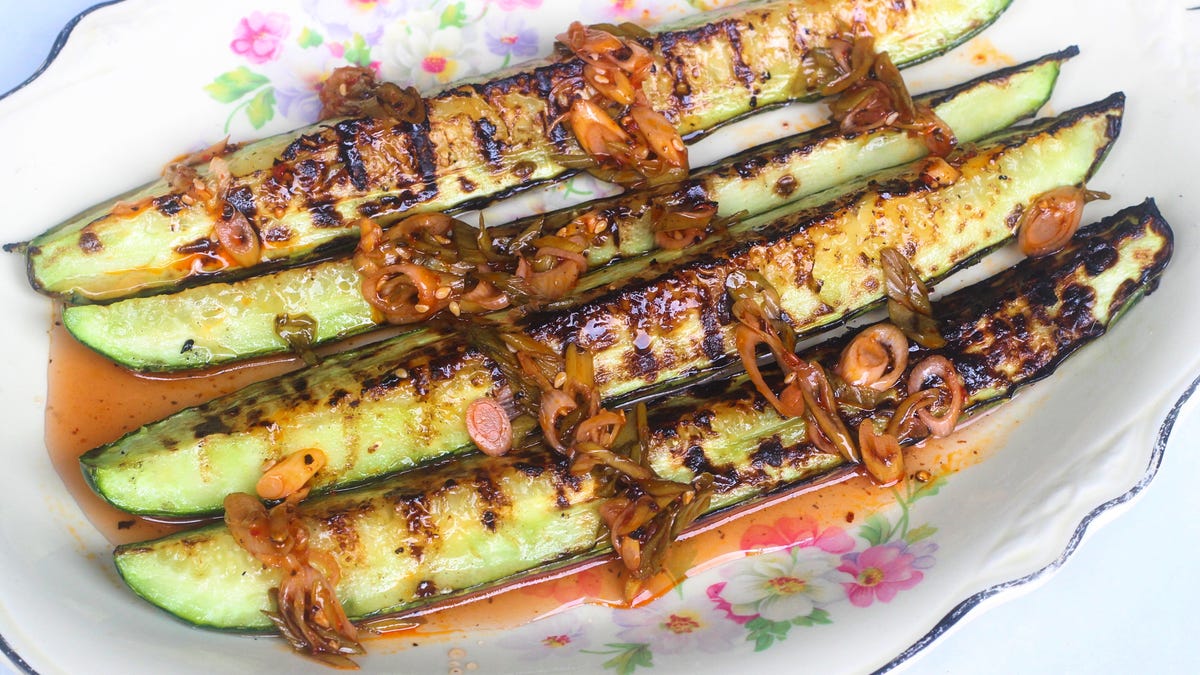
Illustration for article titled You Should Be Grilling A CucumberPhoto: Claire LowerGrill bossGrill bossJoin Claire on her journey from Grill Baby to Grill Boss.

We tend to think of cucumbers as cool and crispy, best smashed and served in salads or in brine and pickled. But a cooked cucumber has beauty, especially a grilled one.

Cooked cumbers are surprisingly sweet and fragrant, with an intoxicating aroma that is similar to, but not identical to, a zucchini. Thanks to their extremely high moisture content, they stay firm when exposed to high heat, giving you a spear with a crisp, juicy inside and a deeply aromatic outside. I like grilled pickles a lot more than I was prepared, I say.

And high heat is key when grilling these babies – you don’t want to fry your cukes, you just want to give them a little outside color and char. The larger your segments, the cooler and firmer they’ll stay inside. I grilled cucumber halves and cucumber quarters, and both are good, although quartering gives extra surface to brown (and browning is equal to taste). As for the skins, you can leave them on or peel them off. I like the touch of bitterness they add and they blow in a delightful way.

Aside from this little knife (and / or peeling) job, grilled cukes require little preparation. Throw them in enough oil to coat them – something neutral is preferable, but I used cheap olive oil and they turned out great – and beat them up with a few generous pinches of salt. Grill over high heat until browned, blistered and slightly softened. Let them cool to room temperature, then drizzle or pour a salty, sour dressing or sauce over them, or chop them into pieces and toss them with a salad. I also think they’d make a killer tea sandwich. You know the variety – cream cheese and white bread could always benefit from a small dimension, and grilled pickles have at least five.

G / O Media can receive a commission

Malaysia now has extra circumstances per million individuals than India

0
Malaysia now has extra circumstances per million individuals than India

SINGAPORE – Malaysia’s daily Covid-19 cases are increasing rapidly and have outperformed India in one critical respect, according to statistics website Our World in Data.

India has been experiencing a devastating second wave since April and has the second largest Covid case load in the world. The country’s daily number of cases, while declining, has increased with hundreds of thousands of infections – far more than the few thousand per day in Malaysia.

But Malaysia’s daily Covid infections per million people – for seven days – have surpassed India’s since Sunday, data from Our World in Data showed. Latest statistics showed that Malaysia reported 205.1 cases per million people on a 7-day rolling basis on Tuesday, compared to the 150.4 cases in India.

Malaysia’s population of around 32 million is much smaller than India’s 1.4 billion.

In general, the actual number of Covid-19 cases is higher than the number of cases reported worldwide, mainly due to a lack of testing. In India, several studies found that cases were likely to be severely underreported.

However, it is not the first time that Malaysia has overtaken India in this measure. Our World in Data showed that Malaysia’s daily cases per million people between November 15 last year and March 27 this year were also higher than India’s.

Malaysia, a country in Southeast Asia, has been grappling with a surge in coronavirus cases since the last few months of 2020. The government has tightened restrictions several times since then, but stopped short of a full lockdown.

The country reported a record rise of 7,478 coronavirus cases on Wednesday, leading to cumulative infections of more than 533,300, data from the Ministry of Health showed. More than 2,300 people have died and 700 infected people are in intensive care units, the ministry said on Tuesday.

Dr. Malaysia’s general manager of health, Noor Hisham Abdullah, said in a Twitter post Tuesday that the country’s daily Covid-19 cases “could follow an exponential trend” and spark a “vertical surge”.

Noor Hisham, a leader in Malaysia’s fight against Covid, also warned that “we must prepare for the worst” and urged people to stay home to break the chain of transmission.

The rapid increase is due to the fact that Malaysia – and many developing countries around the world – are struggling to secure supplies of Covid vaccines.

Malaysia has approved the use of Covid-19 vaccines developed by Pfizer-BioNTech, Oxford-AstraZeneca University and Chinese biotech company Sinovac. The government said it intends to vaccinate 80% of the population by the end of the year, but so far only about 5% have received at least one dose, data from Our World in Data showed.

Why sweaty folks ought to flush extra and bathe much less

0
Why sweaty folks ought to flush extra and bathe much less

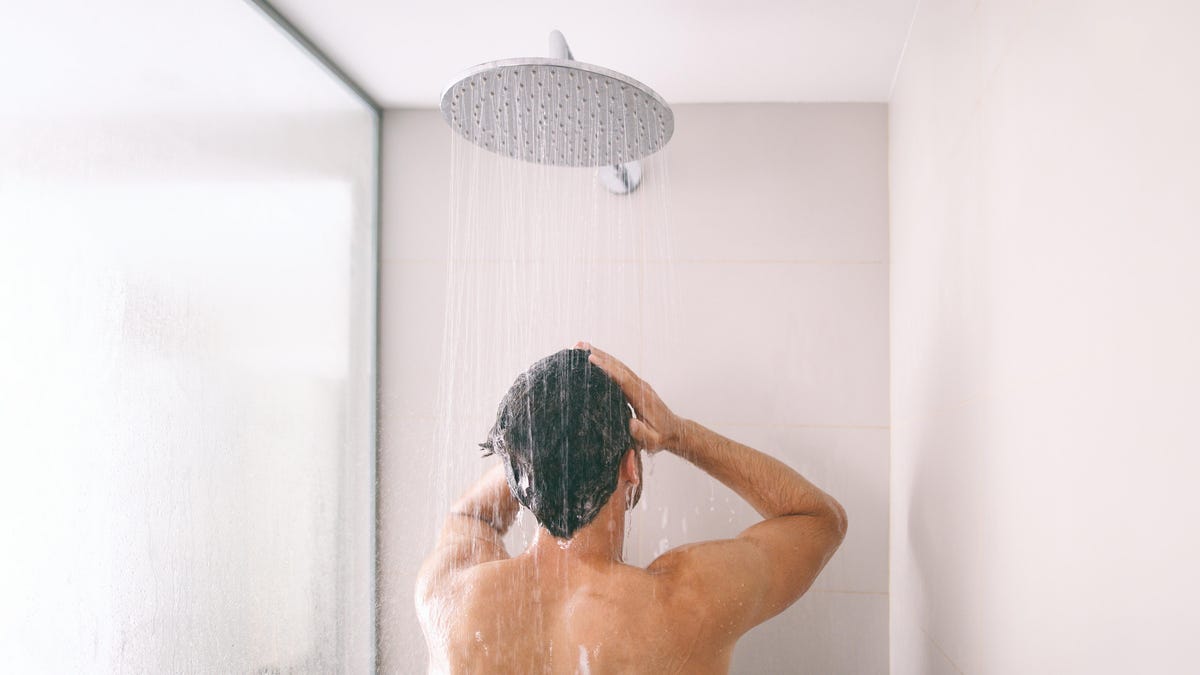
Illustration for article titled Why Sweaty People Should Flush More And Shower LessPhoto: Maridav (Shutterstock)

Where most people have to dab their foreheads, my sweat glands trigger an inexorable tide when it’s hot outside. The technical term for my plight is “sweaty bastard,” and you may know our breed.

My body regularly gets as slick as an oil rig in the summer, so I’ve long been an advocate of showering as much as necessary. Whereas rarely showering is totally cool Under the right circumstances, people like me have to do just the opposite during the hot months to maintain the appearance of a normal person.

But showering several times a day can feel unnecessary at best and a funky waste of water at worst, not to mention attacking your skin. To that end, if you’re sweaty like me, I recommend rinsing off while you shower – and yes, there is quite a difference.

How is flushing different from taking a shower?

Showering is part of leisure time, at least in some ways; When showering, you can enjoy the hot water and stable water pressure. Rinsing, however, is purely pragmatic and is intended to rid your body of the excess bacteria that have likely buried themselves in your skin after the last body rain.

G / O Media can receive a commission

Rinsing is actually not a pleasant activity. You don’t flush because you want to – you flush because you have to. For this purpose, rinsing should be short and to the point. There is no such thing as daydreaming, you are not exploring new soaps and peeling methods, because rinsing is little more than damage control. You can rinse with either hot or cold water, but your rinse shouldn’t take more than two to three minutes.

The nice thing about flushing is that you can do it as many times as you want since you are not abusing the system. You really shouldn’t have to flush more than twice in any given day; The impetus for flushing is to save water. Therefore, the cumulative effect of your flushing schedule should be the same as that of a thorough, but not overly indulgent, shower.

How do you rinse to avoid getting too sweaty?

As mentioned earlier, washing up is a pragmatic ritual. You rinse to cleanse yourself and nothing else. (This technically goes for showers, but people do all sorts of things in the shower that don’t involve actually bathing). To rinse off, get in the shower and scrub yourself with soap – or don’t even use soap if you’re concerned about skin irritation and don’t have body odor. You probably don’t need to shampoo your hair unless it’s littered with sand from the beach or you haven’t washed it in a while. A nice cool douche is also a great way to lower your body temperature.

Flushing is a seasonal practice and should be used with caution – taking into account the environment and your sweat glands. Showering too often can be bad for your skin, and putting too much soap on your skin can be kill bacteria that are actually good for you. Same goes for shampooing, which you should still only be doing when you need it.

For all of my immensely sweaty brothers out there, I ask all of you to flush twice a day over the summer. After all, showering could be too much for the earth – not to mention your sensitive skin – to handle.

Bitcoin worth jumps again above $ 40,000 after a wild week of buying and selling

0
Bitcoin worth jumps again above $ 40,000 after a wild week of buying and selling

A photo illustration depicting the cryptocurrency bitcoin.

Jakub Porzycki | NurPhoto via Getty Images

Bitcoin price surged back above $ 40,000 on Wednesday morning, a week after the price fell 30% to around $ 30,000.

The world’s most popular cryptocurrency traded at $ 40,344.50 on Wednesday at 5:24 a.m. ET, up over 5% over the past 24 hours, according to Coin Metrics data.

All of the other major digital coins were also on Green Wednesday. The price of Ethereum has increased over 10% in the past 24 hours to $ 2,865.61, while the price of Dogecoin has increased a little more than 2% to 36 cents per coin.

The crypto sell-off last week came after authorities in China and the US tightened regulations and tax compliance on cryptocurrencies.

Chinese authorities on Friday called for tighter regulation of crypto mining and trading to reinforce the rules announced in 2017, and the U.S. Treasury Department announced on Thursday that it would require stricter compliance by crypto with the IRS.

But the cryptocurrency market is trying to offset some of the losses this week after falling again to nearly $ 31,000 on Sunday.

Bitcoin’s recent price spike is due to Tesla CEO Elon Musk speaking to Bitcoin miners in North America about renewable energy solutions on Monday. In an article published on Monday, hedge fund billionaire Ray Dalio said he had bitcoin.

Read more about cryptocurrencies from CNBC Pro

Watch as BTS reveals their secret hand gestures and prepares to soften

0
Watch as BTS reveals their secret hand gestures and prepares to soften

BTS is known for his clever lyrics, but the hugely popular group apparently sends subliminal messages as well.

During their visit to The Late Show on Tuesday May 25th, the musicians revealed that their famous finger hearts aren’t the only hand gestures they use to communicate with fans. All seven members –Jin, Suck, J-Hope, RM, Jimin, V. and Jungkook– Participation in the segment after an introduction by the host Stephen Colbert.

RM started the video with the words: “Hello, this is RM from BTS. A few years ago we helped popularize finger hearts, a symbol that means love and affection. But that’s just one of many popular gestures we do tonight. Me and the guys at BTS will teach you the rest. “

Each of the seven men showed creative use of his fingers, including V, who clearly had food in his brain.

“This is a V, which is V to my name, but it also means ‘peace,'” he explained, holding up a peace sign. “Or better yet, if you add a finger, ‘slice of pizza’. Looks delicious, but remember, don’t eat your fingers.”

POPULAR POSTS