Home Blog Page 180

Watch Queen Elizabeth II fortunately wield a sword to chop cake on the G7 occasion

0

The three-day summit will bring together the leaders of the Group of Seven (G7) wealthy nations, which include the United Kingdom, United States, Canada and France, as well as representatives from a few other countries, to discuss issues such as coronavirus vaccines, economic recovery and climate change. The Eden Project is a group of bio domes that create a rainforest environment.

Also on Friday, the Queen and the heads of state and government took official photos together. “Should you look like you are having fun?” she asked her, provoking laughter, according to Reuters.

“Yes,” British Prime Minister Boris Johnson answered. “We enjoyed ourselves despite the appearances.”

The Queen will meet the Bidens again on Sunday 13 June for lunch at Windsor Castle to close the G7 summit.

On Saturday June 12th, the Queen was busy at another event at the castle, her current home. It was one thrown in her honor. She took part in a scaled-down and socially distant annual military parade Trooping the Color, her annual belated birthday party. It usually shows many members of her extended family, but this time she was only accompanied by her cousin Prince Edward, the Duke of Kent. Last year’s event was canceled due to the coronavirus pandemic.

See photos below of the Queen with fellow royals and world leaders at the G7 summit on Friday:

Biogen Alzheimer’s drug and the brand new battle for dementia remedy

0

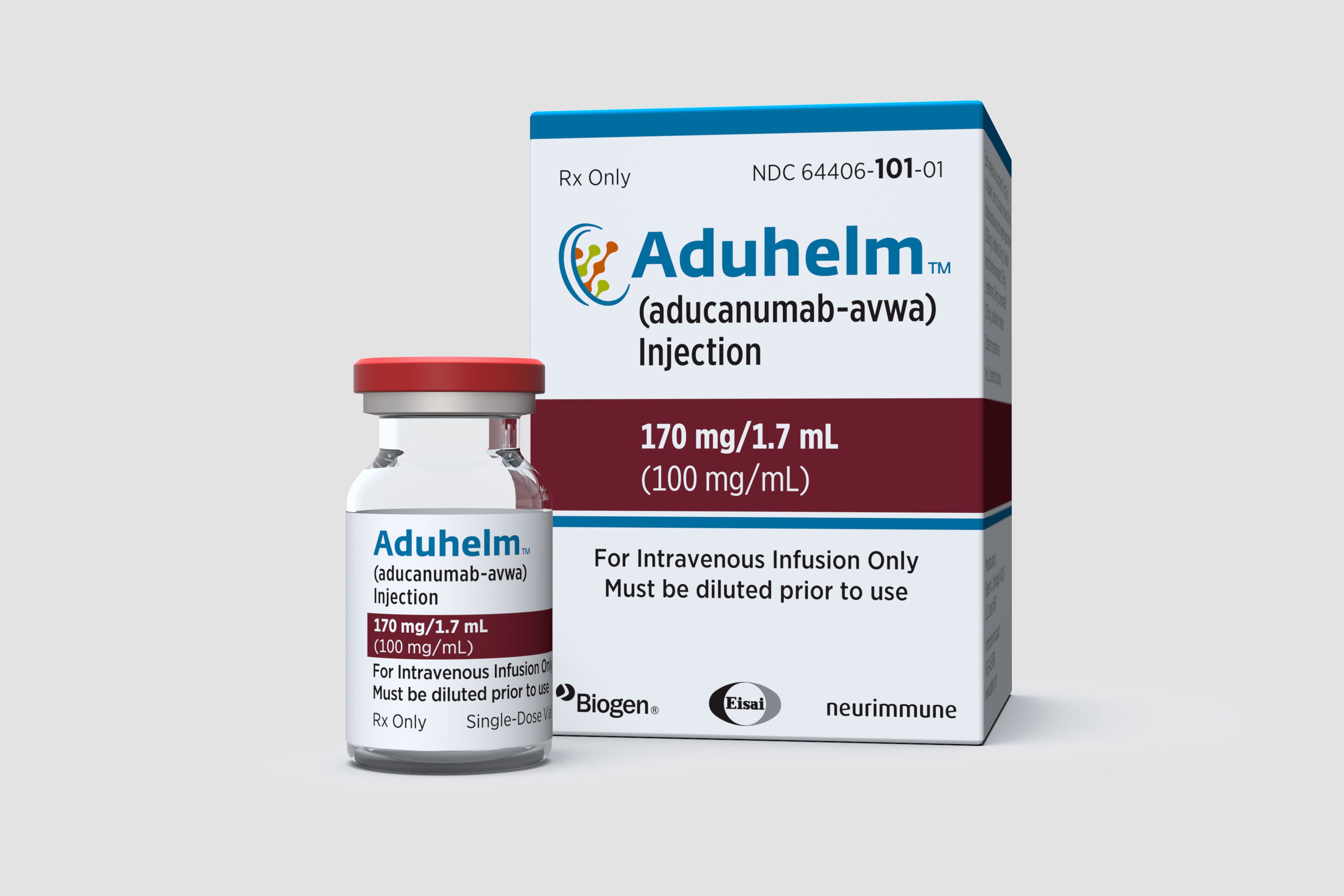
Aduhelm from Biogen

Source: Biogen

The FDA approval of Biogen’s Alzheimer’s drug Aduhelm marked a milestone in Dr. Paul Aisen. The director of the Alzheimer’s Therapeutic Research Institute at USC has focused on the treatment of neurodegenerative disease for the past three decades and in recent years has helped guide this particular drug through the various phases of clinical trials.

But as he sat in his sun-drenched San Diego office in early June, he felt slightly puzzled by the way the Food and Drug Administration approved their use in early June on an “accelerated” basis, normally reserved for cancer drugs. This meant that the clinical benefit was considered likely, but approval for long-term use would be the subject of a larger study in a fourth phase of studies.

Aisen, who works as a paid advisor to Biogen, emphasizes the “unusual nature” of the regulator’s green light, as an advisory board of experts voted and publicly opposed the approval, and insists that there were still “many questions the “I have – they still have no answers.”

Three members of the FDA’s panel that oversees the research have resigned since it was approved this week, including Dr. Aaron Kesselheim, a medicine professor at Harvard Medical School, who said in a letter the agency’s decision on Biogen was “probably the worst drug approval decision in history.” recent US history. “

Last November, that panel said in an 8-1 vote that Biogen’s late-stage phase did not provide “strong evidence” showing that aducanumab is effective in treating Alzheimer’s; two other panellists said the data was “uncertain”.

While Aisen sees Aduhelm as an “effective treatment” for a disease that affects millions of Americans, he also has concerns about the impact of the FDA’s decision on the range of other potential treatment options that are in the late stages of development.

An immediate challenge facing other teams working on a broader Alzheimer’s drug pipeline, he said in a recent video call, would be to keep participants in ongoing studies, let alone attract new ones.

“In most cases,” he said, many people with Alzheimer’s disease would drop out of other drug trials to begin treatment with the newly approved Aduhelm. Leaving them would make the study data for these alternative drugs less useful, even if the drugs in question might one day prove to be safer, more effective, or more suitable for different stages of the disease. But perhaps pervertedly, he still regards Aduhelm’s approval as “a boost to these efforts – a powerful boost”.

Over 6 million Americans suffer from Alzheimer’s

In the past few years, some large pharmaceutical companies have abandoned brain disease research efforts, including Pfizer and Boehringer Ingelheim in 2018 – in fact, Biogen Aduhelm had given up at one point during clinical trials in 2019 before reversing its decision – after decades of failure in search of a breakthrough.

The controversy surrounding the Biogen drug, including its potential cost, is hitting a massive, unmet need for dementia treatment and a disease that costs the US up to $ 259 billion annually. The Alzheimer’s Association estimates that more than 6 million Americans have Alzheimer’s or some other form of dementia, and by 2050 that number could reach over 12 million people, which costs a trillion dollars a year.

Because of this, some dementia drug experts are focusing on the new attention and funding, rather than the potential downsides of Biogen approval, said Dr. Jeffrey Cummings, a neurologist at the University of Nevada, Las Vegas, who does an annual review of. publishes Alzheimer’s drug development pipeline. His research consistently showed that drug failure rates prior to Biogen’s approval were 99.6 percent, a stark contrast to 1 in 5 successful cancer drugs (20%).

Cummings says that any short-term adverse side effect for other drug trials “will be overcome, if at all, by increased interest from companies, venture capital, and biotechnology once they see that there is a way to get approval for a particular drug”. Illness.”

In recent history, the National Institutes of Health spent two to three times more research on heart disease and cancer than they did on dementia, and the lack of qualified participants in clinical trials also slowed progress.

Next in the dementia drug pipeline

For the handful of other Alzheimer’s drugs in development hoping to overcome the same regulatory hurdles and prove their effectiveness – including Eli Lillys Donanemab, Roches Gantenerumab, and Eiseis Lecanemab – there could be a silver lining, the first mover advantage to cede to Aduhelm.

After decades of expensive but largely unsuccessful research attempts, pharmaceutical giant Eli Lilly’s CEO David Ricks said that after a series of positive phase two results for its Donanemab offering, his company is “getting closer and closer to the goal”.

Speaking at CNBC’s Healthy Returns Summit in May, a month before the FDA approved Aduhelm’s rival Biogen, he said his team felt “good about the probability of success” and said he wanted an “accelerated” route too explore what he called “adaptative avenues for the FDA to consider earlier study of data” that “should be used in a serious and widespread disease like Alzheimer’s”.

However, he conceded that recruiting for the next phase of the studies would require a significantly larger cohort of participants, and since it would take 18 months, he did not expect a new approved product until late 2023 at the earliest.

Several experts told CNBC that the Biogen drug’s unique threshold for regulatory approval, with the treatment potential appearing to trump uncertain real-world benefits, efforts of competitors like Lilly, who are focused on drug development on relatively based on similar techniques.

Aduhelm’s own clinical study data had shown that the drug successfully attacked and cleared clusters of a certain type of protein that many researchers believe may be responsible for Alzheimer’s disease. But it didn’t offer enough evidence to prove that the drug provided cognitive benefits to patients.

Debate on targeting amyloid beta formations

Known by scientists as aducanumab, it works by offering a set of identical antibodies that are cloned from white blood cells. These antibodies are chosen for their targeting abilities, as they can identify specific proteins called beta-amyloids that have built up certain formations in the body.

There is ample evidence that these beta-amyloid formations, also known as “pathological aggregates” or “plaques,” are a major cause of Alzheimer’s disease, although the exact causal mechanisms are not yet fully understood, according to Christian Pike von USC’s Leonard Davis School of Gerontology. Nonetheless, he says the antibodies can help prevent these plaques from forming before other particles are caused to break them apart, a process that is clearly identifiable in before and after neural imaging.

As an analogy, it may be helpful to think of the amyloid beta proteins as young people walking through a city during the day, where the city is the human body and the day is a human lifespan. In certain cities, when afternoon turns into evening, individual young people gather, and some of these gatherings can become toxic and begin to cause problems. The antibodies supplied by Aduhelm act like police officers arriving at the scene, identifying disruptive gatherings, surrounding them, separating them, and then instructing bystanders to disperse the young people.

“When you say, ‘Well, hey, the FDA is buying in that general concept,'” Pike said on a phone call, “if we can remove beta-amyloid from the brains of people with the disease, even if we can there is limited evidence of cognitive benefits, “he continued,” there could be a variety of different therapies that would qualify under these criteria.

The long string of past failures within the Alzheimer’s pipeline that targeted beta-amyloid will continue to weigh on optimism until conclusive evidence is produced – something this week’s controversy over the first new approved Alzheimer’s drug in decades shows has not yet been done.

“What we’re going to find out by using this drug one way or another is whether or not the amyloid clearing hypothesis is correct,” says USC health economist Darius Lakdawalla, who argues that Biogens will continue to test it Drug will prove useful to this confirmatory experiment.

“If it’s right, then I think it opens the door to a lot of innovation, a lot of drug candidates that will try to remove amyloid in the pursuit of that hypothesis in the future.”

A yr later, tech corporations’ calls to control facial recognition met with little progress

0

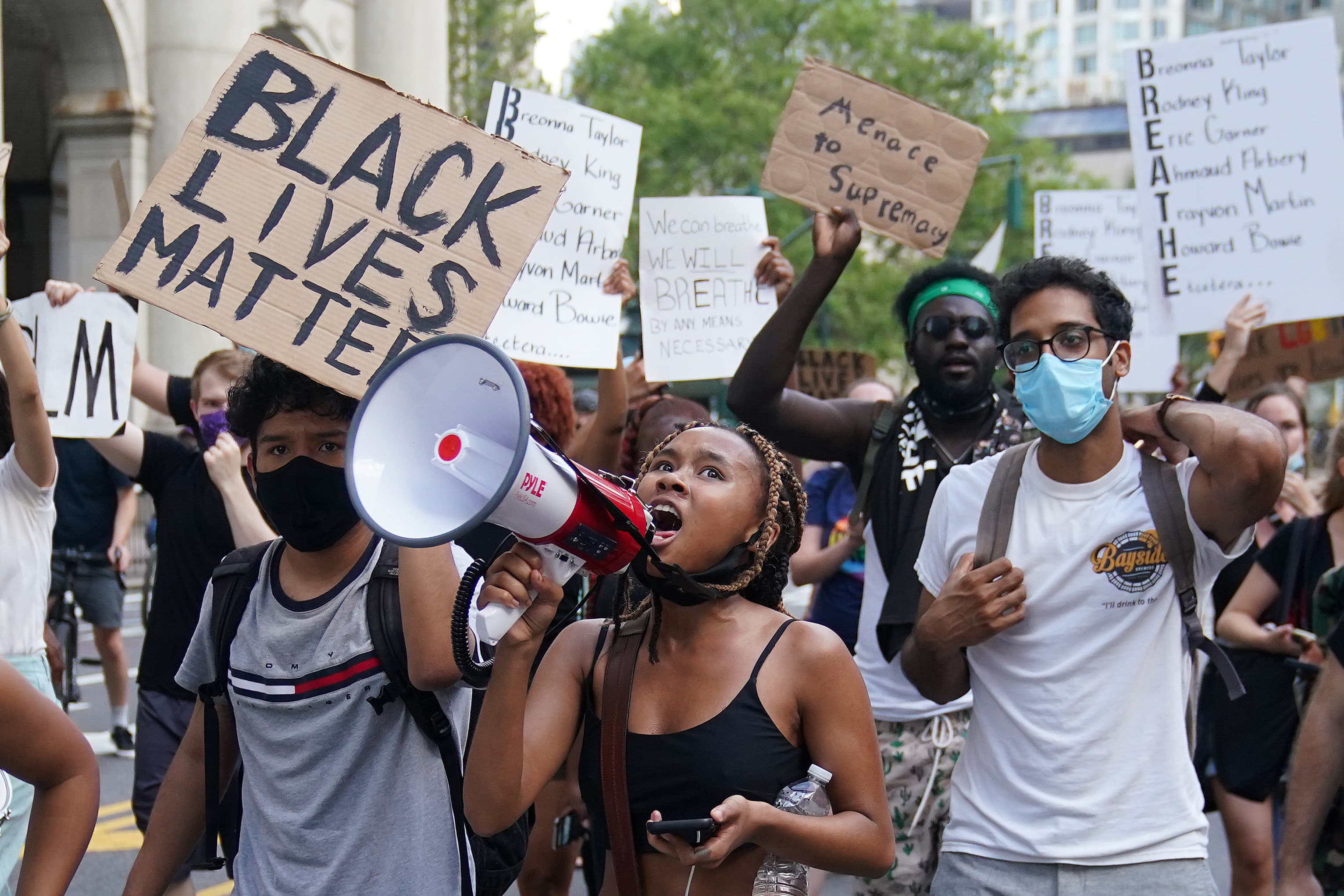
People protest in the street outside a protest to defund the police in a place they are calling the “City Hall Autonomous Zone” in support of “Black Lives Matter” in the Manhattan borough of New York City, New York, U.S., June 30, 2020.

Carlo Allegri | Reuters

In June of last year, following pressure from civil rights advocates and national protests sparked by the murder of George Floyd, three of the biggest names in facial recognition technology self-imposed restrictions on their sale to police.

But after a year of public discussions over the state of policing in America, there’s been almost no progress on how to regulate facial recognition.

That’s left companies like Amazon and Microsoft, who enacted moratoriums to give Congress time to come up with fair rules of the road, in limbo. IBM, by contrast, said it would exit the business entirely.

In the year since these tech companies pressed pause on facial recognition, lawmakers are still grappling with how to properly regulate the technology at the state and federal level. A coalition of Democrats have pressed for a pause on the government’s use of the technology entirely until they can come up with better rules. So far, most of the action has taken place in a handful of states.

Privacy and civil liberties advocates say they view the moratoria by companies as a promising first step, but they also remain wary about other worrisome forms of surveillance that technology companies continue to profit from.

And while Amazon and others restricted the sale of their facial recognition technology, police seem to have used similar tools during the widespread protests around police brutality last summer, though law enforcement has not been forthcoming about their use.

The unique challenge of facial recognition

Facial recognition poses unique risks to citizens, privacy advocates say, even when compared with on-the-ground police surveillance. 

“With most of the digital surveillance, the difference isn’t that there’s more of a court oversight for that sort of activity in the analogue space, the difference is the cost,” said Albert Fox Cahn, Executive Director of the Surveillance Technology Oversight Project (STOP). While trailing someone undercover requires a huge investment of time and money, creating fake social media pages to keep tabs on people is cheap and quick, Cahn said.

Matt Mahmoudi, a researcher and advisor on artificial intelligence and human rights at Amnesty International, said another issue lies in the way facial recognition can be used without the subject’s knowledge.

“In a standard police lineup you’re well aware that you’re being lined up,” Mahmoudi said. “In the case of facial recognition, you have no idea that you’re in a virtual lineup. You might at any moment be in a virtual lineup.”

The sense that facial recognition could be deployed at any time — and the lack of transparency around how law enforcement uses the technology — could chill speech and free expression, activists fear.

Facial-recognition grid

Stegerphoto | Peter Arnold | Getty Images

The potential threat of such tools is especially salient for Black and Brown people. Facial recognition tools have historically been less accurate in identifying them, partly because the algorithms tend to be trained with datasets that skew white and male.

Research has indicated that facial recognition software may incorporate accidental racial and gender bias. In 2018, MIT computer scientist Joy Buolamwini and renowned AI researcher Timnit Gebru co-authored a landmark paper showing IBM and Microsoft’s facial recognition systems were significantly worse when it came to identifying darker-skinned individuals.

Additionally, studies by the American Civil Liberties Union and M.I.T. found that Amazon’s Rekognition technology misidentifies women and people of color more frequently than it does white men.

Proponents of facial recognition technology, including Amazon, have argued that it can help law enforcement track down suspected criminals and reunite missing children with families. Amazon also disputed the ACLU and M.I.T. studies, arguing that researchers used Rekognition differently than how it recommends law enforcement agencies use the software.

Rep. Bobby Rush, D-Ill., himself an activist who joined the Student Nonviolent Coordinating Committee during the Civil Rights Movement of the 1960s and co-founded the Illinois chapter of the Black Panther Party, raised concerns about the technology’s biases and supported a federal moratorium on its use.

“There’s been a generations-long, I guess you would call it, trope in the Black community that all Black people look alike,” Rush said in an interview with CNBC. “Technically, with the advent of this facial recognition technology, that trope has become a truth.”

Tech companies are still ‘monetizing surveillance’

Amazon, Microsoft and IBM have placed sweeping restrictions on their sale of facial recognition tools to police, but law enforcement agencies still have a wealth of surveillance tools at their disposal. 

Microsoft has played a large role in aiding police surveillance outside of facial recognition. The company developed the Domain Awareness System in partnership with the New York Police Department, according to the department’s site. The system is billed as a “crime-fighting and counterterrorism tool” that uses “the largest networks of cameras, license plate readers and radiological sensors in the world.” Microsoft did not comment or provide further information on the DAS.

Amazon’s smart home security subsidiary, Ring, has also faced intense scrutiny from privacy advocates over its rapidly expanding work with police. Since 2018, Ring has formed more than 2,100 partnerships with police and fire departments that offer them access to video footage recorded by its users’ internet connected cameras. Video clips are requested through Ring’s social-media-esque community safety app, called Neighbors, where users can upload and comment on recorded footage and discuss goings on in their area. 

Ring doesn’t disclose sales of its products, but in a letter to lawmakers last January, it said “there are millions of customers who have purchased a Ring device.” 

As Ring’s police partnerships have grown, privacy advocates have expressed concern that the program, and Ring’s accompanying Neighbors app, have turned residents into informants, while giving police access to footage without a warrant and with few guardrails around how they can use the material. 

Ring has argued it creates “safer, more connected communities.” Amazon in 2018 claimed that Ring’s video doorbell product reduces neighborhood burglaries by as much as 55%, though recent investigations by NBC News and CNET found there’s little evidence to support that claim.

Ring’s partnerships with public safety agencies have only grown in the year since Amazon put a pause on selling Rekognition to police. The company has announced 468 new partnerships with police departments since June 10, 2020, public records published by Ring show.

In the latest sign of how much the program has expanded, all 50 U.S. states now have police or fire departments participating in Amazon’s Ring network, according to data from the company’s active agency map.

Following Amazon’s moratorium on Rekognition and amid global protests around police violence, civil liberties and human rights groups seized on the moment to call for Ring to end its partnerships with police. At the time, the Electronic Frontier Foundation argued that Amazon’s statements of solidarity with the Black community rang hollow, given that Ring works with the police, providing them with tools that advocacy groups fear will heighten racial profiling of minorities.

Ring told CNBC in a statement that the company doesn’t tolerate racial profiling and hate speech in content shared from Ring devices and on the Neighbors app.

Privacy advocates who spoke to CNBC said they believe Ring doorbells and Rekognition raise similar concerns in that both products are adding to an increased network of police surveillance. 

“[Amazon is] clearly trying very hard to monetize surveillance technologies and to cozy up to police departments to make it profitable for themselves,” said Nathan Freed Wessler, a senior staff attorney with the ACLU’s Speech, Privacy and Technology Project. “Ring is less concerning in some fundamental ways than face recognition, but it’s really worrisome in that they are basically placing little surveillance cameras in residential neighborhoods across the country and providing police with a very efficient way to try to get access to that footage, which provides law enforcement with just a huge wealth of video of people going about their lives that they never would have had access to before.”

Police need consent to gain access to Ring camera footage. That process became more transparent as a result of an update by Ring last week, which requires police and fire departments to submit requests for user video footage via public posts in the Neighbors app. Previously, agencies could privately email users to request videos. Users can also opt out of seeing posts from public safety agencies in the Neighbors app.

Ring has said that the footage can be a valuable tool to help police investigate crimes like package theft, burglaries and trespassing. But advocates and lawmakers worry that Ring devices will lead to increased surveillance and racial profiling.   

In February, the Electronic Frontier Foundation obtained emails from the Los Angeles Police Department that showed the department requested access to Ring footage during Black Lives Matter protests last summer. The EFF called it “the first documented evidence that a police department specifically requested footage from networked home surveillance devices related to last summer’s political activity.”  

“The LAPD ‘Safe L.A. Task Force’ is asking for your help,” reads one email from LAPD Detective Gerry Chamberlain. “During the recent protests, individuals were injured & property was looted, damaged and destroyed. In an effort to identify those responsible, we are asking you to submit copies of any video(s) you may have for [redacted].”

Ring said its policies prohibit public safety agencies from submitting video requests for protests and other lawful activities. The company added that Ring requires all police requests for video in the Neighbors app to include a valid case number for active investigations, along with incident details.

Privacy and civil liberties advocates not only worry that home surveillance devices like Ring could lead to increased surveillance of protesters, but that Ring footage could be used in concert with other technologies, like facial recognition, so that police can quickly and easily identify individuals.

Law enforcement agencies aren’t prohibited from sharing Ring footage with third parties. Amazon told lawmakers in 2019 that police who download Ring footage can keep the videos forever and share them with anyone, even if the video includes no evidence of a crime, The Washington Post reported.

“Once police get that footage, if they’re in one of the many cities that does not yet ban face recognition, they can take Ring footage and then use a different company’s face recognition system to identify one person, or for that matter, anyone who walks by,” said Wessler. “There would be nothing technologically stopping them from running every face through the system to try to identify people.”

For its part, Ring said last August that it doesn’t use facial recognition technology in any of its devices or services and wouldn’t sell or offer the technology to law enforcement.

Facial recognition and protests

Last summer, privacy advocates warned of the dystopian ways in which protesters for racial justice could be tracked and identified by police. Articles about how to disguise faces with makeup and masks and secure smartphones from sending out detailed location information bounced around progressive circles. 

A year later, there have been a handful of reports about how facial recognition and other surveillance technology might have been used on protesters. But activists say that the information that’s become public about protest surveillance barely scratches the surface of law enforcement capabilities — and that’s part of the problem.

In many cases, law enforcement is not made to disclose information about how they surveil citizens. It wasn’t until last June, in the midst of the protests, that the New York City legislature passed a law requiring the police department to disclose how it uses surveillance technology on the public. Through a lawsuit over the NYPD’s lack of disclosure around its use of facial recognition, STOP found that the department’s Facial Identification Section handled over 22,000 cases over three years, though little else has been revealed.

“It’s been like walking a little bit in the dark,” said Mahmoudi of Amnesty International. 

In one highly publicized case last summer, the NYPD appeared to use facial recognition to track down Black Lives Matter protester Derrick “Dwreck” Ingram, in an attempted arrest that resulted in an hours-long standoff when Ingram refused to let officers enter his apartment without a warrant. Ingram live-streamed the ordeal on social media as dozens of officers reportedly lined his block and a police helicopter flew overhead. The police eventually left and he turned himself in the next day.

In a statement to CNBC, an NYPD spokesperson said police were responding to an open complaint that Ingram had allegedly assaulted a police officer nearly two months prior during a demonstration by yelling into an officer’s ear with a megaphone. Ingram has denied the NYPD’s allegation of assault and the charges were ultimately dismissed.

Ingram said he was “taken aback” and “shaken” to learn that facial recognition tools seemed to be involved in his investigation. A spokesperson for the NYPD’s deputy commissioner of public information, Sergeant Jessica McRorie, did not comment on whether the tools were used in his case but said the NYPD “uses facial recognition as a limited investigative tool” and a match would not count as probable cause for an arrest.

As protests over the killing of George Floyd continue, here’s how police use powerful surveillance tech to track them

Ingram’s surprise was due in part to his fluency in surveillance tools, having led sessions for other activists on how they could protect themselves from surveillance by using encrypted apps, making their social media pages private and other strategies. Still, he didn’t think he would be tracked in such a way.

Now when he educates other activists about surveillance, he understands protesters like himself could still be tracked if law enforcement so chooses. 

“If the government, if police, want to use tools to monitor us, you will be monitored,” he said. “My pushback is that we should use those same tools to prove the harm that this causes. We should be doing the research, we should be fighting with legislation and really telling stories like mine to make what happens public and really expose the system for how much of a fraud and how dangerous it truly is.”

In the nation’s capital, law enforcement revealed in court documents their use of facial recognition tools to identify a protester accused of assault. At the time, the police official who headed the area’s facial recognition program told The Washington Post the tool would not be used on peaceful protests and was only used for leads. A new Virginia law restricting facial recognition by local law enforcement will soon put an end to the facial recognition system, the Post later reported. The system had been a pilot program used across Maryland, Virginia and Washington, D.C., requiring buy-in from each region.

Rep. Anna Eshoo, D-Calif., attempted to learn more about how the federal government used surveillance tools during the racial justice protests last summer and to urge the agencies to limit their use of such tools, but said she was underwhelmed with the response from those agencies at the time.

“I received high-level responses, but very few details,” Eshoo said in an interview with CNBC. “What remains is a lot of unanswered questions.”

Representatives from the agencies to whom Eshoo wrote — the Federal Bureau of Investigation, Drug Enforcement Administration, National Guard and Customs and Border Protection — either did not respond or declined to comment on their responses or use of facial recognition tools on protests.

Reining in facial recognition technology

Momentum for facial recognition laws has seemed to wax and wane over the past year and a half. Prior to the pandemic, several privacy advocates told CNBC they sensed progress on such regulations. 

But the public health crisis reset priorities and possibly even reshaped how some lawmakers and citizens thought about surveillance technologies. Soon, government agencies were discussing how to implement contact tracing on Americans’ smartphones and the widespread use of masks lent some comfort to concerns about technology that could identify their faces.

The social movement following the murder of Floyd by police renewed fears around facial recognition technology and specifically around how law enforcement might use it to surveil protesters. Privacy advocates and progressive lawmakers warned of a chilling effect on speech and free expression should such surveillance go unchecked. 

Lawmakers like Eshoo and Rush, sent a flurry of letters to law enforcement agencies asking about how they surveilled protests and signed onto new bills like the Facial Recognition and Biometric Technology Moratorium Act. That bill would pause the use of such technologies by federal agencies or officials without permission by Congress.

In an interview with CNBC, Eshoo emphasized that the moratorium was just that — not an outright ban, but a chance for Congress to place stronger guardrails on the use of the product.

“The goal in this is that the technology be used responsibly,” she said. “It can be a very useful and fair tool but we don’t have that now.”

But, Eshoo said, things haven’t moved along as quickly as she’d like.

“I’m not happy about where we are because I don’t think the needle has moved at all,” she said.

Where there has been some change is at the state and local level, where legislatures in Sommerville, Mass., San Francisco and Oakland, Calif. have opted to ban the use of facial recognition technology by their city agencies. California now has in place a three year moratorium on the use of facial recognition technology in police body cameras. Last year, lawmakers in Portland, Ore. passed one of the broadest bans on the technology and Washington state legislators opted to require more guardrails and transparency around the government use of the technology.

It could take more of these laws for Congress to finally take action, just as the rise of state digital privacy laws have added urgency for a federal standard (though lawmakers have yet to coalesce around a single bill in that case either).

Still, many continue to call for a permanent ban of law enforcement use of the tools and for federal regulation. 

“While there’s lots of things happening at the state and local level that are incredibly important, we have to push our federal government to actually be able to pass legislation,” said Arisha Hatch, chief of campaigns at Color of Change.

Privacy advocates also remain wary of industry-supported legislation as tech companies such as Amazon and Microsoft have built up heavy lobbying presences at state capitals across the U.S. to help craft facial recognition bills. 

Microsoft CEO Satya Nadella (L) and Amazon CEO Jeff Bezos visit before a meeting of the White House American Technology Council in the State Dining Room of the White House June 19, 2017 in Washington, DC.

Chip Somodevilla | Getty Images

The concern is that technology companies will push for state laws that, in effect, allow them to continue selling and profiting from facial recognition with few guardrails. 

Advocates point to Washington state’s recently passed facial recognition law, which was sponsored by a state senator employed by Microsoft, as a weak attempt at regulating the technology. Versions of Washington’s law have since been introduced in several states including California, Maryland, South Dakota and Idaho.

Groups such as the American Civil Liberties Union argued the bill should have temporarily banned face surveillance until the public can decide if and how the technology should be used. The ACLU also took issue with the fact that, under the Washington law, it’s legal for government agencies to use facial recognition to deny citizens access to essential services such as “housing, health care, food and water,” as long as those decisions undergo “loosely defined ‘meaningful human review,'” the group said.  

At the federal level, tech giants like Amazon, IBM, Microsoft and Google have all voiced support for establishing rules governing facial recognition. But privacy advocates worry companies are calling for weaker federal regulation that, if passed, could end up preempting stronger state laws. 

“Any federal law that is less than a total ban on police use of facial recognition technology has to have a non-preemption provision,” meaning that the federal law wouldn’t supercede any state laws that are potentially more restrictive of facial recognition technology, said the ACLU’s Wessler. 

Wessler added that any federal facial recognition law must give individuals the right to sue entities, such as police departments, that violate the law.

“Those are the two things that Amazon and Microsoft and the other companies want to avoid,” Wessler said. “They want a weak law that basically gives them the cover of saying, ‘We’re now a safe, regulated space, so don’t worry about it.'”

While it could be a while until federal legislation reining in the technology enters the books, decisions by the private sector to place limits on the use of their products — even if incomplete — could be helpful. Several privacy advocates critical of the technology and companies that sell it agreed that any limits on the use of the tool are significant.

“While it is great that Amazon put a pause and all of the other companies put a pause, people are still developing this and they are even still developing this,” said Beryl Lipton, investigative researcher at the Electronic Frontier Foundation. 

There is little transparency into how facial recognition software developed by big technology companies is being used by police. For example, Amazon hasn’t disclosed the law enforcement agencies that use Rekognition or how many use the technology. Additionally, when it announced its one-year moratorium on facial recognition sales to police, the company declined to say whether the ban applies to federal law enforcement agencies such as Immigrations and Customs Enforcement, which was reportedly pitched the technology in 2018.

Large consumer brands like Amazon aren’t the only ones developing this technology or considering integrating it into their products. Lesser-known companies like facial recognition start-up Clearview AI have only begun to enter the public consciousness for their work with law enforcement. Rank One Computing, another company that supplies facial recognition technology to police, made headlines last year after its face matching service incorrectly matched a Detroit man’s license photo to surveillance video of someone shoplifting, leading to the first known wrongful arrest in the U.S. based on the technology.

That means it can be even more impactful when a company that directly deals with law enforcement or relies significantly on the sector’s business limits the use of facial recognition. Police body camera manufacturer Axon said in 2019 it would not use facial recognition technology for the time being after an independent research board it solicited for advice recommended it avoid the technology due largely to ethical considerations. Lipton said that move felt like “meaningful action.”

WATCH: Concern is growing over police use of facial recognition

The distinction between “waterproof” and “waterproof”

0

Illustration for the article Photo: monte_foto (Shutterstock)

When shopping for electronics, outerwear, watches, or building materials, you have probably noticed that some products are labeled as “waterproof” while others are labeled as “water repellent”. While both offer better protection from water than other items, the two terms do not mean the same thing.

in the an article for BobVila.com, Tom Scalisi explains the difference between “waterproof” and “water repellent” products and gives some tips on shopping for both types of items.

Waterproof vs. water repellent

First, the difference between the two terms. According to Scalisi, waterproof items are impermeable to water, meaning they are completely sealed or in some way protected from the harmful effects of water.

Water-repellent products, on the other hand, repel water and offer a certain degree of protection – but only to a certain extent. “After a certain exposure time or a certain pressure, the water is either soaked or seeped through,” he writes. Here are a few examples for each category.

electronics

It can be difficult here. Scalisi says that some electronics manufacturers market a certain product as waterproof, but then state that the protection only lasts up to a certain point. So yes: that makes them water-repellent, not waterproof. Here is as he explains these restrictions:

Regardless of their marketing, all waterproof speakers, phones, watches and cameras have small seams from the assembly process. Regardless of how tight the parts fit or what type of seals are used, water will penetrate these cracks at a certain depth or immersion depth. When the water pressure exceeds the pressure the seam can hold back, the water goes in.

Because of this, these devices have depth limits or ratings. For example, a digital watch can have a water resistance of 200 meters. That means it can theoretically handle water pressure at depths of up to 200 meters before water can penetrate.

G / O Media can receive a commission

dress

When buying a raincoat or other outdoor clothing, choose something that will keep you dry. But again, waterproof articles and water repellent articles are not the same thing – and they all have desirable properties.

Waterproof fabric, for example, offers the highest level of protection from rain, snow and the elements. But that also means they can get stuffy and make you hot and sweaty (which then makes you wet, if not from the weather). And while water-repellent fabrics don’t keep you dry when it rains, they’re more breathable so you won’t overheat and sweat under them, explains Scalisi.

He also provides additional information the water protection to be observed in building materials as well as kitchen and bathroom floors.

Have a good time Artem Chigvintsev’s birthday together with his cutest photos of son Matteo

0

This is surely a big birthday for you Artem Chigvintsev. Why? Well, it’s his first birthday as a father.

Today, June 12th, the Dancing With the Stars pro turns 39 and we’re sure to be fiancés Nikki Bella and son Matteo Chigvintsev make the day very special. As E! News readers know that Artem and Nikki welcomed their first child on July 31, 2020. After the birth, Artem went to Instagram and wrote: “07/31/2020 please say hello to our beloved boy Chigvintsev. “

And it’s no secret that since becoming a father last year, Artem has completely transformed into a loving father. Whether he’s dancing with Matteo or preparing delicious treats with the family, the Russian-American dancer is always in daddy mode.

In fact, Artem recalled Matteo’s 10-month milestone back in May by writing on Instagram: “I can’t believe Teo is 10 months old today. so precious. @thenikkibella you were a great mom, i love you #nevergrowup #son #family. “

How to decide on outside plant containers to make gardening simpler

0

Illustration for the article titled How To Choose Outdoor Plant Containers For Low Maintenance GardeningPhoto: Lena Suetina (Shutterstock)

People who live somewhere with plenty of outdoor space may have the space to spread out and create a sunken garden – rather than restricting yourself to planters like city dwellers – but container gardening has some advantages. Indeed, choosing the right plants (and the right plants) can make your garden and outdoor space pretty low maintenance.

in the an article for Livingetc, Sarah Wilson Here are some tips on choosing the best (and by that we mean the simplest) planters. Here’s what you should know.

Go big

Leave the smaller pots in there Wilson says:

Pick the largest pots you can find and group them together. Not only do they make an eye-catching statement, but watering and tidying up is easier because they’re all in one place. Another benefit of this simple, easy-care garden idea is that there are only a limited amount of growing plants that can do in one pot, which means less pruning.

And that’s not all. Larger plant containers can mean less time watering. Pro Wilson:

Water thoroughly once a week instead of sparingly and often, which will encourage the roots to stay near the surface where they will dry out faster. Instead, they dig deeper to find moisture. Applying a thick layer of organic material around the base of the plants in spring also helps retain moisture.

G / O Media can receive a commission

Choose easy-care planters

Caring for your plants is one thing, but certain types of planters are self-servicing. Wilson advises Stay away from them:

Always choose containers to plant and then don’t forget about them. Avoid wood, which requires regular maintenance, as well as ceramics and terracotta, which can be a nightmare during winter frosts as they can break.

Further low-maintenance container options are:

  • Weatherproof resin (that looks like stoneware)
  • Regenerated polypropylene
  • Fiber Cotta (a mixture of fiberglass and clay)
  • Aged metals like zinc
  • Weathering steel

New optics and know-how for extra money

0

Kia is the latest move away from cheap drive-away prices for small cars with an updated Cerato sedan and hatchback that starts at $ 25,990 for the car.

Just two years ago, you could pick up a Cerato car for $ 21,990.

However, the new price still undercuts competitors Toyota Corolla by about $ 1,700 and Mazda3 by about $ 3,000, and the generous standard equipment and class-leading seven-year warranty coverage is retained, complemented with a fresh new look, more security, and better Technology.

The manufacturer does without the cheapest manual option, which only accounts for one percent of sales.

The new Cerato comes with wireless Apple CarPlay and Android Auto as standard, both of which are accessible via an 8-inch touchscreen. Oddly enough, only Android Auto works with a wired connection.

The Cerato automatically brakes for cars and pedestrians and keeps you in lane by gently pulling the steering wheel while hiking.

If you want radar cruise control, blind spot warning, or rear cross traffic warning, you’ll need to add the optional safety package, which costs an additional $ 1500.

The base model has fabric seats, hard-wearing plastic surfaces and 16-inch steel wheels as well as rear air-conditioning nozzles and three USB charging points.

The Sport class costs $ 27,990 to drive and has a larger 10.25-inch touchscreen, 17-inch alloy wheels, and a nicer steering wheel, but the safety package is still optional.

The Sport + versions get all safety technology as standard, as well as comfortable heated leather seats and automatically folding side mirrors for $ 31,690.

Top-of-the-line GT versions – priced at $ 36,990 – add a 1.6-liter turbo engine instead of the standard 2.0-liter and sportier chassis setup. There are also heated, cooled, and electrically adjustable sports seats, wireless device charging, 18-inch alloy wheels, and a flat-bottom sports steering wheel.

The Cerato has a spacious cabin with plenty of space for adults in the back seats. The cargo space is above average with 502 liters for the sedan and 434 liters for the hatch.

However, the lack of a digital instrument display on every model is disappointing.

The standard 2.0-liter engine delivers a respectable 112 kW and 192 Nm and is mated to a six-speed car, while the GT’s 1.6-liter engine delivers a whopping 150 kW and 265 Nm, mated to a seven-speed dual clutch -Automatic transmission.

The 2.0-liter engine in the cheaper variants has more than enough grunt for city traffic and motorway driving, but has to be cranked fairly vigorously when overtaking.

Kia’s local suspension setup is excellent. It soaks up bumps and corrugations of all shapes and sizes, while the cab is well insulated from road and tire noise.

However, the steering can feel a little numb.

The advertised fuel consumption is 7.4 l / 100 km, but we did about 8.3 l / 100 km on a mixture of city and winding country roads.

The GT is noticeably sharper to drive, with a deep draft of the turbo engine and lightning-fast gear changes from the double clutch car. It is also not that thirsty and only drinks 6.9 l / 100 km.

The steering feels more direct, and the stiffer suspension helps it corner comfortably. The compromise is a less comfortable ride down pockmarked downtown streets.

While it’s more expensive than before, the Cerato is still great value for money, especially when you consider the seven year / unlimited mileage guarantee and seven year free roadside assistance.

The limited-price service is on the expensive side, however, costing around $ 3,000 for seven years on the cheaper models and $ 3,300 for the GT.

JUDGMENT 3.5 / 5

Nicely styled, packed full of features and at a great price, the Cerato doesn’t do much wrong.

KIA CERATO S VITALS

Price: From $ 27,490 drive-away

Engine: 2.0-liter four-cylinder gasoline engine, 112 kW / 192 Nm

Warranty / Maintenance: Seven Years / Unlimited Mileage, $ 2015 over five years.

Safety: five stars, six airbags, automatic emergency braking, lane departure warning. Blind spot warning and rear cross traffic warning in the optional safety package.

Thirst: 7.4L / 100km

Replacement: Temporary steel

Cargo: 502L (sedan), 434L (hatch)

Find out how to Repair Error 2123-1502 on Nintendo Change

0

Stability issues are uncommon on the Nintendo Switch, but the current 12.0.3 firmware is one of the rare times when an update causes a widespread bug on the console. Many users report that they get error code 2123-1502 when trying to download or update games from the eShop, which prevents them from downloading software. Nintendo briefly paused the rollout of firmware to fix the bug, but it appears that some users are still experiencing the issue.

Fortunately, there are a few workarounds that can fix error 2123-1502 on your switch.

Check your WiFi network

The first possible solution is simple:

  1. Make sure you are connected to the correct WiFi network under System Settings> Internet> Internet Settings> [connection name] > Connect to this network.
  2. Turn off the switch completely (press and hold the power button for three seconds, then select Power options> Turn off).
  3. Reboot the switch and try the download again.

Clear your cache

If these preparatory steps don’t work, Nintendo Customer Service will suggest clearing your Switch user profile cache to resolve the issue. This will delete your console’s web history, including cookies and saved website logins. However, this will not affect your games, downloaded content, user settings, or saved data.

  1. Go to System Preferences> System> Formatting Options.
  2. Choose “Reset cache.”
  3. Select the profile that you want to reset the cache for.
  4. Select “Reset” to perform the reset.
  5. Repeat for all user profiles on the console.

Use Google DNS settings

Another potential solution that some users are reporting is to change your Switch console’s DNS settings to Google DNS in Wi-Fi settings.

G / O Media can receive a commission

  1. Go to System Settings> Internet> Internet Settings.
  2. Select your WiFi network from the network list.
  3. Choose “Change settings.”
  4. Scroll down and change DNS settings to “Manual.”
  5. Set up your primary DNS address 8.8.8.8
  6. Put on your secondary DNS address 8.8.4.4
  7. Choose “To save.”
  8. Go back and try the download again.

If that doesn’t work, or somehow new connection problems arise, go back to network settings and change the DNS settings back to “Automatically.”

Try the download again

The final DIY solution is to just try the download again until it works. Some users claim that they successfully overcome error 2123-1502 this way, so give it a try – however, be aware that it only works for this particular download. The same error message will likely appear on other downloads as well.

Again, since the bug is rooted in firmware 12.0.3, these are only temporary solutions. The bug could persist until Nintendo finds a solution and releases another patch.

[Nintendo Life]

Biden desires to induce G-7 leaders for a unified strategy to combating China

0

(LR) President of the European Council Charles Michel, Japan’s Prime Minister Yoshihide Suga, Germany’s Chancellor Angela Merkel, France’s President Emmanuel Macron, Great Britain’s Prime Minister Boris Johnson, US President Joe Biden, Canada’s Prime Minister Justin Trudeau, Italy’s Prime Minister Mario Draghi and the President of the European Commission Ursula von der Leyen will take part in a working session at the G7 summit in Carbis Bay, Cornwall, on June 11, 2021.

Ludovic Marin | AFP | Getty Images

WASHINGTON – President Joe Biden will urge G-7 leaders to take concrete steps to counter China’s increasing global influence on Saturday, the second day of the annual summit.

One of those steps will be a global infrastructure initiative called “Build Back Better for the World”. The multi-billion dollar plan, parts of which have already been announced, aims to create an alternative to China’s Belt and Road infrastructure project, which a White House official described as “higher quality”.

China has been developing land and sea routes between East Asia and the rest of the world for nearly a decade. Critics claim the country has also tried to use these investments to build political goodwill and discourage criticism of its leadership and institutions.

The new G-7 plan is partially financed with existing US contributions to infrastructure financing abroad through institutions such as the World Bank and the International Monetary Fund.

The Biden administration also plans to work with Congress to increase US contributions to the G-7’s development finance toolkit.

“The hope is that together with G-7 partners, the private sector and other stakeholders, we will soon collectively catalyze hundreds of billions of dollars in infrastructure investments for low and middle income countries,” said a senior civil servant who called on Friday anonymity was granted with reporters to discuss ongoing negotiations.

The Biden administration staff insist that the project is not about choosing countries between the US and China.

“This is about offering a positive, alternative vision and approach that they want to choose,” a second government official told reporters during a briefing Friday.

“What we are promoting is a confident, positive agenda that focuses on attracting other countries that share our values ​​on key issues,” the official said.

Biden’s toughest job on Saturday will be to convince G-7 leaders to take concrete action to combat what the United States calls the “genocide and crimes against humanity” that China predominantly targets Muslim Uyghurs in Xinjiang Province.

But rather than pressuring G-7 leaders to flatly condemn China’s treatment of Uyghurs, Biden will take a more diplomatic approach. The president will argue that China’s use of Uighur forced labor constitutes unfair economic competition.

Biden “will make the world understand that we believe these practices are a violation of human dignity and a tremendous example of China’s unfair economic competition,” said a government official. “It’s about sending a wake-up call that the G-7 is serious about defending human rights and that we must work together to eliminate forced labor from our products.”

But there is no guarantee that Biden can convince the rest of his G-7 partners to take concrete action.

Not all G7 members are “ready to be as confrontational to China as Washington demands,” Denny Roy, a senior official at the East-West Center, told the South China Morning Post.

“Most would rather have a constructive economic relationship while quietly opposing certain Chinese practices,” said Roy. “Even Japan, which is generally restrictive on China, has been reluctant to sign sanctions against China for mistreating Uyghurs in Xinjiang.”

And by early Saturday morning it was not yet clear whether China would be mentioned by name in the later public statement by the G-7 leaders on Sunday, the so-called communique.

“We are pushing to be specific in areas like Xinjiang, where there is forced slavery and where we as the G-7 need to express our values,” a senior Biden official said during the briefing. “But it’s too early to say what will end in the final [communique]. “

China is closely monitoring the G-7 meetings, and earlier this week a government spokesman in Beijing addressed the US plan to put China at the center of the G-7 agenda.

“These confrontations are definitely on the wrong track,” Foreign Ministry spokesman Wang Wenbin said at a press conference. “Alliances, block politics and form small cliques are unpopular and doomed to failure.”

Left to right: Justin Trudeau, Canada’s Prime Minister, Charles Michel, President of the European Council, US President Joe Biden, Yoshihide Suga, Japan’s Prime Minister, Boris Johnson, British Prime Minister, Mario Draghi, Italy’s Prime Minister Emmanuel Macron, Frances President Ursula von der Leyen, President of the European Commission, Angela Merkel, Federal Chancellor, during the family photo on the first day of the Summit of the Group of Seven Heads of State and Government in Carbis Bay, Great Britain, on Friday, June 11, 2021.

Hollie Adams | Bloomberg | Getty Images

The G-7 meetings will end on Sunday, after which Biden will travel to Brussels, where he will attend a NATO summit on Monday. There, too, the US will advocate a strategy to counter China’s global influence.

A Biden government official said the summit will be the first time NATO countries “address China’s security challenge directly in a communiqué.”

However, Biden is expected to face some of the same challenges in Brussels as he did in England: the reluctance of many European countries to jeopardize their deep economic ties with Beijing by confronting China directly over its malevolent acts and alleged human rights abuses.

On Tuesday, Biden will meet with the heads of state and government of the European Union.

Following these meetings, the President is due to hold a summit meeting with Russian President Vladimir Putin in Geneva on June 16.

Suicide makes an attempt amongst younger ladies rose greater than 50% throughout the pandemic, CDCC says

0

Chameleon eye | iStock | Getty Images

Suicide attempts increased among 12 to 17 year olds, especially teenage girls, during the Covid-19 pandemic and got worse the longer the social distancing orders and bans on, according to new data from the Centers for Disease Control and Prevention Government continued.

Visits to emergency rooms in hospitals among adolescents had already increased in early May 2020 as the pandemic spread in the United States, the CDC said in a study published on Friday. From the end of July to the end of August 2020, the average weekly number of emergency room visits for suspected suicide attempts in 12 to 17-year-old girls rose by 26.2% compared to the same period of the previous year.

The disruption of daily life from pandemic lockdowns and social distancing orders could have contributed to the increase in suicide attempts, the CDC said. In spring 2020, there was a 16.8% decrease in emergency room visits for men and women between the ages of 18 and 24 compared to the same period in the previous year.

As of June 2020, 25% of the same age group surveyed adults reported having had suicidal thoughts in the past 30 days related to the pandemic, in line with 2019. However, actual visits to the emergency room for attempted suicide increased during the pandemic, the CDC said With.

For adolescent girls, the average weekly visits to the emergency room for suspected suicide attempts increased by 50.6% from February 2021 to March 2021 compared to the same period last year.

Visits to the emergency room for suspected suicide attempts include visits for suicide attempts as well as some non-suicidal self-harm, according to the CDC.

The data was collected by the CDC from the National Syndromic Surveillance Program emergency department visit data in 49 states. Not all states had consistent emergency room visit dates, and no data on race and ethnicity were available at the time of the study.

Suspicions of suicide attempts are often higher in young girls than in young boys, but in this study the difference was more pronounced due to the pandemic than in previous studies. The study points to an increase in emergency room visits for suspected suicide attempts, not an increase in actual suicides, the CDC emphasized in the study.

The increase in alleged suicide attempts by young people could be attributed to social distancing, including a lack of connection with schools, teachers and friends. Other factors could include mental health barriers to treatment, an increase in substance abuse, and concerns about the health and economic situation of the family at home.

Average emergency room visits due to mental health problems and suspected child abuse have also increased in 2020 compared to 2019, potentially contributing to the increase in alleged suicide attempts.

The study finds that the increased amount of time spent with children at home may have made parents aware of their children’s mental health issues and prompted them to seek emergency room treatment, which may have contributed to the increase.

The study also found that the data likely underrepresented the actual number of alleged suicide attempts as Americans were reluctant to go to hospitals during the pandemic for fear of contracting Covid-19.

If you or someone you know is in crisis, call the National Suicide Prevention Lifeline at 800-273-8255.

POPULAR POSTS