Home Blog Page 279

USA give India uncooked supplies for vaccines, medical provides to battle Covid

0
USA give India uncooked supplies for vaccines, medical provides to battle Covid

Medical workers in protective equipment (PPE) stand on alert in front of the Covid-19 station at Sir Ganga Ram Hospital on April 22, 2021 in New Delhi, India.

Sonu Mehta | Hindustan Times | Getty Images

WASHINGTON – The Biden government announced that it will immediately provide the raw materials needed to manufacture coronavirus vaccines in India as the country works to counter the rise in Covid-19 infections.

In the past few weeks, India has been grappling with a staggering surge in new coronavirus infections. Over the weekend, India set another world record for daily cases, bringing the country’s cumulative total to 16,960,172 cases, according to Johns Hopkins.

“Just as India sent aid to the United States because our hospitals were congested at the start of the pandemic, the United States is determined to help India in its need,” said Emily Horne, spokeswoman for the National Security Council, in a statement on Sunday.

Horne added that the United States would send raw materials India needs to make the Covishield vaccine, as well as therapeutics, rapid tests, ventilators and protective equipment.

“The US Development Finance Corporation is funding a significant expansion of manufacturing capacity for BioE, the vaccine maker in India, so that BioE can produce at least 1 billion doses of Covid-19 vaccines by the end of 2022,” Horne wrote. The US would also send a team of health advisors from the Center for Disease Control and USAID to India.

The announcement follows a Sunday call between Biden National Security Advisor Jake Sullivan and Indian National Security Advisor Ajit Doval. Sullivan “reiterated America’s solidarity with India, the two countries with the highest number of Covid-19 cases in the world,” read an ad on the appeal.

The US response comes after the UK, France and Germany pledged aid to India over the weekend.

On Sunday, Biden wrote on Twitter that his government was “determined to help India in its need”.

Last week, when the United States administered a new record of 200 million doses of the coronavirus vaccine, Biden told reporters that his government was looking for more ways to help internationally.

“We’re looking at what will happen to some of the vaccines we don’t use. We’re going to make sure they can be shipped safely,” Biden said on April 21.

“We don’t have enough confidence to send it abroad now. But I assume we can do it,” he added.

How an anti-mask screed was filmed as a “examine”

0
How an anti-mask screed was filmed as a “examine”

Science hocus-pocus on a blackboardImage: Meet (Shutterstock)

A current paper argued in a magazine called Medical Hypotheses that maybe we shouldn’t wear masks. It cites years of research before we understood the pandemic, and their arguments don’t hold together. But it looks like a scientific study, and it’s been shared on social media and by some news sites like it was a study.

For experts in the field, and for those who have kept pace with research on COVID-19 over the past year, the paper’s claims are clearly unsupported and its reasoning is not new or interesting. It is mainly a repetition of claims that have been debunked time and time again (including here at Lifehacker).

But a lot of people shared it because it looked like a legitimate study. It was often referred to as the “Stanford Study” or the “NIH Study,” and the fact that it was published in a peer-reviewed journal seemed to give it credibility. So let’s look at why these signifiers aren’t actually relevant.

What is the difference between a study and a journal article?

Scientific journals publish a wide variety of articles. Many of them describe a study that I would define as an experiment or a series of experiments trying to answer a piece of a real question. A clinical trial of a drug or vaccine is an example of a study. A statistical analysis of disease rates in a population is another. A laboratory experiment with test tubes and microscopes is another.

G / O Media can receive a commission

However, journals also publish other things, such as reviews that collect previous research and comment on similarities and differences in their results. They also publish opinion and editorials that could certainly make a science-based argument for or against a public health recommendation such as the wearing of masks.

There are also magazines that are, shall we say, weird. The one in which this recently published anti-mask paper appeared is called Medical Hypotheses, and while this is an peer-reviewed journal, it is not about publishing empirically solid studies. It says of itself:

… Medical Hypotheses was therefore born and still exists today to openly consider novel, radical new ideas and speculations in medicine and to open the field to radical hypotheses that would be rejected by most conventional journals.

Getting on PubMed doesn’t make something an “NIH Study”.

The National Library of Medicine, part of the National Institutes of Health, maintains a database of articles published in medical and health-related journals. This database, known as PubMedis a helpful tool for finding articles and sharing abstracts.

However, if you didn’t know, you can follow a link to a PubMed abstract, find there is a large NIH logo in the corner, and assume the paper was published by the NIH or one by the NIH. However, the NIH only runs the database. Very few of the 32 million citations describe the research actually carried out by the institute.

It is also not a “Stanford study”

There are Stanford scientists who have published somewhat questionably motivated research on the pandemicbut that is not the case here. A common tactic used in disinformation campaigns (like the one around) Planemia) is to rely on a person’s previous job title or their association with people or institutions with whom they may have interacted in the past, even if that affiliation is no longer correct or relevant.

In the case of this anti-masking paper, the author stated that he was a member of the “Department of Cardiology, Veterans Affairs Palo Alto Health System / Stanford University, Palo Alto, CA, USA”. But according to Stanford itselfApart from a year as a visiting scholar in 2016, the author is not affiliated with Stanford.

These Red flags did not point out the many people who shared the study, even on multiple local news sites, According to a Reuters Fact Check Report. A popular post from a conservative website used the phrase, “A recent Stanford study published by the NCBI and listed under the National Institutes of Health,” which is doubly wrong. If they had read something further, they would have known better. Sometimes people share things they want to believe in rather than things that are actually believable.

10-year Treasury yields will get away of the droop in weeks: Wells Fargo

0
10-year Treasury yields will get away of the droop in weeks: Wells Fargo

The yield on 10 year Treasury bills could be on the verge of collapsing.

After stabilizing in recent weeks, Wells Fargo Securities’s Michael Schumacher predicts that the current risk backdrop will revive yields in the coming weeks.

He lists the Federal Reserve’s high level of convenience in terms of soaring inflation, the massive fiscal and monetary stimulus in the pipeline, and the strength of economic data.

“It’s a recipe for rising returns and maybe quite significant,” the company’s head of macro strategy told CNBC’s Trading Nation on Friday.

The 10 year return is 1.50% and it’s down nearly 5% in the last month. But it’s up 70% so far this year and 155% in the past 52 weeks. Schumacher assumes that the 10-year return at the end of the year will be between 2.10% and 2.40%.

“It sounds aggressive,” he said. “But when you think about the move in February and March, it’s really not that extreme move.”

Schumacher warns of the opposite of inflation.

“Inflation will rise quite sharply over the next few months,” he added. “If you think back to a year, the economies were at a standstill. In fact, inflation has come down quite sharply.”

“I will pose a difficult problem”

And that could become a wake-up call for investors and government officials as early as May. Schumacher notes that this is the final base effect month, a term used by economists to describe an abrupt increase or decrease in data.

“That will frankly be a difficult problem for the Fed and other policy makers,” said Schumacher. “You have to find out, hey, is this actually a real spike in inflation? Is it going to be sustained or will it be short-lived?”

Disclaimer of liability

On the engagement social gathering of Tarek El Moussa and Heather Rae Younger

0
On the engagement social gathering of Tarek El Moussa and Heather Rae Younger

Love is in the air!

That cannot be denied Tarek El Moussa and Heather Rae Young are ready to become husband and wife. But before exchanging vows, the couple celebrated their engagement with an intimate party in Newport Beach, California on Saturday, April 24th.

On Instagram Stories, the two shared behind-the-scenes footage of their gathering, which took place at Louie’s by the Bay, an Italian restaurant with an ocean view.

“Pre-party kisses with my future wife. Let’s get this party started,” the flip or flop star captioned one of his posts, along with a heartwarming snapshot of him and the Selling Sunset star. “My everything … How did I get so happy?”

He later posted clips of the actual event, including sweet treats, a beautiful flower display, and other elaborate decorations. It was straight out of a fairy tale!

“The El Moussa wall and my perfect wife,” Tarek shared as he posed with his future bride. “Heather and I wanted to be intimate tonight – surrounded by our family and close friends.”

Ask your self these inquiries to keep away from shopping for the flawed dwelling

0
Ask your self these inquiries to keep away from shopping for the flawed dwelling

Illustration for article titled Ask Yourself These Questions To Avoid Buying the Wrong HomePhoto: Monster Ztudio (Shutterstock)

It happens to the best of us: one minute you’re innocently scrolling through the Zillow lists and the next you’re planning your life in a former industrial town where you’ve found the historic home of your dreams at a price you seemingly can yourself Afford. You might even go to the next step and take a look at the house in person and realize two things: the house needs a lot of work and you are completely in love with the place.

But no matter how many HGTV shows you watch, when you turn around old happy ending houses, the reality isn’t always that good. Regardless of when the house was built or in what condition it is, ask yourself these questions first when you find yourself in a situation where you are ready to make a bid to make sure it is really that right house for you (and your budget)).

Questions To Ask Before Buying The Wrong Home

in the an article for BobVila.comTerri Williams breaks down several signs that you are about to buy a home that isn’t really working for you. Here are some questions to consider to determine if this is your best option:

  1. Are you forcing the numbers to work?
    Being able to afford a home goes way beyond whether you can hypothetically secure the funds for a down payment and get a mortgage. It also includes all repairs, taxes, maintenance fees, utilities, and who knows what else will show up over time. Make sure you take all of this into account and be realistic about what you can afford.
  2. Do you love the house?
    Not everyone is in a place where they can stand up for a house that they “love”, but if so, why spend so much money on something that you are not really into?
  3. Does the house meet all needs?
    If you live alone this is not a problem. However, if you live with a partner and / or family, make sure the home is suitable for everyone – not just you.
  4. Are you ready to forego the inspection eventuality?
    It’s a sellers’ market. So if you are trying to make your offering stand out by foregoing the inspection contingency, it could be a problem later. “There could be something in the inspection report that completely changes your enthusiasm for buying a home,” said Tyler Forte, CEO of Felix Homes tells BobVila.com.
  5. Are you ignoring the results of the inspection report?
    If so, this may not be the place for you. “When the inspection comes back with a red flag telling you this is not the house for you, listen to them,” said Kris Lindahl, CEO and Founder of Kris Lindahl Real Estate tells BobVila.com. “As soon as we imagine ourselves in a house or envision ourselves raising children in a house, it is really difficult to leave.”
  6. Will you be able to do all the repairs the house will require?
    Please note that home improvement shows only show a tiny part of the entire renovation process. It’s so much work. And expensive too. If you don’t have the skills to do it yourself or the money to hire people to do the repairs, it’s time to go by.
  7. Does the house have a high turnover rate?
    Do a little research and find out the home’s sales history. If it changes hands frequently, that’s not a good sign and you should find out why this is happening.

As heartbreaking as it is to move away from what you believe could be your dream home, the reality is that it may not work. And that’s better to know now than after the papers are signed.

Alaska lawmakers are drafting a authorities assist plan

0
Alaska lawmakers are drafting a authorities assist plan

JUNEAU, Alaska – Alaska lawmakers have proposed spending approximately $ 700 million from a new federal aid package to help nonprofits, local governments, and tourism organizations.

The Alaska House of Representatives on Friday unveiled the plan, which differs from Republican Governor Mike Dunleavy’s plan last week, to use the funds to support business and infrastructure investments, the Anchorage Daily News reported.

Last month, Congress passed the aid package that included $ 1 billion in economic aid to Alaska. Legislators suggested saving the rest of the money for spending next year.

The plan is to replace $ 455 million in federal grants with taxpayers’ money, adding $ 230 million to the state’s capital budget – which is used to fund construction and renovation projects – and $ 175 million to the dividend of the Standing funds would be released.

The plan also includes an allocation of $ 80 million for local governments, $ 30 million for nonprofits, $ 30 million for small business grants, $ 20 million for local economic development organizations to promote tourism in the state and more.

Senate President Peter Micciche, a Republican, said senators would prefer to reserve about half of the $ 1 billion for the next year. Debates on the budget are expected to start next week and take over the final weeks of the regular session of the legislature.

The plan must be approved by the Senate before it becomes law. Dunleavy could veto elements of the plan.

Issues that many lawmakers deemed important to address or regulate, such as Alaska’s long-term deficit and the future of the annual oil check paid to residents of the state oil fund, have been overshadowed. Some lawmakers previously said the influx of new federal funds should not be seen as an excuse for delaying difficult budget decisions.

Alaska Legislation is scheduled to adjourn May 19th.

The Associated Press

What the kid stars are making of their favourite Oscar movies to at the present time

0
What the kid stars are making of their favourite Oscar movies to at the present time

Alan Kim is the newest child star to hit our hearts.

As E! News readers know full well that the young Minari actor won over audiences (mostly at home) thanks to his enchanting performances on and off screen. The Oscar-nominated drama stars Alan David Yi, a first-generation American-Korean child whose family moved to rural Arkansas.

Alan’s acceptance speech at the Critics Choice Awards not only gave us a heartwarming performance on the big screen, but also made us feel good. In March, the 8-year-old actor won the award for the best young actor at the award ceremony.

And during his acceptance speech, the overwhelmed boy burst into tears. “Thank you, thank you. First of all, I’d like to thank all of the critics who voted and my family,” Alan said before listing his loved ones. When he was overwhelmed by emotion, Alan apologized and even pinched himself.

He added, “I hope I can act in other films.”

What’s a “Sleep Divorce” and When Ought to You Contemplate One?

0
What’s a “Sleep Divorce” and When Ought to You Contemplate One?

Illustration for article titled What is one Photo: Everett Collection (Shutterstock)

When you actually stop thinking about it, sharing a bed with another person – to sleep – is a terrible idea. Sure, you can get used to sleeping next to a partner and feel more secure doing it, but having your own bed is tough in terms of sleep quality and disruption.

When everyone is chronically exhausted, you would think we would do everything in our power to get the best night’s sleep possible. And yet, it is considered the norm for couples to sleep in the same bed – to the point that there is a stigma in not sharing a bed with a romantic partner. But it doesn’t have to be that way. Just ask some of the couples who have opted for a “sleep divorce”. Here’s what it is, and when you might be considering one.

What is a sleep divorce?

Simply put, a sleep divorce is when people in a relationship who normally share a bed realize that they may be better off with a separate sleeping arrangement. This could mean that I love Lucy style single beds in the same room, in separate bedrooms, or in something completely different.

The idea is to take steps to ensure that everyone involved is getting the best sleep possible. And in case it’s not clear by now, a sleep divorce is not a reflection of your actual relationship. Indeed it is could help improve your relationship in many ways, including being able to be more patient with each other during the day because you’re rested.

When Should A Sleep Divorce Be Considered?

If sleep disorders or other issues are worsening your relationship, you and your partner may want to discuss a divorce in their sleep. A Article 2019 in the New York Times provided an in-depth look at the concept of sleep divorce and suggested a number of reasons why it might be a solid option for some couples. Some of them are:

  • Sleep on different schedules
  • Snoring and other disruptive breathing
  • You no longer have the physical ability to comfortably share a bed
  • Have different sleep (and personal) hygiene standards
  • Be bitter / angry with your partner because it is their fault that you didn’t sleep well
  • Disputes over sleeping and / or sharing a bed
  • Different sleeping preferences such as room temperature, number of blankets, whether you want to sleep with the TV switched on or not, etc.

G / O Media can receive a commission

Also, don’t forget that people aren’t always open-minded when it comes to topics like sharing a bed. You may be dissatisfied with your sleep arrangement but think your partner likes it, so don’t say anything – and then it turns out that your partner is also looking for a change. A quick conversation can lead to a situation that works better for everyone.

Renewable energies might displace fossil fuels to produce the world with electrical energy by 2050

0
Renewable energies might displace fossil fuels to produce the world with electrical energy by 2050

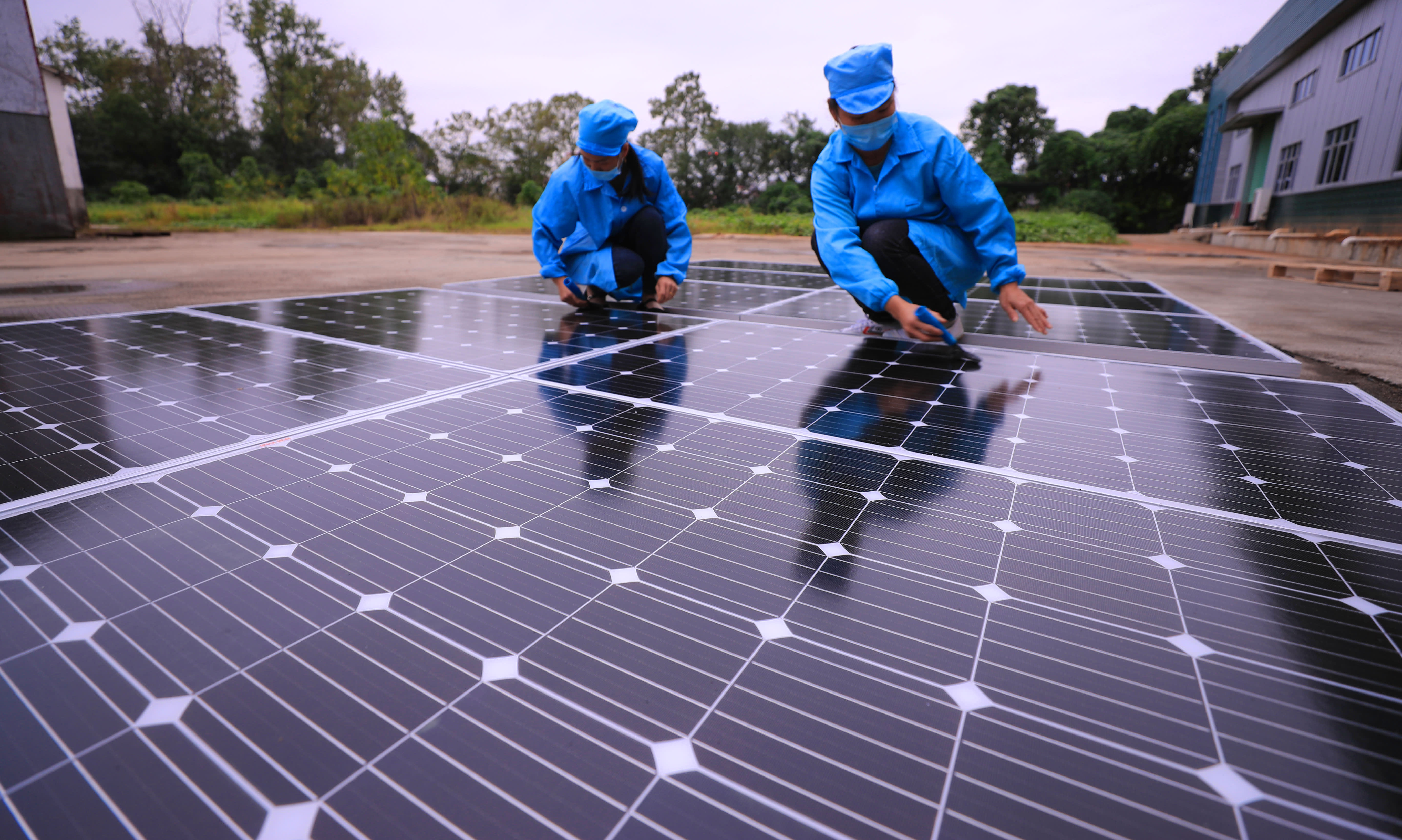
Employees clean solar modules that will be exported to Sudan on October 16, 2020 at a factory in Ji an, Jiangxi Province, China.

Deng Heping | Visual China Group | Getty Images

LONDON – Solar and wind power could completely replace fossil fuels and become a global source of electricity by 2050, a new report says.

The Carbon Tracker think tank report released on Friday also predicted that if wind and solar power continued on their current growth trajectory, they would displace fossil fuels from the electricity sector by the mid-2030s.

Current technology gave the world the ability to generate 6,700 petawatt hours (PWh) of electricity from solar and wind energy, the researchers said – more than 100 times the global energy consumption in 2019.

Despite the potential to generate enormous amounts of energy, according to the report, only 0.7 PWh of solar energy and 1.4 PWh of wind energy were generated in 2019.

However, the authors were confident that the continuing decline in costs would lead to exponential growth in the generation of solar and wind power. With an annual growth rate of 15%, the sun and wind would generate all of the world’s electricity by the mid-2030s and supply all of the world’s energy by 2050.

The report found that the cost of solar energy had decreased by an average of 18% per year since 2010, while the price of wind power had decreased by an average of 9% per year over the same period.

According to the report, solar energy had grown an average of 39% per year over the past decade and had almost doubled every two years. Meanwhile, wind power capacity had increased 17% per year, with advances such as better panels and taller turbines helping to reduce costs.

Rise in steam and exhaust gas from the RWE Weisweiler coal-fired power plant on February 11, 2021 near Inden.

Lukas Schulze | Getty Images News | Getty Images

Nevertheless, there is still skepticism about the likelihood of an imminent so-called energy transition. Some climatologists believe that it is already “practically impossible” to limit the temperature rise of the planet to 1.5 degrees Celsius above pre-industrial levels – a fundamental goal set in the Paris Agreement.

Carroll Muffett, executive director of the nonprofit center for international environmental law, told CNBC earlier this month that “embedded power structures and continued support for dying industries” would thwart progress in the transition to renewable energy sources.

And while many global companies are pledging to help in efforts to slow climate change, others are doubling their funding for fossil fuels.

Of the 60 largest banks in the world, 33 increased their funding for the fossil fuel sector between 2016 and 2020. This emerges from a CNBC analysis of the Banking on Climate Chaos 2021 report.

“Abundant” Africa

Carbon Tracker researchers identified four key groups of countries based on their potential to use wind and solar energy to meet domestic demand.

Low-income, low-energy countries in sub-Saharan Africa were labeled “overabundant,” meaning they had the potential to generate at least 1,000 times more energy than their domestic demand.

Africa in particular has great potential in implementing renewable energy infrastructure, the report said. Researchers said the region could become a “renewable energy superpower”.

Those with the potential to use at least 100 times more energy than demand were labeled “abundant” countries. Australia, Chile and Morocco, which had well-developed infrastructure and governance, were classified as “abundant”.

China, India and the US, which had the potential to produce enough to meet their domestic demand, were “full” while Japan, South Korea and much of Europe were “stretched” when it came to using their renewable resources effectively use.

Jeff Bezos is obsessive about a typical Amazon warehouse violation

0
Jeff Bezos is obsessive about a typical Amazon warehouse violation

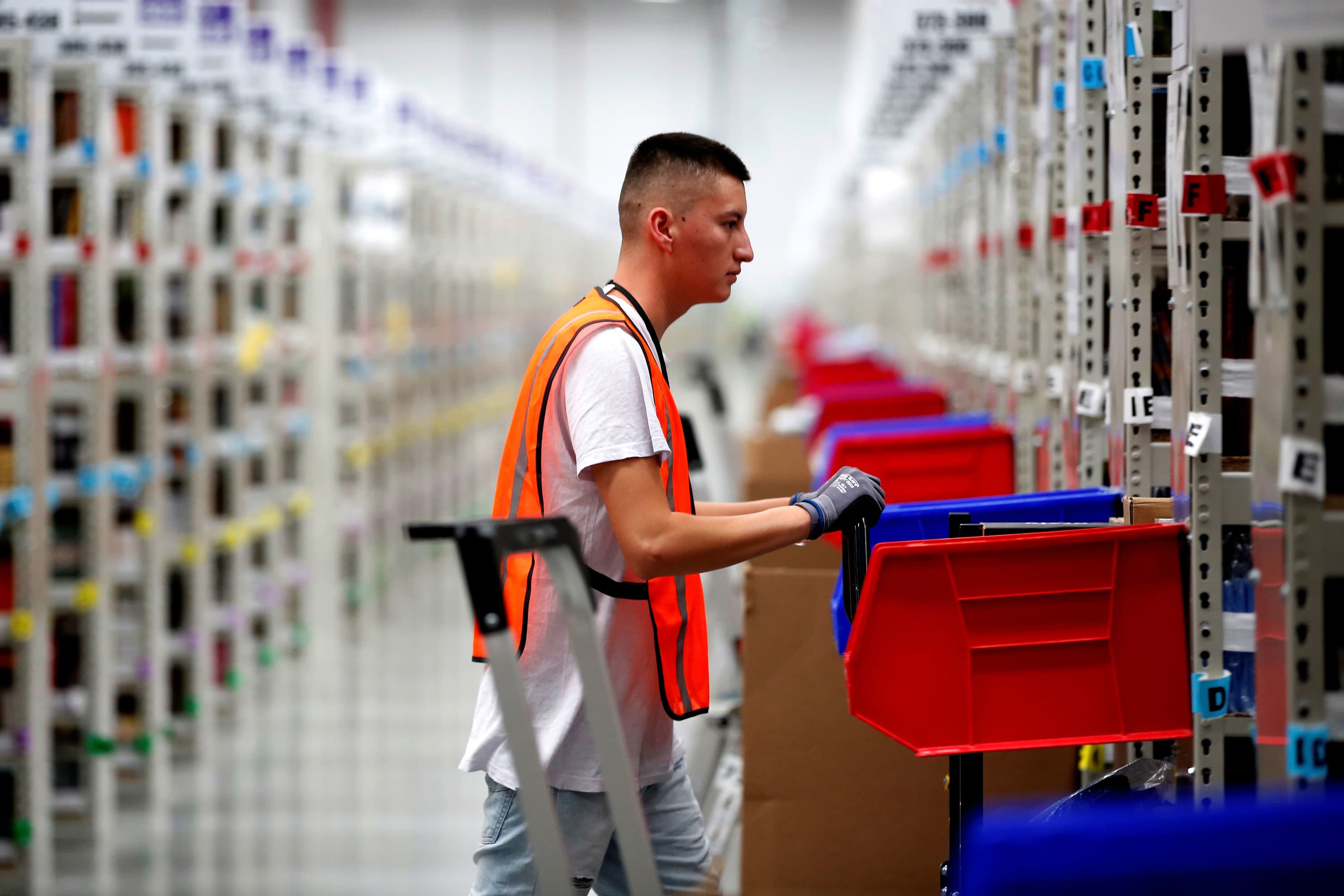
An employee searches for items in one of the corridors of an Amazon warehouse.

Carlos Jasso | Reuters

In his last letter to shareholders, Jeff Bezos, CEO of Amazon, called for a deep dive into musculoskeletal disorders, which account for approximately 40% of work-related injuries across the company and affect millions of workers worldwide in various sectors. It is often synonymous with jobs in manufacturing and places like warehouses.

Of course, from the recent union battle at an Alabama warehouse to the conditions for key employees during the pandemic, Amazon’s treatment of its employees has become a major issue. And it has been cited for a high incidence of work-related accidents in recent years, although the company has stated in the past that it also reports more work-related accidents than its peers due to a more proactive safety culture.

“If you read some of the news, you might think we don’t care about employees,” wrote Bezos in his letter released earlier this month. “In these reports, our employees are sometimes accused of being distressed souls and being treated as robots. This is incorrect. They are sophisticated and thoughtful people who have options for the workplace.”

But they also suffer from MSDs that occur on jobs that can be described as robot-like repetition. Bezos’ in-depth remarks on this workplace injury were one of the first announcements by a large company to bring wider attention to the problem, according to several experts consulted by CNBC. It is estimated that MSDs cost US companies over $ 50 billion each year, resulting in an average of 21 to 32 days of work interruption between 1997 and 2010. In addition to warehouse work at Amazon, MSD issues in meat processing and poultry factories have recently drawn attention.

The CNBC @ Work Summit is back

This fall, October 13th, Facebook CIO Atish Banerjea, Bank of America’s Chief Operations and Technology Officers, Cathy Bessant, WeWork CEO Sandeep Mathrani, and Estee Lauder CFO Tracey Travis, talk about building a resilient future and more. Join Now.

MSDs, often referred to as “ergonomic injuries,” are typically strains and sprains caused by repetitive movement, overexertion, or performing tasks in awkward positions, and include problems such as carpal tunnel syndrome and tendinitis. According to the Bureau of Labor Statistics, retail, manufacturing, and welfare jobs accounted for 50% of all MSD cases in the private sector. While they are common in factory workplaces and with first-time workers, they can also occur through exercise, desk work, and everyday use.

“MSDs are common in the type of work we do and are more likely to occur in the first six months of an employee,” wrote Bezos, adding that the company had started a program to target small groups of employees on body mechanics and safety coaching, which helped a 32% decrease in injuries between 2019 and 2020, while time as a result of injuries “decreased by more than half,” Bezos said in the latest letter. “We need to invent solutions to reduce MSDs for new hires, many of whom may be working in a physical role for the first time.”

Amazon declined to provide additional information to CNBC about its ongoing MSD efforts.

While MSD cases in the US workplace have declined over the past decade, approximately 1.71 billion people worldwide have musculoskeletal disorders, with lower back pain being the most common, the World Health Organization reported. This number is expected to increase as the population ages and grows.

“Many of these injuries are actually preventable, they’re not accidents, we can work to prevent them and make a big difference for patients,” said Anna Miller, vice chairwoman of the orthopedic surgery department and director of the orthopedic trauma department Washington University School of Medicine.

The dangers of repetitive work

While it is common for manufacturing workers to work on the repetitive assembly line, they can also occur while sitting in a home office doing remote work.

One of the biggest problems with MSDs is that there is no specific reason why they are occurring, and they can arise on the fly from a seemingly minor task like climbing stairs, says John Dony, senior director of the National Safety Council. There is little research into how they occur, why they occur, and who is most susceptible. While older workers often suffer from wear and tear, younger workers often try to overcome the risks or fail to understand the risks, Dony said.

Some studies suggest obesity, genetics, or smoking may increase the risk of MSD, but the causal link data isn’t very clear, says Andrew N. Pollak, senior vice president of clinical transformation and chief of orthopedics at the university’s medical system of Maryland.

Very limited federal funding is allocated to this research, but large companies like Amazon, which now employs over a million people, are better able to gather information to share with other companies.

“This type of research has been difficult to do in smaller companies because you just don’t have the same number of people doing the same jobs as you would with a giant like Amazon,” says Pollak.

MSDs can also lead to mental health problems for many frontline workers, and many people keep working after exposure because they need the money, Miller says.

In many service-oriented professions, workers are under pressure to keep working to make the customer happy and deal with injuries to meet the goals, says Jaimo Ahn, professor and chair of education in the Department of Orthopedic Surgery at the Health System University of Michigan.

“If you are not getting there, or if you feel that you are not where you need to be, then move on,” said Ahn.

Solving the MSD Problem

In addition to the WorkingWell coaching program, which was introduced as part of Amazon’s workplace safety efforts last year for 859,000 employees in 250 locations, Amazon is also developing automated workforce plans that use “sophisticated algorithms for rotating employees” across jobs to prevent overuse of certain muscle groups and injuries, and that started rolling out this year.

Rotation schedules are one of the easiest precautionary solutions to preventing continued use of a particular muscle, as well as teaching workers how to lift from their legs instead of their arms or back. It also helps construct a job that involves excessive bending, requires non-slip shoes, or requires workers to lift heavy objects with a partner. Some companies have already put these guidelines in place, but they are sometimes ignored or not well communicated, Dony said.

Other alternatives include automating and implementing robots or machines that can minimize hand use and help with lifting, or handheld devices that show the environment and detail the span and range of motion. Robots have historically been a point of contention for workplace injuries, in some cases because of increasing risks to human workers, including requiring workers to move too fast to keep up ergonomically. However, the company’s executives have rejected this argument.

Solving MSDs outside of Amazon, across the world of work, and for many smaller, less deep-pocketed employers, begins with assessing the risk and walking through the workspaces.

“If you don’t even assess the risk or hazard you’re exposing someone to, you’re already behind the game,” says Dony.

POPULAR POSTS