Home Blog Page 35

Cryptocurrency, the Taliban, and capital flight

0
Cryptocurrency, the Taliban, and capital flight

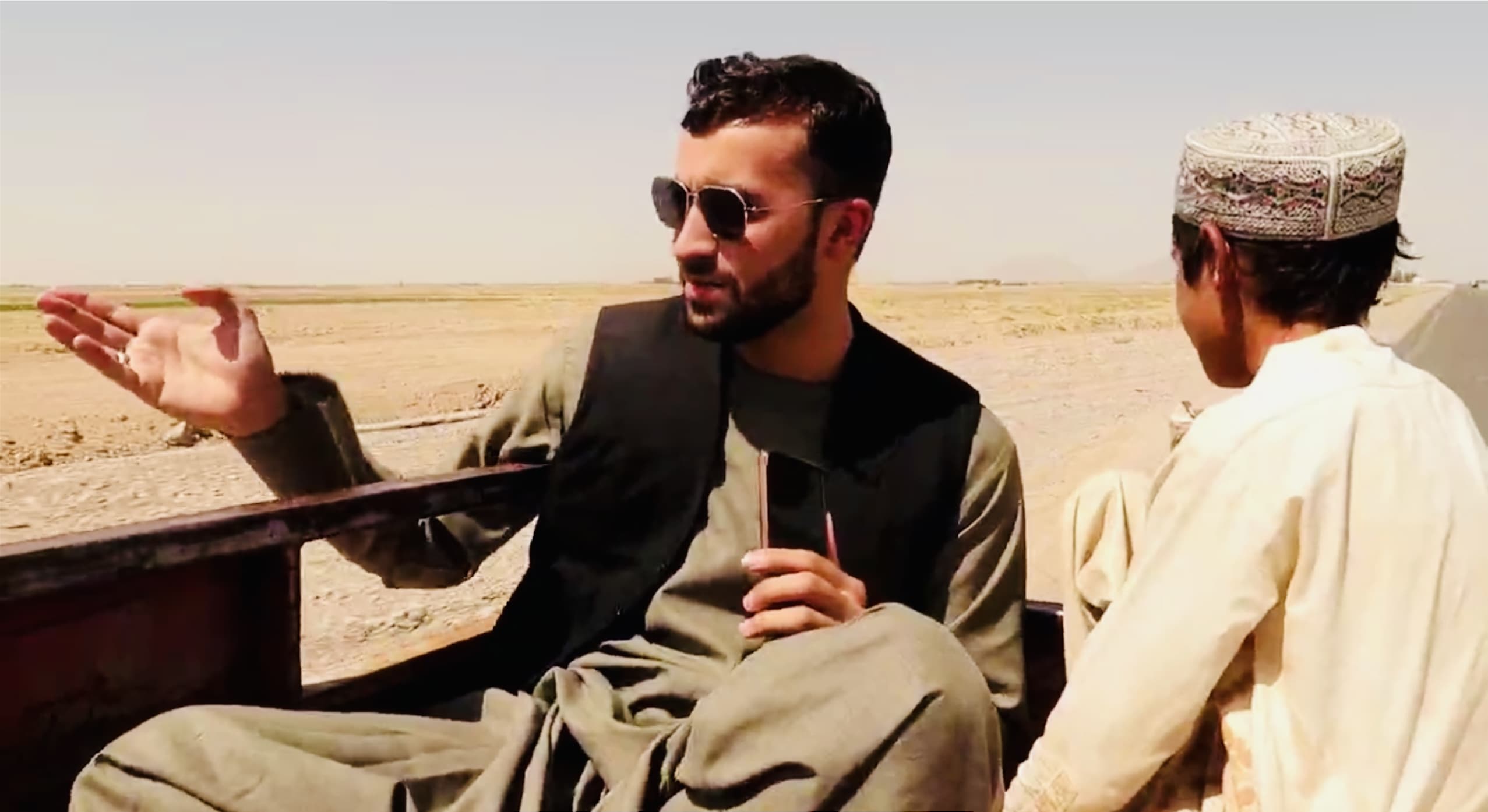
Crypto trader and vlogger Farhan Hotak traveling to the Shah Wali Kot District in Afghanistan.

Farhan Hotak isn’t your typical 22 year-old Afghan.

In the last week, he helped his family of ten flee the province of Zabul in southern Afghanistan and travel 97 miles to a city on the Pakistani border. But unlike others choosing to leave the country, once his relatives were in safe hands, Hotak then turned around and came back so that he could protect his family home – and vlog to his thousands of Instagram followers about the evolving situation on the ground in Afghanistan. 

He has also been keeping a very close eye on his crypto portfolio on Binance, as the local currency touches record lows and nationwide bank closures make it next to impossible to withdraw cash.

“In Afghanistan, we don’t have platforms like PayPal, Venmo, or Zelle, so I have to depend on other things,” said Hotak. 

Afghanistan still mostly operates as a cash economy, so money in Hotak’s crypto wallet won’t help him put dinner on his table tonight, but it does give him peace of mind that some of his wealth is safeguarded against economic instability at home.

It also offers bigger promises down the road: Access to the global economy from inside Afghanistan, certain protections against spiraling inflation, and crucially, the opportunity to make a bet on himself and a future he didn’t think was possible before learning about bitcoin. 

“I have very, very, very limited resources to do anything. I’m interested in the crypto world, because I have earned a lot, and I see a lot of potential in myself that I can go further,” he said.

Run on the banks

For many Afghans, this week has laid bare the worst-case scenario for a country running on legacy financial rails: A nationwide cash shortage, closed borders, a plunging currency, and rapidly rising prices of basic goods.

Many banks were forced to shutter their doors after running out of cash this week. Photos featuring hundreds of Kabul residents crowding outside branches in a futile effort to draw money from their accounts went viral. 

Afghan people line up outside AZIZI Bank to take out cash as the Bank suffers amid money crises in Kabul, Afghanistan, on August 15, 2021.

Haroon Sabawoon | Anadolu Agency | Getty Images

“There’s no bank I can go to right now, no ATM,” said Ali Latifi, a journalist born and based in Kabul. “I live above two banks and three ATM machines, but they’ve been off since Thursday,” said Latifi, referring to the Thursday before the palace ouster. 

Without an authority helming the Central Bank, it appears that printing cash to cover the shortfall isn’t an option, at least in the short-term. 

The Western Union has suspended all services and even the centuries-old “hawala” system – which facilitates cross-border transactions via a sophisticated network of money exchangers and personal contacts – for now, remains closed.

Sangar Paykhar, a Kabul native currently living in the Netherlands, has been in constant touch with relatives there in recent weeks. He said that many who live paycheck to paycheck were, at first, borrowing money from others to get by, but now, those able to lend out cash have started conserving their funds.

“They’ve realized the regime has collapsed” and that those they are lending to “might not have a job tomorrow,” said Paykhar.

A few days before the Taliban entered Kabul, Musa Ramin was among the people who queued outside a bank in a fruitless attempt to withdraw cash. But unlike other Afghans in line with him that day, months earlier, he had invested a portion of his net worth into crypto. Ramin had been burned before by a rapidly depreciating currency, and decentralized digital money had proven to be a trusted safeguard. 

In 2020, on what was meant to be a brief layover on a trip from London to Kabul, Ramin got stuck in Turkey. A one-week, mandatory Covid quarantine ballooned into six months.

“I converted all my money to the lira,” he said. After the Turkish currency began to spiral, Ramin said his capital was cut in half, and he was forced to conserve it. “That is when I discovered bitcoin.”

With all flights cancelled and no other options for departure, Ramin realized he needed to find alternative ways to support himself while stranded in Turkey during the pandemic-related shutdown. That’s when he started trading crypto. 

“At first, I lost a lot of money,” he said. But he’s since gotten the swing of managing his digital assets, thanks to Twitter and tutorials on YouTube. 

Musa Ramin at the Royal Opera House in London, just before his six-month quarantine in Turkey.

Even after returning to Kabul, the 27 year-old says he put all his focus into trading crypto. 80% of his crypto capital is in spot exposure, primarily in major coins, like bitcoin, ethereum, and binance coin. The other 20% he uses to trade futures. 

“I was making more money in crypto in a month than in construction in a year,” said Ramin, though he did acknowledge the risk that’s involved. “It’s easy making money in crypto but keeping that wealth is the difficult part.”

Despite that volatility, Ramin still sees crypto as the safest place to park his cash. “If a government isn’t formed quickly, we might see a Venezuela-type situation here,” Ramin told CNBC. He feels virtual tokens are his safest hedge against political uncertainty and plans to increase his exposure to digital currencies in the coming year to as much as 40% of his total net worth.

Ramin isn’t alone in his thinking. Google trends data shows that web searches in Afghanistan for “bitcoin” and “crypto” rose sharply in July just before the coup in Kabul. That said, because this tool is a measure of interest, the spike could be referring to 10 searches or it could be 100,000.

But in a country that has long relied on physical cash for virtually all transactions, not many people have the option to let their savings sit in a bank account, let alone a digital wallet. 

Just take Hotak. He lives in a remote part of Afghanistan where there are no ATMs or bank branches nearby. That means he has to keep a lot of physical cash on hand, in order to cover daily expenses. “Afghanistan is an unexpected country, and you have to be ready for anything,” he said.

While Hotak thinks that crypto is his future, for now, the bulk of his income comes from day labor jobs, like shoveling, brick work, digging wells, and running a tailor shop that makes clothes.

“Zabul is not a very developed city. It’s a village, so that’s how I earn,” he said.

Signs of a growing crypto economy

It’s hard to get insight into crypto adoption in Afghanistan.

Beyond the fact that measuring cryptocurrency adoption at the grassroots level isn’t easy, people actively go out of their way to hide who they are.

Some Afghans, for example, will conceal their IP address by using a virtual private network, or VPN, in order to mask their geographic digital footprint.

And unlike many crypto boosters – who tend to be vocal and community-driven – digital currency supporters inside Afghanistan often don’t want others to know they exist.

“The crypto community in Afghanistan is very small,” said Hotak. “They actually don’t want to meet each other.” He thinks that could change if the political situation normalizes, but “for now, everyone just wants to stay hidden until things are nice.”

However, new research from blockchain data firm Chainalysis is offering fresh optics on the country’s apparently burgeoning peer-to-peer (P2P) crypto network, which is increasingly the most telling metric of adoption in Afghanistan. Hotak, as well as his friends, use Binance’s P2P exchange, which allows them to buy and sell their coins directly with other users on the platform.

Chainalysis’ 2021 Global Crypto Adoption Index gives Afghanistan a rank of 20 out of the 154 countries it evaluated in terms of overall crypto adoption. And when you isolate for its P2P exchange trade volume, Afghanistan jumps up to seventh place. That’s a big move in just 12 months: Last year, Chainalysis considered Afghanistan’s crypto presence to be so minimal as to entirely exclude it from its 2020 ranking.

“Afghanistan on top makes sense from a capital controls point of view, given it’s hard to move money in and out,” explained Boaz Sobrado, a London-based fintech data analyst.

And some experts tell CNBC that Chainalysis could actually be underestimating its overall adoption.

“Unlike many other countries, sanctioned nations don’t have good and clear data on P2P markets,” explained Sobrado. He says that is partly to do with the fact that it is harder to track those transactions.

Afghan currency traders at a central money market in Kabul.

Getty

There are other anecdotal signs of adoption across the country.

Nearly a decade ago, sisters and Afghan entrepreneurs Elaha and Roya – both of whom had a focus on computer science at Herat University – founded the Digital Citizen Fund, an NGO that helps women and girls in developing countries gain access to technology. The organization has 11 women-only IT centers in Herat and another two in Kabul, where they teach 16,000 females everything from essential computer skills to blockchain technology.

Before classes were suspended earlier this week, creating a crypto wallet was also part of the curriculum. Elaha Mahboob tells CNBC that some students have chosen to secure their money in crypto accounts and a few have specifically started investing in bitcoin and ethereum in order to achieve their long-term financial goals.

“This is especially important as they don’t have to worry about not having access to their money, because major banks in Afghanistan have closed,” Mahboob said.

A few Digital Citizen Fund participants have left the country and used the crypto accounts they made in class as a way to transfer their money out.

Afghanistan’s exposure to the cryptosphere was also taking place inside the presidential palace. Blockchain company Fantom told CNBC it had been working in tandem with the previous government.

One such project with the Ministry of Health involved piloting blockchain technology to track counterfeit pharmaceuticals. Fantom says the pilot “concluded successfully,” and they had been preparing for national rollout before the Taliban took over.

Then there’s Sweden-based Bitrefill, an online marketplace that helps customers live on cryptocurrency by exchanging digital coins like bitcoin or dogecoin for gift cards with partner merchants. In Afghanistan, the card offerings include multiple mobile phone service providers, games such as Fortnite and Minecraft, Hotels.com, and Flightgift, which can be redeemed for flights with 300 international airlines.

While the company wouldn’t share sales numbers on the record with CNBC, Bitrefill does have the endorsement of Janey Gak, who uses it to top up her phone. Her Twitter account has become a must-follow for those who want to understand the situation on the ground through her eyes, but she’s also evangelizing the power of bitcoin to transform the country.

“I’m just an ordinary person. I’m not anyone special,” she said. “I am just someone who discovered bitcoin a couple of years ago.”

In 2018, Gak — who goes by the name “Bibi Janey” — started a Facebook page as a hobby to see what Afghans thought of bitcoin. “I remember getting a lot of comments and questions like, ‘Can you explain more?'” she said. “People would be fascinated by it, but they would be so confused.” She also got lots of questions about where to buy bitcoin.

Since entering this world, she has learned how to code and reads as much as she can about bitcoin. “I don’t trade, I don’t do any of that,” she said. “I just make some money here and there and save it in bitcoin.”

Through her research, she’s come to the conclusion that in order for Afghanistan to be a truly sovereign state, it must never borrow money – and adopt a bitcoin standard. To foment wider adoption, Gak commissions articles to be translated to local languages.

“It’s not much, but it’s a start,” she told CNBC.

DIY crypto rails

The on-ramp to participating in the crypto economy in Afghanistan is complicated and there are still multiple barriers to entry.

Access to the internet, while growing, remains low. There were 8.64 million internet users in Afghanistan in January 2021, according to DataReportal.com and internet penetration stood at 22%.

Unreliable electricity poses another major issue, as power outages are common. “Power goes out once every day for a couple of hours,” said Ramin, though he noted that it happens in some parts of Kabul more often than others.

When CNBC first spoke to Hotak, he was seated near one of the land-crossings into Pakistan, tapping into a WiFi network across the border. “We don’t have proper internet on the Afghanistan side,” he explained. 

Hotak also uses solar power to charge his phone, given the country’s long-standing issue with electricity outages. 

Electricity and a stable internet connection are two essential rails for widespread crypto adoption. Also critical is having access to some form of online banking or a credit card that is recognized internationally – which again, poses a big problem for many Afghans. Eighty-five percent of the country is unbanked, according to one U.N. estimate, meaning they do not have a bank account.

So people wishing to deal in crypto have to get creative.

Hotak and some of his contacts enlist the help of family and friends in neighboring Pakistan or across the Gulf of Oman in the United Arab Emirates, where they have easier access to global markets.

“It’s very easy in Pakistan,” he said. “Most people have relatives in Dubai, who buy crypto for them using their credit cards.”

When the person then wants to liquidate their crypto stake, relatives will sell it for them and use the hawala system, an honor-based system of credit common in Asia and the Middle East, to transfer the funds across the border to Afghanistan. The strategy requires a great deal of trust. In the case of Hotak, his friend in Pakistan doubles as his crypto broker.

“He is a very, very close friend. He has his details on the account that I use, so we could say that it’s his account, but I use it,” Hotak said of the arrangement.

The Salma Hydroelectric Dam in Herat, Afghanistan, is close to the Iran border.

Getty

Trust is also key when it comes to judging the quality of trading tips. “There’s a lot of scammers on YouTube and Twitter,” warned Ramin. When he first started off, he would spend most of his money buying coins promoted by people looking for exit liquidity. “That’s why I stopped trading small-cap coins.”

Hotak, on the other hand, has found a reliable online community that offers him sound trading advice.

“There’s a few groups on Telegram, WhatsApp, and there’s even a Pakistani community on Facebook I follow that gives me the signals to sell. I follow them, and it’s been good so far,” said Hotak.

Brokers advertising crypto services on Facebook appear to be operating across the country. Hotak visited one in Herat in early 2020. He went to interview for a job there and says the two-story data center was packed with boys, mostly aged 20 to 25.

“They were all university people,” he said. “They all had smartphones in their hands, and they were just scrolling down and down.”

CNBC has not spoken with any of these brokerages directly, but Hotak says the site he visited in Herat is still going. Hotak also says that Herat is home to a bitcoin mining farm.

“They had these very big CPUs. Very advanced,” he said. But Hotak tells CNBC he didn’t get to see the entire operation. “I just got a little glimpse of it.”

Blockchain analysts Lorne Lantz and Rieya Piscano say they looked at various data sources and found no sign of bitcoin or ethereum nodes running in Afghanistan, so it is unclear whether this miner in Herat has covered his online footprint, or whether he’s cut off his rigs.

Even with all of these workarounds, the political turmoil of the last few weeks doesn’t make it easy to find time to think about crypto.

“The reality is I cannot focus on crypto trading when the ongoing events in Afghanistan are this intense,” said Hotak. “With no electricity and bad internet, crypto trading is near to impossible, so we just hold.”

Crypto trader and vlogger Farhan Hotak in Herat, Afghanistan.

Path to mass adoption

On Aug. 15, an hour and a half before Ramin’s flight bound for Turkey was due to take off, then-President Ghani arrived to the airport in Kabul. After that, Ramin says that all flights were halted and everyone was kicked out. 

Ramin still has plans to leave, along with his family. But finding a flight is proving to be difficult. He’s used his now dwindling supply of afghanis to purchase flights for ten members of his family. He’s done this three times, and all three times, the flights were canceled. With travel agencies shut, he remains in a bit of a holding pattern on the ground in Kabul. 

Ramin is one among many looking to leave the country. Every media outlet on the planet has been circulating the same photos of Afghans clinging to planes, fleeing the country with whatever possessions they can carry. For several, this has meant having to leave a lot behind.

Ramin estimates that around 5-10% of his net worth is in crypto, which makes it easier to plan an exit, knowing that there is some money in the bank to tide him over, especially since he doesn’t know if he will ever see the money in his bank accounts in Kabul.

“If some type of government doesn’t come to existence, then I could potentially see the majority of my wealth being wiped out,” he said. For now, he and his family are just sitting tight, waiting to catch a flight out.

But many people are staying put, in part because they want to foment positive change at home.

“In these circumstances, one can fully appreciate the censorship-resistance property of blockchain-based assets. I believe this is the main driver of the fundamental value of bitcoin and other cryptos,” said Andrea Barbon, Assistant Professor of Finance at the University of St. Gallen.

Gak, for example, thinks that using legacy financial rails like the hawala system might be one of the most effective ways to foster mass adoption. It is a vision she detailed in a prescient story she wrote for Hacker Noon in 2018.

She’s also thinking about opening her own exchange shop in Kabul. “The idea is that anyone with bitcoin can exchange it for fiat and then use that to buy goods like always. Anyone who is unable to receive can have their family for example, send the bitcoin to me with a unique address that only the recipient would know just like hawala,” she explained in a tweet.

Ramin has a similar plan to make crypto more accessible to Afghans. “I hope once I gain more knowledge in blockchain technology to create a team and develop an easily accessible trading platform which Afghans can use,” he said.

There are promising trends on their side. The number of social media users in Afghanistan increased by 22% from 2020 to 2021, and 68.7% of the total population now has a mobile phone connection, according to DataReportal.com. It helps that more than 60% of the population is under 25 and hungry to be a part of the modern economy. Shakib Noori, previously the CEO of a mobile money company in Afghanistan, says this younger demographic also tends to be more tech savvy.

Ultimately, CNBC is told that grassroots adoption comes down to one Afghan teaching another about how cryptocurrencies like bitcoin work. Hotak has already mentored three students, and that’s just the beginning.

“The Afghan people – they’re very complicated. And it’s very hard convincing them that digital currency exists,” he said. “I have plans to teach people about cryptocurrency in the future…but for now, people are just laying low and waiting to see what happens next.”

Evacuees crowd the interior of a U.S. Air Force C-17 Globemaster III transport aircraft, carrying some 640 Afghans to Qatar from Kabul, Afghanistan August 15, 2021.

Courtesy of Defense One | Handout via Reuters

Seven Little Recognized Tricks to Save Cash on Amazon, together with 75% off “hidden” reductions

0
Seven Little Recognized Tricks to Save Cash on Amazon, together with 75% off “hidden” reductions

When you order from Amazon, here is everything you need to know to get a great deal.

We take a look at how to find hidden discounts – and how to verify that your bargain is real.

1

Free delivery and shopping can help you lower the cost of your online order

With the help of savings experts, we will reveal six simple ways to save money when shopping at online retailers.

Up to 75% discount

Bargain hunters at LatestDeals.co.uk have developed a free tool to uncover hidden bargains on Amazon.

The amount you save depends on the item you are looking for.

However, they say you could get discounts of up to 70%.

Get freebies

Amazon is giving out freebies to Prime subscribers at random.

You need to register for the program online through the Your Account section and let Amazon know which categories you are most interested in samples from, e.g. B. Food or Beauty.

Of course, there’s no guarantee you’ll get a freebie – but let us know how you’re doing.

The perk also works on Amazon Alexa.

Fiona Hawkes, personal finance blogger who runs Savvy in Somerset, relies on them to try products before making a big purchase.

How often you can save money later, she explains: “The products often arrive with discount vouchers so that you can save on the purchase.

“Samples change quite often and in the past there have been Coca-Cola cans, toothpaste, energy drinks, crackers and coffee available.

“Just say, ‘Alexa, send me a sample.'”

Subscribe and save

Bargain blogger Mr Deals Manchester swears by this trick to save money on the items you regularly order.

He said, “When you subscribe to an item, you get money, but there are often special offers that mean an extra big discount.

“Subscribe and save [the item you want], then click on ‘earlier’ to have it delivered as usual – then cancel the subscription immediately so that you can pocket the savings. ”

But do the math first. Well worth it if you really save money buying in bulk – and how much you need.

There’s no point in spending extra money when you don’t need it.

Do your research

Oli Townsend, Assistant Deals and Features Editor at MoneySavingExpert, recommends comparing Amazon prices with those of other online retailers.

He said, “You can use sites like Google Shopping, PriceSpy, and Price Runner to do a quick price comparison.

“It also has thousands of daily deals and while there are bargains to be had, not all of them will be a winner handing out.”

For example, the website could claim you save £ 30 – but if you check the historian price, it might have been £ 50 less two weeks ago.

Get 40% off with warehouse deals

It’s a good idea to check out Amazon’s warehouse listings – this is where you can buy used and open products at a reasonable discount.

Earlier this week we revealed how you can get up to 40% off.

Note, however, that the packaging may not be the usual Amazon standard.

The same applies to the Amazon Outlet, where buyers can buy overlaid or faulty goods at a discount.

British Coupon Kid Jordon Cox said: “You often see things with slight defects like a battered box or slightly damaged – but this does not affect the usability of the items.

“The rest of the stuff is because they just ordered way too much for Christmas or a holiday and didn’t sell it, so they sell it for a cheaper price.

“I even saw £ 100 off a stroller that was used once in the past and was sent back to Amazon.

“The box was open, but the contents are fine.”

Split the cost

It is actually possible to have two adults on one Amazon Prime account.

Amazon Household means Prime users can link their account to that of another adult.

You both get access to Prime Delivery, Prime Video, and Prime Music.

Membership typically costs around € 7.99 per month – if two of you share the price, that’s less than € 4 each.

Just remember that your credit and debit card details are shared with each other. So choose someone you trust.

Have it delivered to you for free

Nobody likes to pay that extra £ 3 to £ 5 for delivery that is added to the end of your online order – so do your best to avoid this.

James Andrew, Senior Personal Finance Editor at Money, said, “The first thing to check is the free shipping interruption.

“If you’re paying for delivery as things stand, adding that little extra item to get you across the line can mean you pay less overall and get more.”

Martin Lewis’ MoneySavingExpert explained how to find secret Amazon bargains and save you almost 40% of your loot.

TikTok stars have also revealed the secret of making money on Amazon.

And if you’re looking to cut costs elsewhere, we share our four simple tips on how to get your laundry cheaper – which can save you £ 100 a year.

Apartment hunters looking to move can now easily get a local’s opinion by contacting Alexa. ask

Contemplate the mojito whenever you want a daydreaming getaway

0
Contemplate the mojito whenever you want a daydreaming getaway

Image for article titled Contemplate the Mojito when in need of a daydream getaway

Photo: girls

Nowadays, no matter how early I wake up, I can’t reach the material plane before 2 p.m. and become a functioning person sporadic bouts of manic ability – but this mysterious increase in hours when I’m only technically awake is unusual even for me. At least three times this week I have dealt with one or the other friend in disbelief: “Time actually goes faster, doesn’t it? It’s not just getting-older, is it? And it’s not that I’m having fun. Nobody is having fun. So what is there? What-how-why and oh my god, will it always be like this? “

The general consensus among my friends is that Time really stepped on the gas, although no one can say exactly why. (There are theories! But that’s for explore someone else’s article.) Whether they are really serious or just trying to calm me down, I don’t know – but if it’s true, then I’ve brought a bike for a quick chase, and the futility of keeping it The pace is increasing day by day more clear. I finally gave up two nights ago. Somewhere in the fade between late afternoon and early evening, I stopped charging forward. I decided to go out on the balcony, sink into distant thoughts and enjoy the last of those warm summer nights. I decided to make a mojito.

Served high and filled with broken ice, it is a drink to linger, to dream, to gaze at the stars. “

The beauty of the mojito lies in its simplicity. In an industry that loves to make a fuss and innovate, the unadorned mojito is easy to overlook or relegate to the sidelines as a boring standard. That is, I have to say, the wrong approach. I love the mojito because it is harmonious and elemental: the gravel of the sugar, the cooling air of the mint, the freshwater effect of rum and lime. Served high and filled with broken ice, it is a drink to linger, to dream, to gaze at the stars. It’s the perfect drink when you don’t have time.

For those of you who are not suffering from maladaptive daydreaming, I urge you to consider the mojito nonetheless. Because its delicious. But it’s also sturdier than the average cocktail – perfect for packing in a thermos and taking to the park with a blanket and book. And because it’s so easy to prepare, having friends over is not a bad option either – simple staging makes production child’s play.

G / O Media can receive a commission

Two ways to make a mojito

Here are two ways to make a mojito – the first is a bit more rustic and requires less prep, but the addition of lime zest can add a bitterness to the back end of the drink (if that’s what you’re against). The latter is arguably a more uniform composition, but may require a little more effort. To give up the hunting season you will need:

  • ¾ Lime, cut into wedges
  • 2 brown sugar cubes (white is good too)
  • A handful of mint
  • 2 ounces white rum (I personally love Havana Club 3 Años, but when I’m in the US I’ll replace it with Plantation 3-Star. But use the white rum you prefer.)

Mash the lime and sugar cubes in a shaker. You shouldn’t overwork the lime peel, but make sure the sugar cubes have been thoroughly mashed. You don’t have to mess up the mint because it’s so delicate; the shaking process is sufficient. Add mint and rum. Fill the shaker with broken ice and give it a quick shake – you are not trying to dilute; They just want the ingredients to be incorporated and the sugar grains spread out. Pour unscreened into a chilled glass.

To make the refined exit …

  • 1 ounce of fresh lime juice
  • 1 brown sugar cube
  • ¾ simple syrup
  • Handful of mint
  • 2 ounces of white rum

First mix the sugar cubes with the lime juice, then add the mint, the sugar syrup and the rum. Top up with broken ice and shake briefly. Pour unscreened into a chilled glass.

If you find that your mojito is too sour or too sweet on both recipes, start adding a bar spoonful of plain syrup (if too sour) or a dash of lime juice (if too sweet) until it’s more to your taste. You have the time. Make it perfect.

Hilary Duff shares poem her son Luca wrote and skim at their wedding ceremony

0
Hilary Duff shares poem her son Luca wrote and skim at their wedding ceremony

Hilary Duff is nostalgic about one of her sons Luca ComrieSweetest moments when she nursed herself back to health.

On Saturday, August 21, the 33-year-old star of the upcoming series How I Met Your Father, who is currently recovering from a groundbreaking COVID-19 infection, shared a post from her husband on her Instagram story Matthew coma published a framed handwritten poem that their son wrote and read about their new blended family at the couple’s 2019 wedding when he was 7 years old.

Luca, now 9 and whose father is Hilary’s ex-husband Mike ComrieShe wrote: “Our family is a galaxy that shoots through the cosmos, magical dreams of mine [sic]. in the heart of my family and shining love in our souls (brit electric zooms through when we play tag) [sic]. Sister dresses me in the morning and waits for me to smile. I am your example … I will stand up for you and protect you. Always dream with you. “

Hilary and Matthew tied the knot in an intimate candlelight wedding in the back yard of their Beverly Hills home in December 2019. In a cover interview for the April 2020 issue of Parents magazine, the actress previously announced that Luca read an original poem at the ceremony.

What dad and mom ought to know in regards to the summer time wave of RSV circumstances

0
What dad and mom ought to know in regards to the summer time wave of RSV circumstances

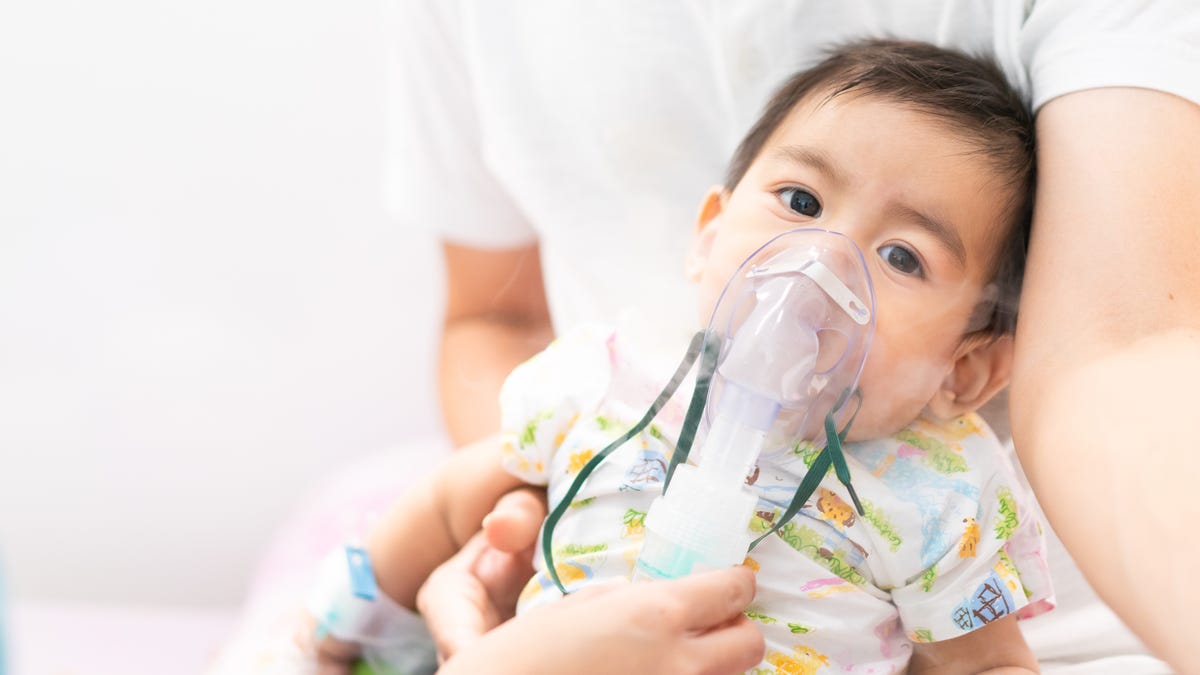
Image for the article titled What Parents Should Know About the Summer Wave of RSV Cases

Photo: SUKJAI FOTO (Shutterstock)

As we are all grappling with the summer spike in COVID-19 due to the Delta variant, there is also another virus that is widespread called the Respiratory Syncytial Virus (or RSV). RSV is an incredibly common respiratory virus that usually circulates between October and February. But with this year’s early surge kicking in right at the start of school, there are a few things parents should be aware of.

Initially, it is estimated to be two years of age almost all children will be infected with RSV– and it is possible to get infected several times. “Everyone has probably contracted RSV at least once in their life,” he said Dr. Michael Chang, an assistant professor of pediatrics at UTHealth Houston.

The vast majority of children who get RSV will have a mild case – they may develop a runny nose, cough, and even a high fever, but they will recover well. For adults, RSV usually only feels like a bad cold if there are any symptoms. However, more serious cases can and will occur.

Some children have to be hospitalized for RSV

Although the vast majority of children will be fine, some will develop a severe case of RSV that requires hospitalization. If the case is severe, there is a risk of either developing bronchiolitis, which causes the small airways in the lungs to become inflamed, or pneumonia.

G / O Media can receive a commission

An average year becomes an estimated 58,000 children are hospitalized for RSV, the average length of stay is one to two days. Although deaths from RSV are rare, hospitalization for a severe RSV case is not required.

Severe cases of RSV usually occur in young infants

Severe cases of RSV usually occur in young infants, who are generally less than six months old, and in children with lung or heart problems. This includes children with congenital heart defects as well as children under the age of two who were born prematurely due to their more vulnerable lungs.

For children at high risk of complications from RSV, there is one Drug called palivizumab This can help prevent serious illness from the virus, although it cannot cure or treat children who already have severe RSV. Unfortunately, there is still no vaccine against RSV.

If your child has RSV and is having difficulty breathing, or you hear a whistling sound when exhaling, it is a sign they need to go to the emergency room or hospital. If babies are breathing quickly or taking longer to feed, it is a sign that they need medical attention.

We are currently seeing a summer surge in RSV

Given all of the COVID-19 precautions over the past year and a half, doctors didn’t see very many RSV cases over the winter. However, when the precautions were lifted and people got off, RSV cases spiked in an off-season summer surge that many doctors, including infectious disease experts like Chang, hadn’t anticipated.

Currently, doctors are seeing a rate of RSV cases that is consistent, if not higher, than what they typically see in winter. “It all happens in mid-August and July, which is totally unusual for RSV,” said Chang.

RSV hospital admissions coincide with COVID-19 hospital admissions

Unfortunately, this means that the children who develop severe RSV cases end up in hospital at a time when capacities are already exhausted due to COVID. There are many accidents in pediatric intensive care units in the summer, while there are many cases of flu and RSV in the winter.

“Usually the RSV will peak and maybe start to decline, then the flu will come,” said Chang. “We usually see that every winter.”

Right now they are seeing the usual summer accidents, an influx of RSV, as well as any additional COVID-19 patients. This means that hospitals that are full will have to move some of their patients to another location.

“We will always find a bed for you, but it could be in a different condition,” said Chang.

COVID-19 precautions work really well for RSV

The good news is that COVID-19 precautions are also incredibly effective in preventing the spread of RSV. “The interventions we are doing for COVID-19 – masks, physical distancing, hygiene – are the same ones you would do for RSV,” Chang said.

So mask yourself and keep washing your hands as this will not only prevent the spread of COVID-19 but also RSV.

The FDA approval for the Pfizer Covid vaccine may come on Monday, the report stated

0
The FDA approval for the Pfizer Covid vaccine may come on Monday, the report stated

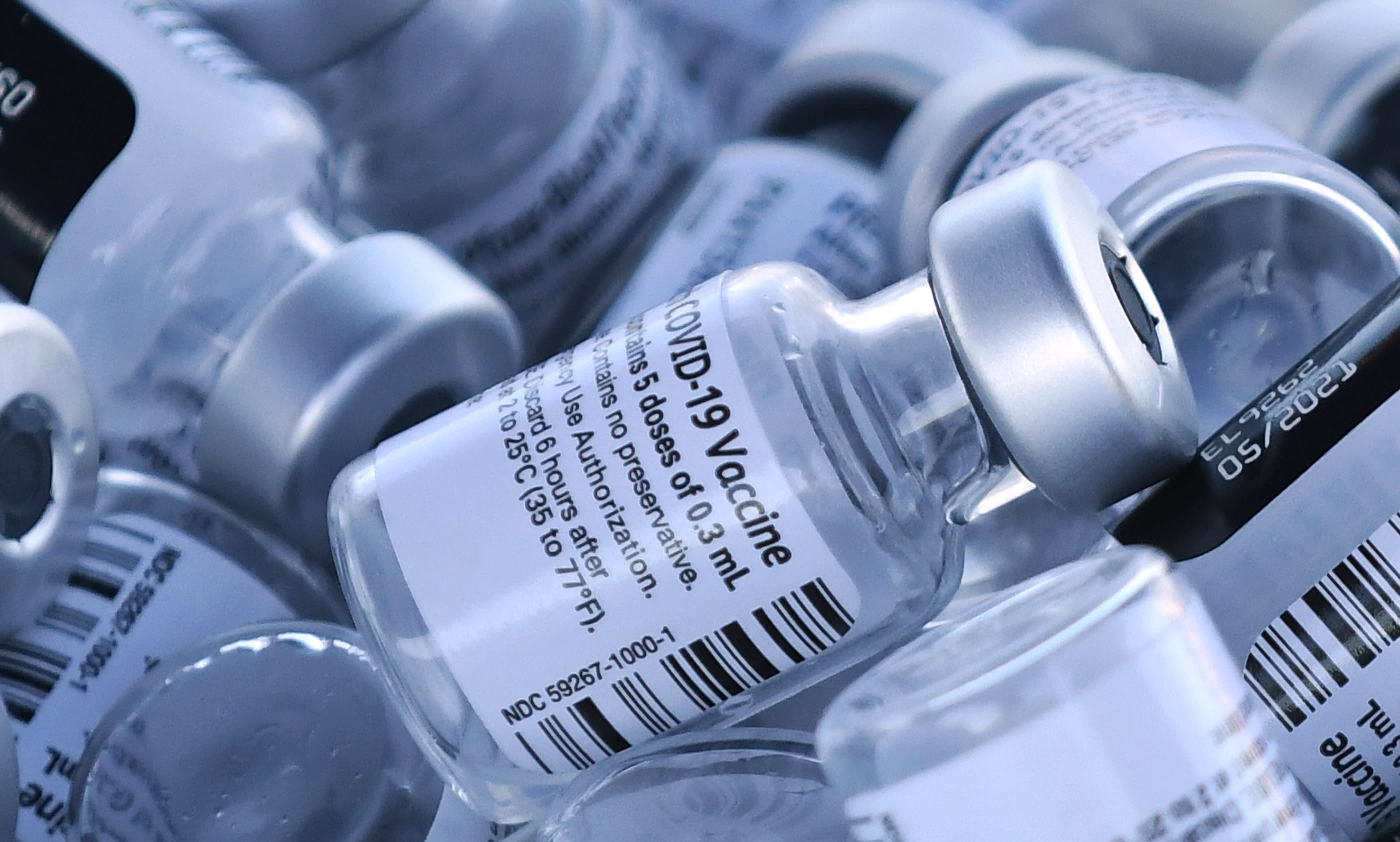
Empty Pfizer COVID-19 vaccine vials will be delivered on Jan.

Paul Hennessy | NurPhoto | Getty Images

The Food and Drug Administration is working on the approval of the Pfizer-BioNTech Covid-19 vaccine on Monday, the New York Times reported, citing sources.

The review process could go beyond that date, the Times said, as paperwork and negotiations with the company continue.

The move would make it the first Covid vaccine to move from emergency approval to full FDA approval.

The FDA declined to comment on the Times report to CNBC.

White House senior medical advisor Dr. Anthony Fauci, told the Associated Press on Aug. 8 that he hoped vaccines would get full approval “within the month of August,” adding that full approval would lead to more companies and schools requiring vaccines.

U.S. companies have tightened vaccination regulations for employees as Covid cases have increased across the country in recent weeks, and some cited full FDA approval as part of the decision-making process.

Full approval could also help convince people who are reluctant to get vaccinated until the FDA has fully approved the vaccination.

According to CDC data on Friday, more than 203 million doses of the Pfizer BioNTech vaccine have been administered nationwide, fully vaccinating more than 91 million people in the United States.

Pfizer and BioNTech began applying for their biologics license for the two-dose vaccine in May after receiving emergency clearance from the FDA in December. The FDA sets a six month target for approval of high priority drugs.

If formally approved, Pfizer and BioNTech’s vaccine would remain available in the market after the pandemic ended and the companies could promote the vaccine directly to consumers. Pharmaceutical manufacturers with an EUA are banned from promoting their vaccines, CNBC previously reported.

The companies announced on Aug. 16 that they had initiated the approval process for a booster dose for fully vaccinated individuals after submitting clinical trial data to the FDA.

Top health officials from agencies like the Centers for Disease Control and Prevention, the White House and the FDA said in a statement Wednesday that the effectiveness of mRNA vaccines declines over time, especially in those with compromised immune systems. They said the US would start distributing booster shots to the public in September.

Read the full New York Times report here.

“I stay on $ 47 a day – that is how I spend my time”

0
“I stay on $ 47 a day – that is how I spend my time”

Before Covid hit last March, I was making a decent income of around $ 4,000 a month as a freelance video producer. But as the pandemic deepened, that gig revenue quickly shrunk to $ 700.

With all the uncertainty about the future, I found myself on a futon in my sister’s house in New Jersey. I felt restless and missed all the trips I used to make for work.

But a few months later, my prayers were answered: Croatia announced that it would offer a one-year residence permit to digital nomads (anyone outside the European Union who works remotely) from January 2021.

I had visited Croatia before and was totally fascinated by the country, so I decided to apply.

Getting Croatia’s digital nomad residence permit

I did a lot of groundwork between April and December before I got the permit.

The application processing fee was $ 100, and to qualify, I had to have a monthly income of at least $ 2,750. So in the months that followed, I aggressively built a recurring income stream from freelance gigs (video production and copywriting) through Upwork.

In December, I was making around $ 4,000 a month again. I was also an obsessive saver and rarely spent my income. So with the $ 76,000 in my savings account, I felt financially secure enough to live abroad.

Zoom In Icon Arrows pointing outwards

A nice street in the heart of downtown Split

Photo: Steve Tsentserensky

In addition to income requirements, I was required to provide proof of international health insurance (obtained through a U.S. travel insurance company called Seven Corners), an FBI background check, and an address where I would live.

I spend a lot less in Croatia than in the US

I currently live in Split, the second largest city in Croatia, which is located on the east coast of the Adriatic.

The views are beautiful and the cost of living is much cheaper compared to most major US cities. For example, the average rent for a one-bedroom in Jersey City is $ 2,779 (excluding utilities), according to the RentCafe website.

Zoom In Icon Arrows pointing outwards

Steve Tsentserensky’s average monthly spend

Gene Woo Kim | CNBC Make It

I live alone in a 650 square meter apartment that I found through a Facebook group for expats in Croatia. I rent direct from owner for $ 540 per month (including utilities).

Marmontova Ulica, a busy Split street with several shops and restaurants. The island of Brač is shown in the distance.

Photo: Steve Tsentserensky

I spend an average of $ 47 a day. Here is a breakdown (as of June 2021):

  • Rent and utilities: $ 540
  • Health insurance: $ 65
  • eat (Groceries, food and drink): $ 608
  • Subscriptions: $ 14
  • phone: $ 12
  • Leisure travel: $ 185

total: $ 1,424

How do I spend my days

As soon as my alarm clock rings at 6:30 a.m., I make myself Turkish coffee and just have breakfast – mostly eggs, vegetables, cheese and toasted bread.

Then I dive straight into my freelance projects. I try to work around eight hours on weekdays. Since most of my customers are based in the United States, I plan to work for Eastern or Pacific Standard Time.

If I want to have lunch ($ 10-14, tip included), there are several places within walking distance. I love trips to the bakery for a tasty burek, a hearty pastry that is usually filled with meat or cheese ($ 2-3).

A cheese burek and double espresso in a Split coffee shop are around $ 5.

Photo: Steve Tsentserensky

A nice dinner on the coast includes many seafood dishes like tuna, squid, and squid risotto ($ 18-30, including drinks and tip).

Squid risotto and a beer from Dujkin Dvorlocal, a local Split restaurant, for just under $ 18.

Photo: Steve Tsentserensky

I’m a pretty social person and met a lot of great people in Split – both locals and other expats. On weekends, I could spend hours having meaningful conversations with friends about 2 espressos.

From my apartment I am a three-minute walk to the famous ruins of Diocletian’s Palace. Built around the turn of the fourth century and considered the heart of the city, the streets of this UNESCO World Heritage Site have been smoothed by pedestrians.

The famous ruins of Diocletian’s Palace

Photo: Steve Tsentserensky

I’m also six minutes from the Riva, a waterfront promenade full of cafes, bars, restaurants, and shops.

At 35, traveling has always been an integral part of my life. Since arriving in Croatia, I have made a number of trips to see more of this endlessly beautiful country.

A couple of places I’ve been: Zagreb (where I lived for a few months), Rijeka, Zadar and the islands of Hvar and Brač. Most recently, I took a two hour bus ride ($ 28 round trip) to Zaton.

A view of Zagreb Cathedral, a Roman Catholic cathedral church and the second tallest building in Croatia.

Photo: Steve Tsentserensky

The pace of life in Croatia is dramatically different – and much more my pace – than in New Jersey. When you combine that with affordability, friendly people, fun activities, and low crime rates, there isn’t much to fault.

Continuation of nomadic life

One of the disadvantages of working and living abroad is absent and far from my family and friends, so I hope to travel home at some point.

One of Split’s most famous landmarks is the Cathedral of St. Domnius – filled with wall paintings, carved altars, and a steep bell tower.

Photo: Steve Tsentserensky

While Croatia will forever hold a place in my heart, several other countries, including Georgia and Portugal, also offer nomad digital visas. As soon as my permit here expires in March 2022, I plan to take advantage of these opportunities and continue nomadic life for as long as possible.

The freedom to work from anywhere and set your own course is a bit addicting and the spontaneity is a big part of what I enjoy.

Steve Tsentserensky is a video producer, photographer and author. He currently lives in Croatia on a digital nomad residence permit. Follow him on Instagram.

Do not miss:

Learn how to assist a accomplice by way of the dying of a mum or dad

0
Learn how to assist a accomplice by way of the dying of a mum or dad

Losing a parent comes as close to a universal experience as it gets, but that doesn’t mean each of us is truly prepared. If it happens to your significant other, you may not know how to help them deal with grief and coping, but that is one of your duties as a partner. This is how you can be there for a partner whose parents have died.

Know that grief looks different every day

There are “stages” of grief as identified by Elisabeth Kübler-Ross in 1969: denial, anger, negotiations, depression and acceptance. Self-help books also often say some form of the phrase “grief is not linear”. Taken together, you can expect all of this to add up to a confusing amount of time as your partner goes through these stages, sometimes several times a day.

Remember that there is no wrong way to grieve and it is your job to deal with it

Know that everything they do and how they react is normal. There is no single pattern of grief, and your response to a parent’s death may depend on a number of factors, all of which you are not aware of. Your relationship with this parent as a child, your existing relationship, the nature of your death, and your mental state can all play a role.

Even if their grief looks different than you would express yours, don’t discredit them. Wake up every day to meet them where they are and give them unconditional support. Ann Sano, a 25-year-old New Yorker whose mother died at the age of 13, said, “I still don’t know how to deal with this. I make jokes that are probably uncomfortable for people, but it’s my way of healing. “

If your partner is taking an approach that you find disturbing or uncomfortable, perhaps joking or aloof, remember that there is no wrong way to grieve and it is your job to roll around with it and be there if that seems like it unaffected behavior ceases.

Make it clear again and again that you are there for them and that you are on this journey together.

Conversely, if your partner is in an “angry” phase, work extra hard not to give in to them when they attack you. If you find yourself in a “depression” phase, understand and do not try to force them back to normal. The normality that they are used to is over and they have to learn to find their way around without these parents, no matter what kind of relationship they had, and it takes a lot of time.

Expect that your partner might be aloof for a while too. Sano told Lifehacker that her mother’s death created a “void” that led her to turn down help from anyone, including potential friends. She is in a happy relationship now, she added, but that took time.

What this all boils down to is the fact that you need to be ready to evolve in accordance with them and you need to understand. Tell them that you are doing your best to understand them and that you know they are having a hard time. Make it clear again and again that you are there for them and that you are on this journey together.

Patience is most important

Sano said her biggest piece of advice to anyone helping a partner if a parent dies is “patient”.

“Patience is literally the key to being there for someone who is grieving,” she added. “Sometimes I just want to sit in a car for hours and cry in silence. Sometimes my fear prevails. Sometimes I get jealous when I see others with their mothers. All I can say is, ‘Be patient with us.’ We went through hell and back. We may need a second, a minute, an hour or a day, but we will recover, so please be patient with us and understand that we are only human and don’t want to be rude, quiet, sad, angry. or whatever we feel. “

Listen to your partner

Your partner may be completely silent about his dead parents or he may bring them up – often. It might seem like all they’re talking about now is death. If so, that’s fine. Try not to get tired of the subject; Your partner is hurt and needs you to listen. Remember that one day you will be in this position too and you want someone to listen to you.

Don’t think of every emotional outburst as something that needs to be stopped.

“It’s hard to say how a partner can be supportive because knowing what kind of support a person needs when they’re in grief isn’t always easy,” warned Meaghan McGoldrick, a 30-year-old New Yorker who has both parents lost and founded an annual benefit concert, Cancer cannot kill loveto honor them. “Grief is not linear, which makes the support process just as rocky. But the best way a partner can be there – or at least what works for my partner and me – is to start listening and feeling. Listen to your partner when they’re having a tough day or just want to tell a 40-minute story about their loved one that has nothing to do with anything. “

If they show interest in counseling or say something that sets off alarm bells in your head, don’t fire them. This is a very difficult time and you may not be thinking clearly. You have to take on an additional level of rationality for a while.

There are times when they won’t tell you how they are feeling. You have to ask.

Make her cry too. It may feel natural to jump in and try to get them out, but allowing them to feel and express even their saddest emotions is critical to their healing. Don’t look at every emotional outburst as something that needs to be stopped. Sure, when they cry, get them some ice cream or hug them, but don’t pull out all the stops to finish the phrase. You have to let it out.

There are times when they won’t tell you how they are feeling. You have to ask. Ask how they are doing and what they need, both in the immediate aftermath of death and on particularly difficult days, such as their first parentless family vacation or their parents’ birthday. Some people have a hard time asking what they need, so make this part a little easier by reminding them that you are there for them.

Put in work

After a parent dies, your partner is unlikely to become their normal you anymore. Dishes can pile up. Messages can go unanswered. Show that you are by their side by stepping in and making some of this work easier. Tidying up, making and bringing food, and acting as a barrier between them and well-meaning but invasive people.

Every family situation is different, but it is not unreasonable to assume that you were also close to this parent and feel your own grief. Don’t ignore this sadness.

You will get a lot of messages and calls. Retelling the story to people at different levels of acquaintance or taking on a composite facade is exhausting, so intervene if you can, if they seem open to it. You can be a great advocate for them by making sure cliché platitudes and curious questions don’t get through and the house stays intact while they devote the time they would normally spend on grief, funeral plans, and healing.

“After these signs, feel that you may not need advice or ‘things are getting easier’. At some point it becomes easier to know when they only need one ear and when to stay in the other room while they do the movements. Sometimes a drink doesn’t hurt, ”advised McGoldrick.

The grief doesn’t stop after the funeral flowers and casseroles stop rolling either. This will be hard for a long time and the pain will never really go away. As the partner of a grieving person, you will always be in service somehow, so prepare for the long haul.

“Having my boyfriend now for anniversaries, birthdays, or just hard days in general is a huge help as we do activities to keep my mind occupied,” said Sano. “We make sure that we also visit my mother on these special days. It warms my heart when he says goodbye to my mother’s stone and kisses it. I think it gives me a sense of relief and happiness to know that he loves her as much as I do. The days when it happens to be difficult, he and I take these days one after the other because my emptiness still triggers my anxiety attacks and now he only helps to talk me out of everything I’m going through at this moment. “

Acknowledge your own grief

Every family situation is different, but it is not unreasonable to assume that you were also close to this parent and feel your own grief. Don’t ignore this sadness, even if it may feel like your partner’s sadness is more legitimate and deserves immediate attention. Your pain is important too, and if you push it away you will have difficulty healing and you will not be as good a partner as you could be.

Talk to your partner about the dead parent if they seem open to it. Share your own fond memories, maybe at the first time you met or the moment you knew the parents recognized you as a partner for their child. Tell them stories about the parents they may not even know, moments you and the parents shared in the room without them. You can work together on this healing journey. Don’t discredit your own feelings here.

If you have to cry, be it because of the loss or because you saw someone you love so upset, cry. Being open and honest with your feelings is a better way of honoring the deceased than allowing their death to tear your life apart. You have to be strong to be there for your child, so please do them their right by doing this as best you can.

Kanye West and Irina Shayk reportedly break up up after a whirlwind romance

0
Kanye West and Irina Shayk reportedly break up up after a whirlwind romance

“Kanye took pictures of Irina at every opportunity,” said a second source of her romantic getaway. “She loved posing for him, and he was really into what he created with his photographs. She looks like his muse. “

That same month, a separate source told E! News about how the rapper “Fade” and the Russian supermodel got along. For one thing, they both run in the same fashion circles and soon went from acquaintances to something more.

“Kanye and Irina recently connected when they were both in New York City. They met one night and had chemistry and hit it off,” the insider previously said, and another source added, “It’s very easy going and she only been in contact for about a month. Kanye said he doesn’t want anything serious but likes Irina’s vibe. “

However, if their breakup is any indication, their relationship just seems to have taken its course.

Are inflatable kayaks worthwhile or do you have to purchase an actual boat?

0
Are inflatable kayaks worthwhile or do you have to purchase an actual boat?

little girl in a kayak

Photo: Beth Skwarecki

When buying my first kayak and discussing options starting at $ 250, I came across a $ 99 inflatable kayak that seemed too good to be true. There must be a catch, I thought. This is by no means a real boat. Later, after I bought my real kayak, I noticed that the inflatable boat had dropped to $ 50. I picked it up. I had to know.

The one I bought is a Intex K1 Challenger. In the two or three years since I got it, I’ve noticed more and more inflatable kayaks popping up on the local lake, most of the same brand as me. The two K2 Explorer is also popular; I’ve seen kids fishing from them and couples enjoying using them to paddle around the lake.

From my experience I can say that a cheap inflatable kayak does the bare minimum of what a kayak needs to do. It keeps you afloat and lets you float through the water. It’s not a good boat, but maybe it doesn’t have to be. Here are some things to keep in mind when feeling tempted.

What is the weight limit for an inflatable kayak?

Regular kayaks usually have weight limits between 200 and 450 pounds. We mentioned last time that you want to have a higher capacity than you think, but it is especially important to be careful with inflatable boats as their weight limits are often very low.

G / O Media can receive a commission

My Challenger only goes up to 165 pounds; The two person explorer I keep seeing around the lake is 400, which sounds like a lot until you remember having to put two people in there. There are likely other inflatables out there with higher weight limits, but if you are an adult, read the label carefully before purchasing.

That said, these kayaks are great for kids. My 120-pound son has no problem paddling around the lake in the Challenger. My kindergarten daughter loves it too; When I paddle with her, I tie her inflatable boat to the back of my regular kayak so I can pull her behind me.

How hard is it to inflate a kayak?

folded kayak before inflating;  You can see my foot as a yardstick and the kayak paddle in the corner.

Photo: Beth Skwarecki

One of my concerns was that it would take forever to inflate the kayak, so I was pleasantly surprised to learn that it doesn’t. It only takes a few minutes to unpack the boat and get out on the water once you get the hang of it – including how the valves work.

Mine has a Boston valve that takes air in but not out, so it can be easily inflated without accidentally losing air. What makes it difficult is that it is stacked on top of a regular screw top valve for quick draining. The screw cap needs to be completely closed when inflating, but luckily you can open it all the way – for example, remove the valve from the boat – to quickly deflate.

The first time I used the kayak, I found one valve but not the other: we swam well around the lake and then had a hell of a lot of time to squeeze out the air to grab it and go home. Another time I ran into a couple who were having trouble inflating their kayak for the first time because the drain valve was loose; at this point I knew how both valves work and was able to show them the trick.

Once you know how to do it, it will take less than ten minutes – maybe five if you’re good – to get the boat ready. The included hand pump (it looks like a bicycle pump) is sufficient for the job; I don’t think an electric pump is necessary.

How does an inflatable kayak behave on the water?

To be completely honest, this isn’t a great boat. But you knew that when you bought it for $ 99 (or $ 50 on sale). Be sure to attach the plastic fin to the bottom and don’t set your expectations too high.

The boat turns on its opposite side with every stroke of the paddle, but that’s the nature of short, flat-bottomed craft. The supplied paddle isn’t the best either, but you can always buy your own paddle if that bothers you. (When I’m in the dinghy because I’m letting a kid or friend use the real kayak, we often switch paddles to make things a little fairer.)

In theory, an inflatable kayak could leak, but the material is tough and that has not happened to me yet. Nevertheless, I am glad that I only drive the boat where I could easily swim ashore in an emergency.

What is it like to store an inflatable kayak?

This is the part they won’t tell you about. Yes, an inflatable boat can be packed up in a confined space, but if you pull it out of the water it will get wet and likely muddy. In this state you don’t want to roll the thing into your little suitcase.

Maybe if you use your kayak on the beach and have plenty of time to dry it off in the sun before heading back, this could work. But often at dusk I find myself with a dripping boat in a gravel parking lot.

So I can get started quickly: First I remove the seat and footrest from the boat and throw them in the trunk without venting them. I break the paddle in half (instead of separating all five segments and folding them into its smallest shape) and toss it in too. Then I open the valves on the kayak itself. After a minute or two, I declare that it’s deflated enough. I roughly fold the thing in thirds and tip it, not yet completely dry or clean, onto everything else in the trunk.

I keep the dinghy in the trunk between trips and don’t clean it thoroughly until I put it back in the suitcase at the end of the season.

Conclusion: is this a good kayak? No. But is it a great way to get out on the water if you’re not ready to invest in a full size boat? Absolutely.

POPULAR POSTS