Home Blog Page 83

BiP shares a primary have a look at David Spade and different hosts on the seashore

0

Bachelor in Paradise is about to show us one more time, and the show was just giving its first glimpse of the guest hosts messing around.

On Thursday, July 29, the ABC dating series, which has not aired any new episodes since 2019, posted photos of the four celebrities who will stand up for the former host on its official Instagram account Chris Harrison. The stars-David Spade, Lance bass, Lil Jon and Tituss Burgess– were photographed from the set of the show on the beach in Mexico.

“Yes buoy! [sparkle emoji] Say hello to our great restaurateurs at the #BachelorInParadise! [island and rose emoji]“Read the caption.

One person not on the carousel was the mainstay of the franchise Wells Adamswho, in addition to his well-known role as a show bartender, will also act as the master of rose ceremonies.

The absence did not go unnoticed by Wells himself, who quipped in the comments section: “Have you lost my picture?” He also added a crying emoji.

Are Sumo Deadlifts Dishonest?

0

Man deadlift sumo

Photo: Family SOK (Shutterstock)

A deadlift, where you pick up a barbell from the floor and use it to stand up, is one of the easiest and most difficult barbell exercises. But what happens if you do the lift with your feet outstretched to your sides? Does that make it less powerful?

To hear tearful commenters on Instagram talk about it, sumo deadlifting is a scam because spreading your legs gives you less distance to lift the bar. Less ROM or range of motion means you’ll make lifting easier. It makes sense in theory.

But does a sumo stance actually make lifting easier? And if so, is that enough to cheat it?

Let’s look at the deadlift rules

Remember that the concept of cheating only makes sense in the context of rules. So what are the rules?

G / O Media can receive a commission

In the large powerlifting associations, the breadth of your posture is up to you. Here is the USA powerlifting rulebook, for example. There is a weight training association called “Power Lifting” that bans sumo but also holds powerlifting meetings, and If they do, sumo is allowed.

Strongman does not have consistent rules, although the sumo stance is usually not allowed at deadlift events. However, this is the responsibility of the organizer. When you show up for a strongman meeting, ask if sumo is allowed if you prefer to draw sumo. Sumo wouldn’t exactly be a cheat as there is no way to get away with it for a secret advantage; it would just get you a no-rep.

However, is one of these positions easier than the other? There is an easy way to answer this question, and the answer is a resounding “no”. Check out only the best powerlifters and world records in the deadlift. Hell, if you look at average weight lifters, you get the same answer. Some draw sumo, some draw conventionally. If you could pull more weight in the sumo deadlift, everyone would be pulling sumo.

Here is an example of what you would see if a posture had a general benefit: When lifting weights, people would “spread” one leg forward and the other backward. When lifters figured out how to squat snatch with their legs folded, they found it was more effective when exercising and lifters could move more weight. These days, both split and squat styles are legal, but almost everyone does squat snatches. This is what happens when two styles are legal but one is clearly superior. Powerlifting just hasn’t seen deadlifting pose.

What are the pros and cons of sumo drag?

As some respondents will be happy to point out, a great advantage of sumo is that it reduces the distance the bar has to cover – if only by a few inches.

This reduced ROM is most noticeable on shorter lifters, which include many female competitors. I believe that Bozos like to insist that sumo cheat because they are looking for a way to discredit women’s elevators. (Another common insult is that sumo is “gay”.)

But sumo also has its downsides. You are in a less advantageous position for the early part of the elevator as it lifts off the ground. For most people, sumo deadlifts are harder and easier to complete from the floor; Traditional deadlifts (feet together) are a little easier to start, but can be more difficult to block.

The truth is, the choice of posture for strength athletes depends on preferences and body proportions. One theory is that Strength athletes with short arms or long torsos are usually better at sumo; those with the opposite are better with conventional ones. Another argues that it is more to do with the shape of your hip joint. In any case, it differs from person to person.

So you get the best of both worlds

As with anything in the gym, the best way to find out what works for you is to try it out. Get a coach or check out some good tutorials conventional and Sumo Deadlift techniques and spend some time exercising which you normally don’t. After a while, consider switching. Chances are that one of these will work better for you than the other. If the two are about the same, congratulations, you can flip a coin – or just pick based on your sports. (Do you keep an eye on strongman competition? A solid conventional deadlift is a good investment for you.)

So you are free to deadlift however you want, and please don’t tell anyone who takes the opposite posture that they are doing it wrong. If you pull conventionally and are jealous of others’ sumo pull, give sumo a try! But if you can’t lift more weight than you can with a regular deadlift, that should be an indication that sumo isn’t really cheating. Maybe you’re just jealous.

The right way to discover childcare when every little thing is properly booked

0

Image for the article titled How to Find Childcare When Everything is Firmly Booked

Photo: Monkey Business Images (Shutterstock)

School is about to restart, so working families will have to look for childcare again to close the gap between school and working hours. But this year seems to be even harder than usual – not as easy as it was usual – like many daycare centers and after-school care centers Experience a shortage of employees.

As frustrating as it is to work in a country that still doesn’t recognize reality 60% of families have two parents who work outside the homeUntil that changes, parents will still be stuck looking for back-to-school childcare.

If you still haven’t found what you need, we have a few ideas that you might be looking for.

Contact your local university

College students often have a more flexible schedule than most others. If you have a college campus nearby, this is a good place to start. Some universities have student lists or boards where you can post a babysitting job. Another strategy would be to reach out to universities that have students with babysitting experience or that are planning to work with children as part of their careers, such as B. an early childhood education department or a club that runs local elementary schools.

G / O Media can receive a commission

Team up with a family in a similar situation

The problem of finding part-time childcare to bridge the gap between school and work hours is a problem that many, many families face. You’re nowhere near alone – given the lack of opportunity right now, there’s a good chance another family on your network is going through the same battle.

It is worth reaching out to other families, be they work colleagues, families you know from church, neighbors, your child’s parents, friends of your child, or other families you know who may also need childcare. This could take the form of a babysitter swap, such as having one family take on the early shift while the second family takes on the afternoon shift or a part-time nanny share.

Offer to hire a home parent

Another alternative is to reach out to a stay-at-home parent who may be willing to take care of a child or two before and after school. In a perfect world, her and your children would be about the same age and get along. That is the ideal scenario.

In a less than perfect world, even if there is a mix of age and temperament, there are still a number of stay-at-home parents who may be interested in a part-time job. Just make sure you talk about the payment in advance and what is expected of the content of that payment, e.g. Snack or transportation to after-school activities. (Also make sure everyone here studies and understands all of the applicable tax implications.)

Find babysitting groups in your area

If you search Facebook you can sometimes find babysitting exchange groups near you, often made up of parents who need childcare and babysitters who are looking for work. A local parenting group can also be a good resource.

These local groups are a good place to find potential sources of out-of-school care, as well as other parents who are in a similar situation and may be willing to join, whether it be for swapping childcare or a part-time nanny to take over sharing.

Try Taylor Swift’s highly effective message to the Olympic gymnastics crew

0

Taylor Swift knows “Everything has changed” since Simone Biles dropped out of the women’s all-around competition, but she knows it too Suni Lee and Jade Carey are more than “Ready For It”.

The pop star offered her voice for an inspirational message prior to the televised all-round women’s gymnastics. Speaking over a video of participants training for the Tokyo 2020 Olympics, she said, “Life can surprise you. It can humiliate you. It can test you. It can inspire you.”

Taylor also admitted how the team overcame numerous hurdles on the way to Tokyo, including Simone’s decision to suspend her Olympic trip. The world-class athlete announced her decision to sit out the women’s tournament on Tuesday, July 27th, stating that she would like to prioritize her mental health.

In their absence, Jade and Suni went to the plate.

“They didn’t expect this to be the story, but that doesn’t mean they weren’t ready for the spotlight,” said the singer. “They worked for it, they dreamed of it, they belong here.”

Unit trusts in Singapore – issues to know earlier than you make investments, Cash Information

0

Most common investments in Singapore, (like stocks, bonds, and property) are not difficult to understand once you get past the jargon. When it comes to complex products like a unit trust or mutual fund, however… it’s a different story. And the danger is that you might get sweet-talked into investing in a unit trust without seeing the full picture.

So, before you start buying unit trusts, here’s a guide to how unit trusts work, what kind of costs and returns you can expect, and how to choose the right one.

What is a unit trust?

A unit trust (or “mutual fund”, as the wacky Americans call it) is a fund where multiple investors pool their money. A fund manager takes that pool and channels it into a whole bunch of different investments.

Okay, I know. That made absolutely no sense. Let me try to unpack it into three main points:

1. A unit trust is a collective investment, not an individual one.

You do not have personal control over the individual components of the investment portfolio. You simply hand over the reins to the a professional fund manager.

This isn’t great for control freaks, but for the rest of us, it may not be a bad thing. You may not have time to monitor stock markets, or the expertise to make informed decisions.

2. Unit trusts lower the risks of investment by diversifying.

In English, this means your fund manager takes your money and buys shares in many different companies. If one flops, the others help mitigate the damage.

Kind of like how (back in the day) we all had both Uber and Grab apps on our phones – so that when Uber has surge pricing you can still book a Grab.

3. Your fund manager is very important… and no, her services are not free.

The fund manager is what makes or breaks a unit trust. Her job is to actively buy and sell assets to try and generate higher returns.

So, whether you make or lose money depends almost completely on how competent your fund manager is. Naturally, you must pay for her services. Fund managers can make up to 2 per cent of the portfolio’s total asset value every year.

What fees are involved in unit trusts?

Although you don’t need a lot to start investing – some banks let you start with just $100 a month – unit trusts are ultimately costly to invest in because there are many fees involved.

Here are the fees you might need to pay personally (usually taken as a cut off your investment amount so you don’t feel the pinch):

Fee Description Expected amount
Initial service charge A fee you pay when you buy a fund Up to 5 per cent of your investment
Realisation / redemption fee The amount you pay when you sell the fund Up to 5 per cent, but usually none if you had to pay initial service charge
Switching fee A fee to pay if you decide to switch from one fund to another (under the same fund manager) 1 per cent of your investment
Online sales charge Admin fee for buying a fund online 0.8 per cent to 1 per cent of your investment

That’s not all! There are also overall costs that must be paid to the various parties involved in maintaining the fund. These are usually calculated off the total value of the fund’s assets (net asset value, or NAV).

Fee Description Expected amount
Management fee Your fund manager’s pay cheque 1.5 per cent to 2 per cent of NAV per year
Trustee fee The organisation that safekeeps the various assets in the fund will charge a fee for its custodian services 0.1 per cent to 0.15 per cent of NAV per year
Miscellaneous fees Admin fees, audit fees, etc. Variable

Guess where that money will come from? You, of course, along with everyone else who bought the unit trust.

But despite all these fees that cut into your returns like crazy, some investors still love unit trusts.

Why?

For one thing, it’s an easy way to invest in certain key markets. Think about the hype around Tencent stock in China or Apple stock in the US. If you want to own shares in these companies to impress chicks, one of your options in Singapore is to go through a unit trust.

It’s also the closest thing you can get to actually hiring your own personal money manager. Investing is very time- and effort-consuming, not to mention fraught with risk. There’s a certain peace of mind when you outsource it to a professional, even if it costs more.

That said, paying a premium does not guarantee higher returns! It’s very hard for even competent fund managers to “beat the market” (i.e. the returns on a generic index fund, like an STI ETF).

How do you choose a unit trust?

Unlike simpler forms of investment, like buying Singapore Savings Bonds or shares in your favourite telco company, it’s a little harder to make a decision when it comes to unit trusts.

For a start, there are a gazillion of them out there, and they all have incomprehensible names like “AB SICAV I Low Volatility Eq A SGD H Acc”.

So what do you look out for? Here are some terms you’ll come across when researching the unit trust you’re interested in.

Fund house: This is the investment bank or company that offers this fund. Big names are BlackRock, Aberdeen, Franklin Templeton, etc.

Fund manager: The specific fund manager (e.g. John Doe from JPMorgan) and describes their experience level and expertise.

Fund objective: Unit trusts cater to various investment objectives – whether you want passive income, fast or long-term capital growth, or just to beat inflation.

Investment strategy: Articulates what the fund manager will do with your money to achieve objectives. For example, if it’s meant to provide passive income, the fund manager will focus on high dividend yields.

Geography: Which countries this portfolio focuses on. Country/region-specific unit trusts let you ride on fast-growing or strong economies, while wider coverage funds are more resilient to big geopolitical changes.

ALSO READ: 5 best regular savings plans in Singapore 2021: Invest with $100 a month

Asset allocation: Tells you what sorts of financial products are in the portfolio – stocks, bonds, REITs and so on. Common categories are equity funds (stocks only, higher risk), fixed income funds (bonds only, lower risk) and balanced (mix of the two).

Holdings: What the fund manager is currently investing in. This gives you a better “feel” of the unit trust. For example, a unit trust that invests in China’s biggest tech companies is very different from a more conservative fund that invests in big global brands like Coca-Cola and Unilever.

Performance history: The historical return on investment is published. This is a good place to check if the unit trust pays out regular dividends, and how much you can expect to get.

Unit price: Each unit trust is divided into purchasable units. The price of each unit is based on the total current value of all the assets in the fund which is constantly fluctuating, just like stocks. Think of this as the equivalent of share prices.

Minimum investment: There’s usually a minimum amount (e.g. $1,000) you need to start with, otherwise your request won’t even be entertained.

… And these are only the basics! There are also lots of documents, like the prospectus and annual report, to read. Ugh.

Of course, you can always go down to the bank and ask for professional advice. Better yet, go to a few and get some opinions. Here are the 4 most popular financial institutions you can go to:

DBS unit trust

Practically every Singaporean has a DBS/POSB bank account, which is already half the battle won (for DBS, anyway) as you can easily invest in unit trusts through DBS iBanking.

Finding the right unit trust among its 500+ investment fund options is the difficult bit. For beginners, you can narrow it down by filtering by currency (choose SGD to avoid foreign exchange fluctuations) and by risk profile (according to your personal risk appetite).

You can also select Focus Funds, which are investment vehicles selected by  DBS’ in-house fund selection team every quarter. These have been vetted and reviewed by the DBS team. Unfortunately, their reviews are full of investment jargon which isn’t really helpful if you’re not familiar with them.

You can invest either with a lump sum (usually minimum $1,000) or with small monthly amount (e.g. $100 a month).

OCBC unit trust

Similar to DBS, OCBC offers unit trust investments with low barriers to entry – you just need to set up an OCBC online banking account or get one opened instantly at an OCBC branch.

You can look at the complete list of OCBC unit trusts here. There’s also a page of OCBC-selected funds, which would certainly help narrow things down, but you still need to know roughly what you want (e.g. which region you want to invest in, which investment bank you’re confident about) to use it.

Also, OCBC also has an email/SMS alert service for unit trusts on your watchlist.

As with DBS, you can start investing with either $1,000 (lump sum) or from $100 a month.

UOB unit trust

UOB’s unit trust page is helpfully divided into subcategories (based on geography and asset mix) so you can easily zoom in on the ones that interest you. The 6 categories are:

Category Description
Global Investments distributed across many regions for maximum diversification
Asia Unit trusts focusing on high growth (but riskier) Asian region
US Funds that let you buy into the biggest financial market in the world
Equities Unit trusts made up of stocks for potential capital growth
Fixed income Generally lower risk investments comprising mainly government and corporate bonds
Dividend Unit trusts focusing on regular high dividends but not necessarily capital growth, can be a mix of assets

You can also use the fund selector page to filter by fund house, asset type, geography and investment scheme (e.g. CPFIS, SRS).

Similar to the other local banks, you can invest using a UOB internet banking account. It takes at least $1,000 to start investing. Otherwise, you can opt for a Regular Savings Plan.

By the way, UOB has an asset management arm with its own unit trusts e.g. United Income Focus Trust. But you don’t to buy them through UOB as some other banks also offer them.

Phillip unit trust (POEMS)

Apart from the three local banks, you might also want to consider investing with POEMS because there are supposedly no fees (platform, sales or switching fees) when you purchase online or “port in” your existing unit trust.

These are only the fees you need to pay personally though – the other collective fund fees, such as your fund manager’s pay cheque, still need to be paid.

Looking for the right investment vehicle with POEMS can be overwhelming because there are over 1,000 unit trusts. They also have a lot more types of funds than the banks, like “alternative investments”, “commodities” and “derivatives”. In that respect, you do need quite a lot of investment knowledge to start.

For beginners, there are some model portfolios for you to peruse, but beware – they’re not exactly for the faint-hearted either.

However, here’s a suggestion: No one will stop you from talking to investment advisors at DBS, UOB or OCBC to assess your needs and identify the best unit trusts for you, and then buying it to through POEMS online.

alt

FundSupermart (FSMOne)

Another non-bank platform for investments in Singapore is FundSupermart’s FSMOne, which is exactly what it sounds like: A “supermarket” with a huge variety of unit trusts (close to 1,500!) as well as a ton of ETFs, bonds and stocks to choose from.

The sheer variety of options can be staggering, but there are FundSupermart investment advisors to help you with your decision, so you’re not going in blind. Thereafter, managing your portfolio with FSM MAPS, their “dashboard”, is a simple affair.

Like POEMS, FundSupermart dangles the big old “no fees” carrot (that is, no fees apart from the NAV!) for investing with them. That’s also one of their key selling points – the chance to actually make money instead of having banks eat into your profit.

DollarDex by Aviva

An alternative platform that’s solely focused on unit trusts, DollarDex may seem like a much smaller outfit that the rest but it does have some credentials: Its parent company is the insurance firm Aviva, it’s regulated by MAS, and it’s registered as an CPFIS investment broker.

Again, DollarDex focuses on transparent pricing and no extra fees (apart from the NAV of your unit trust) so your profits aren’t eroded by fees.

The user interface is clean and simple, which is great for beginners who are new to unit trusts, and information is presented in a pared-down manner. On the other hand, if you’re looking for very detailed information, you need to do a bit of digging around on this platform.

The main drawback is that there aren’t as many unit trusts to choose from compared to bigger players like POEMS and FundSupermart. And of course, it doesn’t list anything other than unit trusts, so it won’t work as a consolidated platform for all your investments.

ALSO READ: Guide to Investment-Linked Policies (ILP): What you need to know

This article was first published in MoneySmart.

Amazon (AMZN) revenue Q2 2021

0

Amazon shares fell more than 5% in expanded trading on Thursday after the company reported its first drop in sales in three years and gave poor guidance for the third quarter.

This is how the company did it:

  • Merits: $ 15.12 vs. According to analysts polled by Refinitiv, USD 12.30 per share
  • Revenue: $ 113.08 billion versus $ 113.08 billion $ 115.2 billion, according to the analysts polled by Refinitiv

Amazon’s revenue rose 27% year-over-year to $ 113.08 billion, marking the third straight quarter in which revenue exceeded $ 100 billion. However, that still fell short of Wall Street’s forecast of $ 115.2 billion.

For the third quarter, Amazon expects sales between 106 and 112 billion US dollars, which corresponds to a growth of 10 to 16 percent compared to the same period last year. That’s well below the consensus estimate of $ 119.2 billion.

Amazon said its third quarter operating profit will be between $ 2.5 billion and $ 6 billion, a remarkably large gap. This is still a step below the $ 6.2 billion cost of coronavirus security measures in Q3 2020.

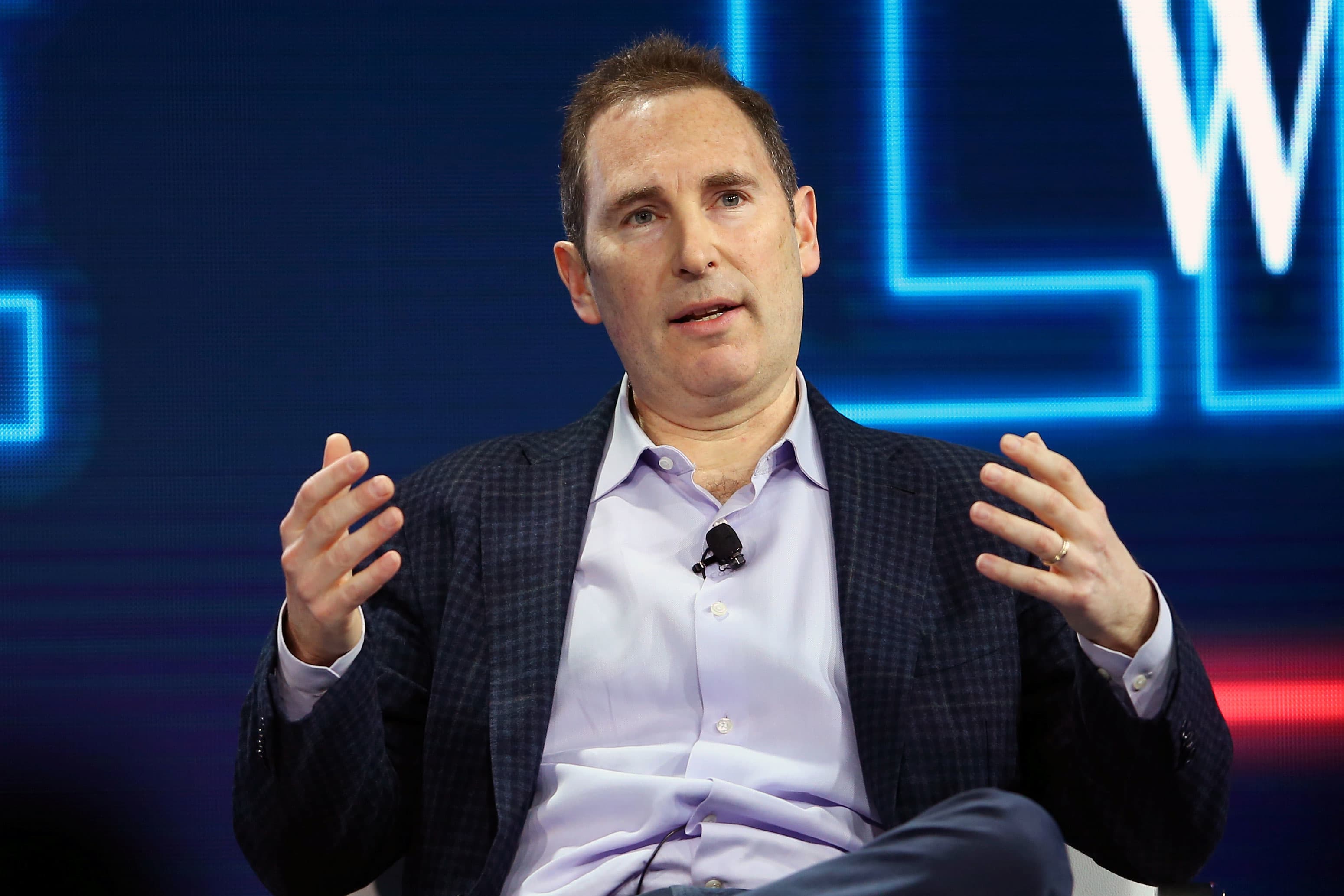
The June quarter reflects the final full quarter of Jeff Bezos’ tenure as CEO. On July 5, Bezos passed the role of CEO to Andy Jassy, ​​who previously ran AWS. Bezos is now Executive Chairman. It is unclear whether Jassy will be attending Amazon’s conference call on Thursday evening after winning. Bezos has not participated in a profit talk since 2009.

In a statement, Jassy thanked Amazon employees for their work during the coronavirus pandemic, adding, “I’m very excited to work with you as we invent and build the future.”

The other pillar of Amazon’s business, Amazon Web Services, grew revenue 37% in the second quarter, faster than 32% in the previous quarter. AWS revenue for the quarter was $ 14.81 billion, beating analysts’ estimates of $ 14.20 billion.

This story evolves. Check back for updates.

WATCH: Amazon stock is about to make a comeback, says Jim Cramer

This is examine how a lot life your iPhone battery has left

0

A hand is holding an iPhone X

Photo: Kicking Studio (Shutterstock)

Apple has come under fire in the past for a myriad of battery issues, and frankly, there are few modern day inconveniences more annoying than feeling like you can’t use your phone for more than a few minutes without plugging it in to charge to have to. Therefore, it is helpful to know where your iPhone battery stands in terms of capacity and performance.

According to Apple, the lithium-ion batteries in your devices are designed to work at up to 80% capacity through around 500 complete charging cycles. As the battery runs low, you will have fewer hours of operation before you have to juicing it again. Batteries naturally degrade over time, and they certainly won’t work at 100% for long (and possibly never after you’ve used your device).

We got covered How to check your iPhone’s battery life, that is easy to see in Settings> Battery> Battery Health. This shows you the current capacity of your battery compared to when it was new and gives you options to maximize battery performance.

However, you might also be interested in how often you’ve charged your phone as this also gives a sense of how long your battery will last. If you’ve far exceeded 500 full charges, slower performance may make more sense. There is an easy way to do this, which you can also find in your device settings (h / t ZDNet).

Here’s how to view your iPhone’s charging history

  1. Go to Settings> Privacy> Analytics and Improvements.
  2. Switch Share the iPhone analysis (or Share iPhone and Watch analytics if you have an Apple Watch). This should be on by default, but if it isn’t, you will have to wait a few days for the data to compile before proceeding with the next steps.
  3. Tap Analytics data and scroll to entries that start with “log-aggregated” and select the latest available date.
  4. From here you search a code wall for “Battery cycle number”- You can either scroll (there is a lot of data to sort) or copy and paste the report text into a text editor or document that you can manually search through. The number below this entry tells you how many charging cycles your battery has already completed.

G / O Media can receive a commission

Image for article titled How to Check How Much Life Your iPhone Battery Has Left

Screenshot: Emily Long

Note that a value above 500 does not mean that your battery is dead and needs to be replaced. In fact, my log shows 517 full charge cycles and my maximum capacity is still 88%.

It’s also useful to know that one charge cycle won’t take your battery from zero to 100 all at once, so you don’t have to let your battery die and then fully charge it. ON The charging cycle is counted when 100% of your capacity is discharged, even if you juice it in between.

Israel will give Pfizer Covid booster vaccinations to aged folks

0

A man receives his third dose of the COVID19 vaccine on July 14, 2021 at Sheba Medical Center in Ramat Gan, Israel.

Amir Levy | Getty Images

Israeli health officials plan to offer booster shots of the Pfizer-BioNTech Covid-19 vaccine to people over the age of 60 as the vaccine’s effectiveness appears to be waning as the Delta variant spreads around the world, NBC News confirmed Thursday.

The heads of the health organizations that have given the Pfizer vaccine will begin giving third vaccinations on Sunday, according to NBC News. The booster vaccination is available to patients over the age of 60 who have received their second vaccination at least five months earlier.

The country’s health ministry reported last week that the two-dose vaccine is now only 39% effective in Israel, where the highly transmissible Delta variant is the dominant strain. The syringe still works very well at preventing people from getting seriously ill, Israeli officials said, showing 88% effectiveness against hospital stays and 91% effectiveness against serious illnesses.

The data from Israel, which began vaccinating its population before many other countries, supports drug manufacturers’ arguments that people will eventually need a booster vaccination to protect themselves from new variants.

Pfizer CEO Albert Bourla on Wednesday doubled his remarks that people will need a third dose of the vaccine to maintain high levels of protection against the virus. The US drug maker released new data Wednesday from a company-funded study that showed the vaccine’s effectiveness dropped to about 84% after four to six months.

“We have also seen data from Israel that immunity is declining and that affects what used to be 100% against hospitalization,” Bourla said on CNBC’s The Exchange.

The Centers for Disease Control and Prevention, the Food and Drug Administration and the World Health Organization have stated that they are not currently recommending a Covid booster due to a lack of data. US and global health officials have said they are looking at Israeli research, which has not been peer-reviewed and has given little detail.

“We need to be aware that these vaccines can become less effective over time,” said Dr. Isaac Bogoch, professor of infectious diseases at the University of Toronto, in a recent interview.

He stressed that the vaccinations still appear to be highly effective in preventing serious infections and helping hospital systems not get overwhelmed in the colder months. “We are still in the Covid era and anything can happen,” he said.

“We have to be prepared and we have to be agile that at some point people will need a booster,” he added. “This close monitoring, which is taking place in places like Israel, the UK and other parts of the world, will be very helpful in moving policy forward when and when we need boosters.

Israel’s plans to increase its population come two days after the CDC reversed course and advised fully vaccinated Americans living in areas with high rates of Covid infection to return to wearing face masks indoors. According to a CNBC analysis, the guidelines cover about two-thirds of the US population.

While the Delta variant hits unvaccinated people the hardest, some vaccinated people could carry higher amounts of the virus than previously thought and potentially pass it on to others, said CDC Director Dr. Rochelle Walensky on Tuesday.

Walensky added new data showing that the variant behaves “uniquely different from previous strains of the virus,” suggesting that some people infected with the Delta variant “can be contagious and can transmit the virus to others.”

“This pandemic continues to pose a serious threat to the health of all Americans,” Walensky told reporters on a call. “Today we have new science on the Delta variant that requires us to update the guidelines on what to do when you are fully vaccinated.”

– CNBC’s Kevin Stankiewicz contributed to this report.

How you can put together and cook dinner with corn milk

0

Image for the article titled You Can Make (and Cook with) Your Own Corn Milk

Photo: itaci (Shutterstock)

If you know me, you will know that I love corn very much. This year I grew my own corn for the first time and although it is a bit smaller than the ears of wheat you see in the grocery store, it’s still sweet and juicy, and I wanted to get as much flavor out of those cute cobs of mine as possible . So I made some corn milk.

I’ve always been the pistons milked with my knife and occasionally boiled it in water to a golden corn stockbut recently I used milk as a corn flavor extraction method and it works very well.

All you have to do is put your used flasks in a stock pot and add enough whole milk to just cover them (about one cup per flask should do the trick, but don’t get hung up on strict measurements). I also add 1/4 teaspoon of salt for each pair of cobs to balance out the sweetness and bring out the corn flavor. Heat the milk over medium heat until it starts to steam and bubbles start to form, then reduce the heat (and take it off the stove if you have an electric stove), cover the saucepan and let it steep to room temperature. Finally put the whole thing in the fridge overnight. Remove the pistons the next day and you will get corn milk (not to be confused with this other one, much sweeter corn milkwhich is very good, but a completely different animal).

Corn milk tastes exactly how you hope it will – creamy and cheesy. It’s sweet, but only as sweet as your corn, and perfect for baking and cooking (but only if the things you bake and cook could benefit from a little extra graininess).

You can use corn milk in recipes just like regular milk without corn flakes – without having to change the quantities. The uses for corn milk are many and far-reaching, but my first impetus is to make corn ice cream, an incredibly underrated type of ice cream. It would also be good in bread pudding, french toast, egg casseroles and scrambled eggs, quick breads, or an old-fashioned hot milk cake. If you can do it with regular milk, you can do it with corn milk (and you probably should).

G / O Media can receive a commission

This interview with Suni Lee’s father is assured to win your coronary heart

0

Suni Lee is officially an Olympic gold medalist – and as fans around the world and their teammates flick through the news – there’s probably no one more proud than their parents.

Moments after the Team USA gymnast won the all-around on July 29, the Today show caught up with the teenage athlete’s parents. John Lee and Yeev Thojawho watched their daughter’s victorious performance from their Minnesota home.

“I almost cried and I never cry,” said John Today co-anchor Hoda Kotb. “I’m so happy that she won.”

At the age of just 18, Suni is the first Hmong American to take part in the Olympic Games and win a gold medal. The athlete achieved a score of 57.44 to secure her victory, which in turn defended the United States’ winning streak that began at the 2004 Olympics.

A moment closes for John, who built a balance beam for his daughter in her garden as a little girl.

POPULAR POSTS