Home Blog Page 402

We’re instructing Australian women the flawed cash class

0
We’re instructing Australian women the flawed cash class

What messages do we send to young girls? Image: Getty

There is a famous finding from a 2016 study of pocket money in Australia: girls make $ 9.60 a week while boys make $ 13.

The Heritage Bank study did not investigate the reasons for this, but another study from the Australian Institute of Family Studies found that girls did not do less housework or work.

In fact, they do more: Australian girls aged 10 and 11 spent an average of 10 minutes more per day on housework than boys in 2012.

It’s just one of the unconscious lessons we teach young children about money, and it has long-term consequences.

Shaky foundations

We’re instructing Australian women the flawed cash class

The children’s financial literacy is broadly balanced, but the way girls and boys handle money is not. Image: Getty

According to a study by the Australian Council for Educational Research (ACER) published in July last year, there is no gap in the overall achievement of financial literacy between 15-year-old boys and girls.

However, there were gender differences in attitudes towards money. Australian boys were more likely to enjoy talking about money, while girls at the time of the survey felt that money matters were not relevant to them.

In addition, girls reported having less access to financial education, both in and out of school, than boys who reported having received information from friends, the media and school.

Girls also grow up disadvantaged because they are statistically less involved in their family’s financial decisions, according to a recent study by the Melbourne Institute.

“Children are always watching us. It doesn’t matter how much we talk about how things are to be done, they end up repeating the behaviors that they see us quite often, “Women With Cents’ financial expert and founder Natasha Janssens told Yahoo Finance.

“So if there’s a subject where dad takes care of the bills and dad knows how to fix the car and fix the lawnmower… and mom is more about bringing people together and knowing how to cook a fantastic meal then that’s usually what kids do. “

She believes the first and most important step for Australia’s parents is to take a careful look at their own relationship with money, both as individuals and as couples and parents.

The story goes on

Then it’s about talking to your kids about money.

“[Start] to encourage and nurture their curiosity and entrepreneurship about the ways in which they can make money, ”said Janssens.

“Instead of teaching girls to ask mom for pocket money, instead of saying, ‘Okay, what would you like to do? How else can you earn this? ‘

“We know that for girls we often have to pass down very outdated habits over generations and have to be able to stand on our own two feet, regardless of whether we want to be a mother at home or not.”

Compound challenges

Girls are being marketed more than ever.  Image: Getty

Girls are being marketed more than ever. Image: Getty

Janssens also believes that the school system and parents could do more to undo deeply ingrained gender teaching about how we spend our money.

She fears that parents of girls have an additional hurdle when it comes to financial literacy.

“[Young girls] have never been marketed to anymore. If we look at how our parents grew up and how I grew up – today they just ran Youtube, ABC Kids, an educational game on the phone and adverts, ”she said.

Across both sexes, they teach children to “want, want, want” to be, but for girls, that “want” is built into a larger discussion than just a toy or snack.

Rather, girls on Instagram and TikTok are bombarded with messages about how they look.

“It doesn’t matter what we teach them [about values and money] At home, they watch their friends being taught various things and being encouraged to spend money on their looks. And I just want to point out to parents that this is the news now that we are going to set it up for in the future, ”she said.

“Then a lot of money is spent on maintaining our looks and making us feel worthy and good enough.”

What happens in adulthood?

Woman inserts a coin into a piggy bank, toned image

What happens to us as adults? Image: Getty

The financial skills gap in children may have disappeared, but for adult women it is still a pressing problem.

The latest Australian Household, Income and Labor Dynamics Survey (HILDA) found that there is widespread illiteracy across Australia – especially among young Australians.

Regarding 63 percent of men, only 48 percent of women understand at least three basic concepts of financial literacy.

“Such widespread illiteracy in the financial sector is increasingly worrying given the highly complex financial markets, high levels of individual and household debt and easy access to credit,” said Professor Alison Preston of the University of Western Australia Business School in March 2020.

Because COVID-19 and its associated financial challenges are still an issue, this issue will not be addressed.

The latest financy women index from December 2020 showed that women remain in financially more insecure positions than men despite the improved unemployment rate.

And more than one in five female employees reported severe or moderate financial stress in 2020, according to AMP’s 2020 Financial Wellness Report. That’s almost three times the number of men reporting the same level of stress.

However, that doesn’t mean the situation is bad. After all, the literacy gap for children has narrowed.

Téa Angelos, founder of the Smart Women Society and advocate of financial aid, believes schools are now doing much more to teach children about financial literacy.

And while she believes that linking financial literacy with real-world concepts for students, like paying for their formal attire for 10th grade, is the next step, getting a good attitude early on is much more dependent on financial support To establish money.

“Our attitudes to money and our beliefs and attitudes towards money as adults are ultimately shaped by how we grew up with money, how we grew up with it, what we learned in school and how our parents and other people deal with money . ” She said.

“How we grow up with money [can] form really limiting beliefs around money. Hard to change that the mindset of money is difficult to manage and stressful. Money is a tool to improve my future. “

But teaching girls that is crucial, she said.

Take control of your money and learn to maximize it with the women’s money movement! Join the club LinkedIn and follow Yahoo Finance Australia on Facebook, Twitter and Instagramand subscribe to the free Fully Briefed daily newsletter.

Get your tickets now.
Get your tickets now.

How my beginning meditation follow goes

0
How my beginning meditation follow goes

Illustration for article titled How My Beginning Meditation Practice GoesPhoto: Fizkes (Shutterstock)

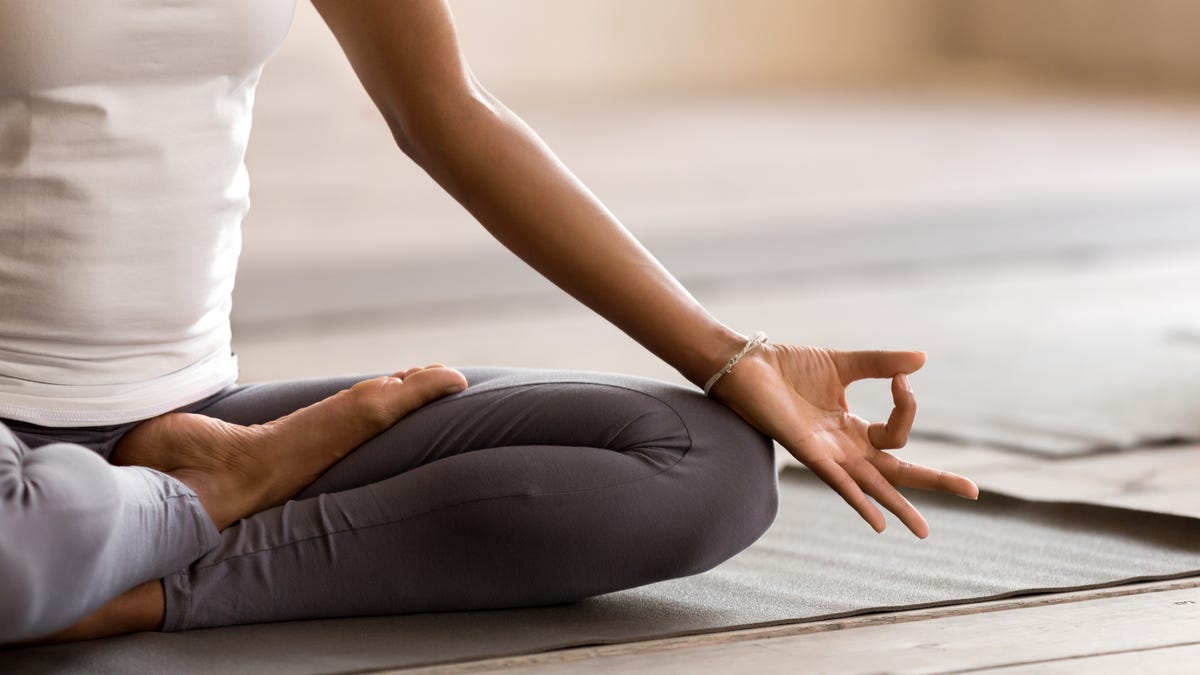
As part of Lifehacker’s fitness challengeI try different meditation techniques for 30 days. This is the second week of my challenge, and I’ve taken a new step in developing a consistent meditation routine: I’ve lengthened the length of my meditation sessions and tried to meditate at noon instead of sitting in the morning. The results were … less than desirable.

Experiment with different times of the day

In my first week My level of comfort with meditation increased, but it did not necessarily relieve my stress. I suffer most of the stress during the work day – the ever-growing to-do list can be overwhelming and most of the time I let it exceed my waking hours. In the second week, I decided to meditate for five minutes in the middle of the day.

Illustration for article titled How My Beginning Meditation Practice Goes

I continued to use the Headspace app but found that the sessions I wanted to do during the day jumped from three minutes to ten. My plan to last five minutes wasn’t going to work. It was ten minutes.

G / O Media can receive a commission

Meditate as a multitasker during the day

Meditation requires a willingness to give up responsibility for a set period of time. For someone who enjoys multitasking, it was impossible to let go of that responsibility in the middle of my day. I was unable to let my thoughts slip by as the session dictated. I would think of a deadline or meeting I had later that day and couldn’t shake it off. My persistent thoughts forbid the moments of calm that I wanted to achieve. This could be due to a deeper issue: high functioning anxiety.

Illustration for article titled How My Beginning Meditation Practice Goes

According to the advice center Better helpHigh-functioning anxiety manifests itself in many ways – for example, an compulsion to work extra hard or an overwhelming fear of the future. Although I have not been diagnosed with high-functioning anxiety disorder, these symptoms seem awfully familiar to me and I could benefit from the methods available to relieve these symptoms. Better Help explains that mindfulness was an effective treatment:

Incorporating mindfulness into cognitive therapy helps counselors of people with high functional anxiety give their patients the tools they need to anchor themselves in their own thoughts and feelings in the moment, rather than worrying about what others are doing People think or what might happen in therapy in the distant future.

Learn to pan and move on

After reading about the benefits of mindfulness and fear, I felt empowered to hold on to my challenge. Since the midday meditation was negatively affecting what I wanted, I decided to switch to meditation before going to bed. I often stay up until 2 or 3 a.m., watch TV and sometimes work. I hope that nighttime meditation will force me to set aside the day at an appropriate hour and position my body so that it can fall asleep more easily while I sleep more restfully. For me this can be the key to consistency and potentially less stressful during my work hours.

The way to overcome “zoom fatigue”

0
The way to overcome “zoom fatigue”

Illustration for article titled How To Photo: Girts Ragelis (Shutterstock)

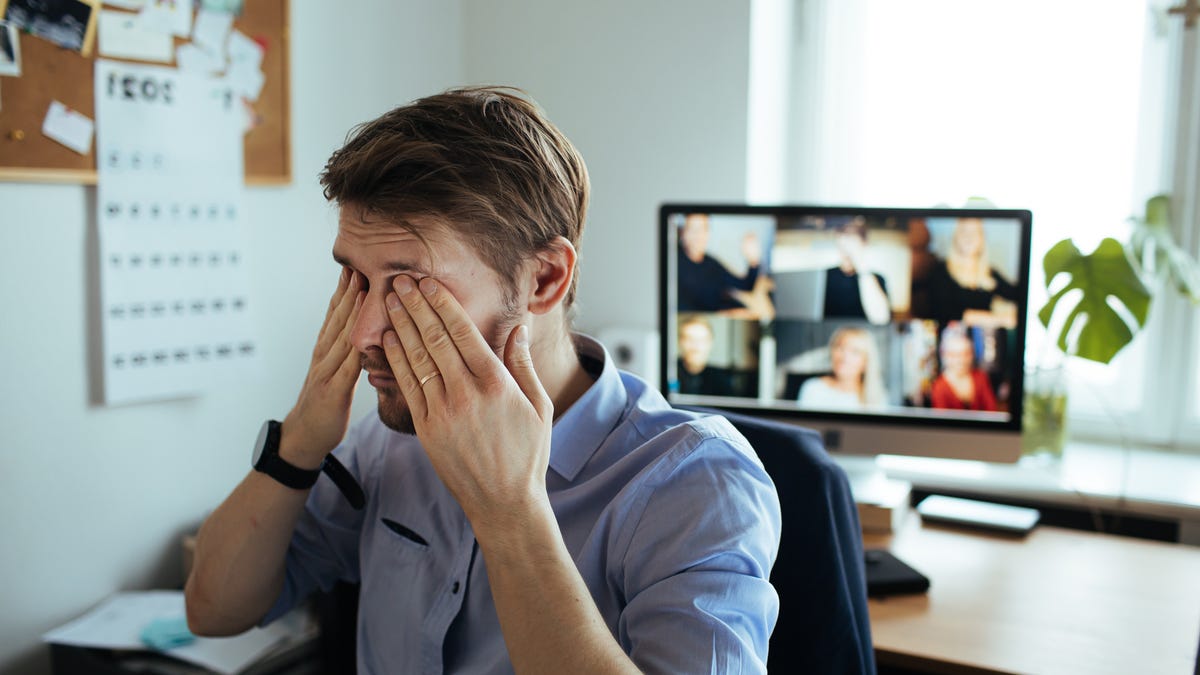
During the pandemic, many former office workers were inevitably glued to their computer monitors. With work migrating online, video tools like Zoom and Google Hangouts have become the rare place for regular conversations with coworkers. However, video conferencing is not an alternative to seeing your employees with no screens in the way and has created a “zoom fatigue” epidemic.

According to a new study by Stanford researchers published in the journal Technology, mind and behaviorZoom fatigue is basically what it sounds like – resulting from the increased stress of keeping connections at a distance through video chat – and leads to burnout, stress and monotony at work. However, there are ways you can lessen the stranglehold video conferencing can have on your mood.

Illustration for article titled How To

What is zoom fatigue?

This isn’t specifically true of Zoom, and company executives would likely argue that the term does a disservice to their marketing efforts. According to Jeremy Bailenson, founding director of the Stanford Virtual Human Interaction Lab, the problem applies to all video conferencing services. In general, it describes the fatigue caused by having to constantly feel turned on when switching between browser windows for different online meetings. It also makes sense given that studies have shown This longer screen time – especially when combined with a sedentary lifestyle – increases your chances of developing moderate to severe depression.

G / O Media can receive a commission

Typically, when you suffer from this, you are drowning in a large virtual meeting schedule feeling like you can barely keep your head above water.

What causes it

Bailenson’s research reveals four reasons why video conferencing can be so mentally stressful:

  • Intense eye contact is exhausting. Turning a blind eye to your co-workers to show that you are paying attention can be a challenge. Doing this several times a day can feel oppressive. If you don’t make concerted eye contact during much of the meeting, your co-workers may think your attention is falling.
  • Watching yourself during video chats is exhausting. Watching yourself in a meeting only increases performance anxiety. The psychological cost of living during the pandemic is onerous enough – why worry about how you look to your co-workers?
  • Video chats mean we move less. When you’re constantly chained to a desk, you’re not moving nearly as much as your body needs. In a traditional office setting at least, you may need to go to a conference room on a different floor. When we switch between different video meetings, we sit more and move less. to the detriment of our mental wellbeing.
  • Nonverbal cues are harder to interpret. The challenge of deciphering nonverbal cues only adds to the stress video chats cause. This can lead to what Bailenson calls “cognitive overload,” where your head may float in the supposed subtext of the conversation.

Illustration for article titled How To

Ways to Combat Zoom Fatigue

Fortunately, Bailenson did not uncover the problems without offering solutions.

  • In case of eye contact: The researcher recommends not using the full screen setting. That way, your coworkers will at least look a little smaller so you won’t feel so pressured to keep your eyes on theirs.
  • For self-confidence: It is not essential to leave the camera on every time you meet. If you don’t present something, what’s the point of filming yourself? If you need to keep your camera on, Bailenson recommends adjusting your settings so that only the other person can be seen in the chat, rather than having both videos available to both parties. In the meantime, don’t hesitate to turn off the camera.
  • For mobility: Bailenson recommends using a different camera that you can link to your feed so you can still move around and possibly present from a standing position if you so choose. Another option is to turn the camera back off and wear bluetooth headphones so you can walk around your house or apartment.
  • If you are afraid of non-verbal cues: Turning off your camera also works fine. However, to reinforce it even further, the researcher recommends listening to the meeting outside of your computer. That way, if all you have to do is use audio and feel comfortable joining the meeting while putting away the dishes for example, you no longer have to worry and analyze any micro-cues that routinely pop up.

Marvel Boss weighs in in WandaVision Season 2

0
Marvel Boss weighs in in WandaVision Season 2

For the most part, Feige explained, Marvel develops its TV shows like its movies.

“In other words, when we start with a movie, we hope there is a second part, we hope there is a third part, but we don’t take that into account in part one,” he said. “We’re trying to create something that pulls people under their spell enough and that people want to enjoy and revisit so much that they want to see the story go on. That’s how we do it on television.”

This is a new direction for the brand, so this is just the beginning.

“It’s part of the fun, exciting, and adrenaline-pumping creativity that Disney + can bring to really new ways of storytelling and new ways of telling our stories,” he said. “Maybe one day we’ll be planning five seasons of a show, but we’re really focused on delivering the best seasons we can deliver one after the other so far.”

Biden indicators an government order to repair the chip scarcity by means of a provide chain evaluate

0
Biden indicators an government order to repair the chip scarcity by means of a provide chain evaluate

President Joe Biden signed an ordinance on Wednesday aimed at addressing a global chip shortage that is affecting industries that range from medical care to electric vehicles.

The contract includes a 100-day review of key products, including semiconductors and advanced batteries for electric vehicles, followed by a more comprehensive long-term review of six economic sectors. The long-term review will enable policy recommendations to strengthen supply chains with the aim of implementing the proposals quickly, Biden said at a press briefing Wednesday before signing the order.

The action follows calls from non-partisan congressmen and industry leaders warning of the possible consequences of the shortage. Semiconductors, commonly known as chips, are used to power electronics including phones, electric vehicles, and even some medical supplies. Senate Majority Leader Chuck Schumer, DN.Y., said “semiconductor manufacturing is a dangerous flaw in our economy and national security.”

Biden met with a bipartisan group of lawmakers on Wednesday to discuss the shortage and said he was “very productive”. He praised the cooperative nature of the meeting and said: “It’s like before, people were actually on the same page.”

The semiconductor supply chain took a hit at the start of the Covid pandemic, as much of the world’s chips are made in countries like China and Taiwan. The health crisis has highlighted problems with the US’s reliance on overseas supply chains in many areas, and the semiconductor industry is no different. According to the Semiconductor Industry Association, a coalition backed by several chip manufacturers, the US only accounts for about 12.5% ​​of semiconductor manufacturing.

The shortage has already affected several companies. Ford said earlier this month that reduced estimates from suppliers could mean losing up to 20% of its expected production in the first quarter. General Motors said earlier this month it will be extending downtime at multiple manufacturing facilities due to the shortage and will “reevaluate in mid-March”. However, on Wednesday, ahead of the executive order announcement, GM CFO Paul Jacobson said that the worst of the chip shortages may already be over.

In a letter to Biden last week, several industry associations, including the SIA, the Advanced Medical Technology Association, and the Motor & Equipment Manufacturers Association, wrote that the U.S. should incentivize new semiconductor manufacturing facilities to be built in the country to effectively compete with other countries invested in chip manufacturing.

Subscribe to CNBC on YouTube.

WATCH: Chip scarcity is slowing production of game consoles, cars, and more

The primary cargo of COVAX vaccines arrives in Ghana, hope for growing nations

0
The primary cargo of COVAX vaccines arrives in Ghana, hope for growing nations

A shipment of Covid-19 vaccines from the global COVAX vaccination program will arrive at Kotoka International Airport in Accra, Ghana on February 24, 2021.

Nipah Dennis | AFP | Getty Images

The first shipment of Covid-19 vaccines, delivered under the World Health Organization’s COVAX program, arrived in Ghana on Wednesday. This is a hopeful turning point for developing countries, who may be lagging behind in the global race to vaccinate a virus that has killed nearly 2.5 million people worldwide.

The flight brought 600,000 doses of the AstraZeneca vaccine, which is believed to be far easier to distribute in developing countries because it does not require extremely cold storage temperatures like the Pfizer-GenTech and Moderna vaccines.

The vaccines delivered on Wednesday will be prioritized for frontline medical professionals, those over 60 and those with pre-existing health conditions, according to the Ghanaian Ministry of Information.

“Today is the historic moment for which we have planned and worked so hard,” said UNICEF Executive Director Henrietta Fore in a joint statement from her agency and WHO Ghana.

“With the first shipment of cans, we can deliver on the promise of the COVAX Facility to ensure that people from less affluent countries are not left behind in the race for life-saving vaccines.”

Airport workers transport a shipment of Covid-19 vaccines from Covax’s global Covid-19 vaccination program onto dolls at Kotoka International Airport in Accra on February 24, 2021.

Nipah Dennis | AFP | Getty Images

COVAX is a global plan jointly led by WHO, an international vaccine alliance called Gavi, and the Coalition for Innovation in Epidemic Preparation.

While wealthier nations drive costly vaccine development and procurement, poorer countries suffer the consequences of inequality. Mark Suzman, executive director of the Bill & Melinda Gates Foundation, said in December that it may be too late for the vaccines to be distributed fairly as rich countries have already closed massive deals.

Wealthy nations, making up just 14% of the world’s population, had secured 53% of the world’s top performing coronavirus vaccines by December, according to a group of human rights activists called the People’s Vaccine Alliance.

COVAX was founded to ensure fair access to vaccines worldwide. By the end of 2021, 20% of people in the 92 poorest countries in the world are to be vaccinated through donations. Several other middle-income countries will purchase vaccines through COVAX on a self-funded basis. The plan this year is to deliver 2 billion doses of vaccines that have been recognized by WHO as safe and effective.

The recordings shipped to Ghana were produced by the Indian Serum Institute, which has been granted access to the intellectual property that enables it to manufacture vaccines based on the Oxford-AstraZeneca formula. The African Union has secured around 670 million doses of the Serum Institute’s vaccine for its member countries. The goal is for 60% of the 1.3 billion people in Africa to be vaccinated in the next two to three years.

“By far the fastest of all time”

“This is amazingly important. We want the gap between vaccinating the rich and poor to be narrowed to zero,” Hassan Damluji, assistant director of global politics and advocacy at the Bill & Melinda Gates Foundation, told CNBC in an interview Wednesday .

“We know that it usually takes decades for a vaccine to be developed and used for the first time in rich countries and then to reach the poorest people in the world. So Ghana receives its first shipment, just three months after the first vaccine rollouts World are more than extraordinary, “he said. “It is by far the fastest ever.”

A health worker applies a Sinovac CoronaVac Coronavirus Disease (COVID-19) vaccine to an elderly Citzen on February 18, 2021 in Sao Goncalo, near Rio de Janeiro, Brazil.

Ricardo Moraes | Reuters

The Gates Foundation has spent $ 1.75 billion fighting the coronavirus and has focused on vaccine development within COVAX.

Damluji noted that the program’s vaccine sourcing for poor countries was funded entirely by donors at a time when every developed world economy is in recession. “So it’s pretty remarkable,” he said.

Vaccine inequality will plunge countries into deeper poverty

The exclusion of poor countries from vaccination programs launched in wealthier countries will have devastating and lasting consequences, warn economists and public health experts that dramatically increase inequalities, hinder social and economic development and leave dozens of countries in significantly higher debt.

These inequalities, according to Oxford Economics, mean that the long-term economic damage of the pandemic will be twice as severe in emerging markets as it is in developed countries. A study by the RAND Corporation predicts the global economy will lose $ 153 billion in production annually if emerging economies do not get access to vaccines.

The countries of the COVAX donation plan are to receive doses that are appropriate for their populations: Afghanistan, for example, will receive 3 million doses, while Namibia will receive almost 130,000.

The Palestinian Territories expect to receive vaccines through COVAX in March. Iran and Iraq are part of COVAX, as are many lower-income countries in the Middle East. The wealthier Gulf States have sourced their own vaccine supplies directly from the manufacturers, while some, despite their own recessions, also contribute to the COVAX fundraising pool: Saudi Arabia donated $ 300 million and Qatar donated $ 10 million.

The U.S. hadn’t made a contribution to the COVAX facility under the Trump administration, but the Biden administration has pledged the largest donation to date – $ 4 billion.

Damluji pointed out the challenges of COVAX’s goals by running extensive vaccination campaigns in countries with faulty infrastructure, limited logistics and transportation, remote populations, and in some cases violence and war.

“This stuff is a moving target. Rightly the world’s attention is on it and wants to make sure it goes well,” he said. “But a few months ago we didn’t even know which vaccines would work. And now people need them on their doorstep.”

“There will be some complications as well,” he added. “It’s the biggest health procurement effort ever.”

Is Spotify Hifi value it?

0
Is Spotify Hifi value it?

I’ll admit that as someone who loves to rock, I was thrilled that my favorite streaming service – Spotify – announced it was introducing a new level of service for them lossless audio streaming. Sure, it costs more than what I’m paying now, but throwing away the expected $ 20 a month on perfect audio sounds pretty good, doesn’t it? My future road trips are now ten times better.

May be.

Here is the thing. I wouldn’t pay a penny more for enhanced audio for a streaming service just because the option was there. At least not without seeing whether I can tell the difference between the existing, high-quality offerings of the streaming service and its lossless offerings. I will argue that for the most part, most people are probably unable to tell the difference – and I’m not the only one to say so.

As Napier Lopes from The Next Web writes::

“Spotify Premium (the existing, ad-free level for 9.99 US dollars) already transmits streams with a maximum of 320 kbit / s (256 kbit / s on the web) activates this in the settings of the app. While at low bitrates the differences between lossy and lossless audio can be obvious, I’m willing to bet that most people can’t tell a lossless file apart from a 256 kbps MP3 file – let alone a file that does more modern Ogg codec compressed the Spotify was used.

Our hearing is subject to a lot of placebo. Just assuming that a certain upgrade or key specification will make your speakers or headphones sound better often results in an “improvement” rather than an actual change. Still, many gold-eared audiophiles will swear they can hear a difference without evidence. ”

G / O Media can receive a commission

Since Spotify’s “HiFi” service isn’t coming out later this year, you can’t test lossless streaming directly. However, it is pretty easy to see if you can currently tell the difference between audio files with different bit rates and compressions. Lopes recommends that Digital Feed ABX testThis gives you two audio files – an A sample and a B sample – and a destination sample. Your job is to say whether A or B fits the target, and you can choose between a faster five-track test, a ten-track test, or a mega-20-track test.

In other words, the test is to see if you can tell a difference between a lossless and a lossy version of a song. And if you think it will be easy then when you use it, the test setup looks like this:

Illustration for article titled Before You Pay For Spotify "Hi-Fi," Test your hearingScreenshot: David Murphy

You click A, X or B to play a track and you can switch between the different versions by clicking A, X or B. Even then, in most situations, I found it quite difficult to tell the difference between the files. Either my hearing is bad or it’s really, really difficult to separate Spotify’s 320kbps streaming – the highest quality – from a lossless file.

I’m not even going to show my results because honestly, most of the time I was just guessing. It’s plausible that my home audio setup – basically $ 150 headphones plugged directly into my desktop PC’s motherboard – just isn’t good enough to tell the difference between a high quality file and a lossless one to recognize. But even with a pimped up setup, it’s a tough test for a Reddit user describes::

I ran this test with LS50W in a treated room. I’m about 65-70% correct. I had to concentrate REALLY hard and listen critically in a completely inorganic way. And I still have a high percentage wrong. The difference was so negligible that I switched from Tidal to Spotify after this test. I haven’t looked back since.

If you want a quiz with more bones, NPR published a similar study back in 2015 that you can use to test your ears. In this case, I picked the 320kbps file superbly. But the lossless file? Not as much.

And if you happen to have a lossy and lossless file of the same song, you can try this old school trick to compare the differences between the two:

Regardless, I wouldn’t bother with a more expensive “hi-fi” audio service if you could tell the difference between this and the “regular” offerings of a streaming service for everything you have at home – your headphones, speakers, or yours Ears. You are going to be spending money on a “benefit” that you will never appreciate, and that seems silly.

Daniel Kaluuya reveals that he has not been invited to premieres

0
Daniel Kaluuya reveals that he has not been invited to premieres

Um, maybe it got lost in the mail?

Daniel Kaluuya, which was nominated for his appearance in an Oscar Jordan PeeleIn the much-touted horror film Get Out, he is said to have never been invited to the world premiere of the film.

The widow star made the claim on the Graham Norton Show, telling the host, “You didn’t invite me, brother.”

When Norton said there was no way that could be true, Kaluuya stated that he was never asked to attend the screening at the Sundance Film Festival, which showed the film to the public for the first time. The actor explained, “I was shooting in Atlanta [Black Panther.] I’ve relaxed and cleared my schedule. I said, “I really want to do it.” And then I just didn’t get the invitation. “

He added that he ended up having his premiere alone. “I wasn’t invited so I was just in my bed,” he said with a laugh. “Somebody wrote to me, ‘It is really well done.'”

Dow jumps 200 factors, which is elevated by leisure video games, Nasdaq erases 1% loss and goes optimistic

0
Dow jumps 200 factors, which is elevated by leisure video games, Nasdaq erases 1% loss and goes optimistic

Key stock averages erased previous losses and traded higher on Wednesday as investors continued to pile in names sensitive to an economic comeback.

The Dow Jones Industrial Average rose 200 points after falling more than 100 points. The blue-chip Dow’s biggest winners were energy, industry and finance, including Boeing, Goldman Sachs, Chevron and Caterpillar. The S&P 500 rose 0.4%.

The tech-heavy Nasdaq Composite was down 1.3% and turned slightly positive. Tech stocks were sold earlier when the 10-year government bond yield surpassed 1.4%, reaching its highest level since February 2020. Higher interest rates could cause investors to switch from high-flyers to bonds while they could hinder growth companies, which benefited from the low-price environment. Apple, Microsoft, Amazon and Facebook are still in the red.

“Expect volatility along the way, and higher interest rates will continue to add risk to sectors and factors, but … stock market dips should be bought in this environment,” said Christopher Metli, a quantitative and derivatives strategist at Morgan Stanley said in a note.

Yields even rose after Federal Reserve Chairman Jerome Powell said in a Congressional hearing on Tuesday that inflation was “weak” and that the US economy was “far from our employment and inflation targets.”

Powell’s visit to Capitol Hill continued on Wednesday when he addressed the House of Representatives Financial Services Committee.

“Higher interest rates could dampen broad market gains, multipliers should compress, and the final phase of the early cycle themes could lead value to take the long-awaited leadership over growth,” said Ed Clissold, chief US strategist at Ned David Research. in a note.

The stock market made a big intraday comeback in the previous session after the Fed chief’s comments allayed some concerns about a pickup in price pressures and rising interest rates. The Dow and the S&P 500 offset heavy losses and close slightly higher. The Nasdaq Composite, which was down nearly 4% at one point, closed with a loss of just 0.5%.

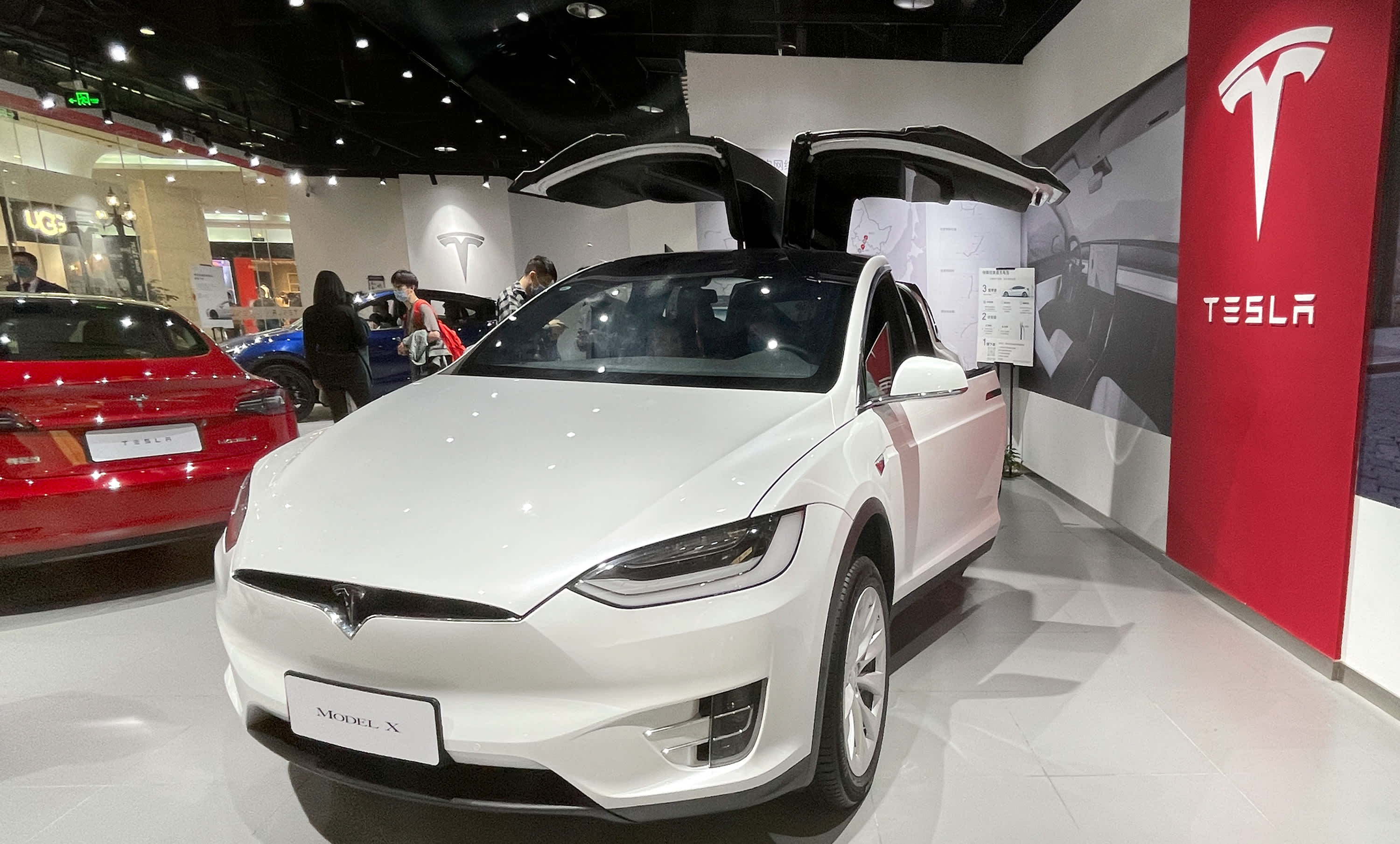
Tesla shares rose 4.6% after Ark Invest’s Cathie Wood bought a ton more of their largest stake during the Tuesday sale. According to the company’s website, Wood bought more than $ 120 million worth of Tesla shares for the flagship Ark Innovation ETF.

Bitcoin, viewed by some as a barometer of speculation in the financial markets, rebounded above $ 50,000 on Wednesday after another purchase of Square’s cryptocurrency.

On Wednesday, Food and Drug Administration staff approved Johnson & Johnson’s emergency single-shot Covid-19 vaccine and brought a third vaccine to the US

Cash: Educate Your Youngsters How To Make investments Their Cash Messages

0
Cash: Educate Your Youngsters How To Make investments Their Cash Messages

NASHVILLE, TN (WSMV) – The McDonalds wanted to teach their kids the budget, and COVID-19 gave them the perfect excuse to get started. “In order for them to have the right habits to save and spend money, they are ready for whatever happens when something like a pandemic happens,” they told us.

You are now using an app called the Busy Kid. “They can mark when they do their chores and when they do it that they get an allowance which in some way is automatically added to their account.”

Experts say this is important and they encourage people not to use piggy banks or cash.

“It’s so old-fashioned that we have to change the way we do things because we …

Read additional from the source

Copyright @ www.wsmv.com

News highlights

  • Headline: Teach Your Children How To Invest Their Money News
  • Review all news and articles from Money News Updates on Currency.

Disclaimer: If you need to update / edit / remove these messages or articles, please contact our support team. Further information

POPULAR POSTS